Saudi doctors managed to separate Monday the lower organs of two infant Polish girls who were born joined at the spine and intestines, a member of the medical team said
Published:
4 January 2005 y., Tuesday
Saudi doctors managed to separate Monday the lower organs of two infant Polish girls who were born joined at the spine and intestines, a member of the medical team said.
Speaking as the operation went into its fifth hour, Dr. Soud al-Jadaan told a press conference that the team of 50 doctors, technicians and nurses had separated the intestines, urinary systems and sexual organs of the 13-month-old Daria and Olga Kolacz.
"There were no surprises and everything went according to schedule," al-Jadaan said. "It needed a lot of time to split them from the lower part of the bodies ... It was sensitive, but we did it with no complications."
The surgery began after the twins had undergone 20 days of medical tests at King Abdul-Aziz Medical City for the National Guard in the Saudi capital, Riyadh, to confirm that a safe separation was possible. The cost of the operation is being financed by Crown Prince Abdullah, the kingdom's de facto ruler, according to the official Saudi Press Agency.
Crown Prince Abdullah offered to pay medical and travel expenses for the twins and their mother, Wieslawa Dabrowska, after being informed of the case by a Saudi doctor, who learned about the twins from an Internet discussion forum. The family is from Janikowo in central Poland.
The 10-stage operation is expected to last for about 15 hours, it said.
Šaltinis:
AP
Copying, publishing, announcing any information from the News.lt portal without written permission of News.lt editorial office is prohibited.
The most popular articles
 Some 56 000 people in the EU are currently waiting for a transplant operation. Every day 12 of them die waiting for an organ to be donated.
more »
Some 56 000 people in the EU are currently waiting for a transplant operation. Every day 12 of them die waiting for an organ to be donated.
more »
 Every day, across the vast country, Chinese school children put down their pens and perform a series of government-devised exercises intended to strengthen their eyes.
more »
Every day, across the vast country, Chinese school children put down their pens and perform a series of government-devised exercises intended to strengthen their eyes.
more »
 D. Simmons said the experience of living for so long with a machine pumping her blood was "scary."
more »
D. Simmons said the experience of living for so long with a machine pumping her blood was "scary."
more »
 A recent report found that children in Europe are not getting enough fruit and vegetables, so the European Commission is proposing to set aside money to ensure they get weekly fruit.
more »
A recent report found that children in Europe are not getting enough fruit and vegetables, so the European Commission is proposing to set aside money to ensure they get weekly fruit.
more »
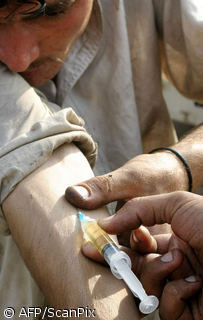 Every year 7,000-8,000 people in the EU die because of drug use and a drugs overdose remains one of the main causes of death among young people.
more »
Every year 7,000-8,000 people in the EU die because of drug use and a drugs overdose remains one of the main causes of death among young people.
more »
 Bad health through a bad diet is a growing problem across Europe.
more »
Bad health through a bad diet is a growing problem across Europe.
more »
 In accordance with the EC Treaty rules on state aid, the European Commission has approved aid worth €90 million to be granted by France to the R&D programme “ADNA” covering the development of personalised medicine for infectious diseases, cancer and genetic diseases.
more »
In accordance with the EC Treaty rules on state aid, the European Commission has approved aid worth €90 million to be granted by France to the R&D programme “ADNA” covering the development of personalised medicine for infectious diseases, cancer and genetic diseases.
more »
 October is international breast cancer awareness month. In Europe alone there are an estimated 430,000 new cases a year and in the EU breast cancer will affect one in 10 women before the age of 80.
more »
October is international breast cancer awareness month. In Europe alone there are an estimated 430,000 new cases a year and in the EU breast cancer will affect one in 10 women before the age of 80.
more »
 Today in the afternoon, President Valdas Adamkus had a lens replacement surgery in his right eye at Santariškių Clinical Hospital.
more »
Today in the afternoon, President Valdas Adamkus had a lens replacement surgery in his right eye at Santariškių Clinical Hospital.
more »
The last four suspected bird flu patients two of them confirmed to have contracted the deadly H5N1 strain were discharged from a hospital in eastern Turkey, signalling an end to the recent outbreak, a doctor said on Saturday.
more »