People who use the Internet to find real-life sex partners are more likely to have had sexually transmitted diseases or engaged in risky intimate behavior, a government-led study found.
Published:
27 July 2000 y., Thursday
Another study, based on San Francisco's handling of syphilis cases linked to an Internet chat room, suggests the Internet can help public health officials curb disease outbreaks.
Both studies appear in Wednesday's Journal of the American Medical Association.
In the first study, led by Centers of Disease Control researcher Mary McFarlane, investigators looked at the habits of 856 clients at a Denver HIV testing and counseling center. Nearly 16 percent — 135 subjects — reported seeking sex partners online.
Nearly a third of those online seekers said they had contracted sexually transmitted diseases and had been exposed to HIV-positive sex partners. In comparison, 20 percent of those who tried to find partners in more conventional ways said they'd had venereal diseases and just 14 percent said they'd had HIV-positive partners.
A JAMA editorial said the findings weren't surprising, since the anonymity of sex facilitated by the Internet would be expected to appeal to "sexual adventurers" willing to take risks.
The San Francisco health officials determined last year that two men may have contracted syphilis from partners they met online. Because the patients said they knew only their partners' chat room aliases, officials couldn't use conventional methods of tracking them down or alerting others about the danger.
With help from the service provider that hosted the chat room, officials posted alerts there encouraging men who may have met sexual partners online to seek medical evaluation. That helped them find five additional men with syphilis linked to the chat room, said the authors, led by Dr. Jeffrey Klausner of the city's public health department.
Šaltinis:
discovery.com
Copying, publishing, announcing any information from the News.lt portal without written permission of News.lt editorial office is prohibited.
The most popular articles
 With the new influenza season underway, MEPs have criticised the EU's "disproportionate" response to the outbreak of the H1N1 ("swine flu") virus in 2009-2010.
more »
With the new influenza season underway, MEPs have criticised the EU's "disproportionate" response to the outbreak of the H1N1 ("swine flu") virus in 2009-2010.
more »
 Over half the EU adult population is now overweight or obese according to the “Health at a Glance: Europe 2010” report published by the European Commission and the OECD today.
more »
Over half the EU adult population is now overweight or obese according to the “Health at a Glance: Europe 2010” report published by the European Commission and the OECD today.
more »
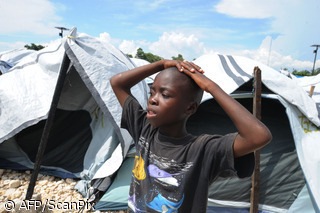 Over 130 people die in central Haiti due to a suspected outbreak of cholera.
more »
Over 130 people die in central Haiti due to a suspected outbreak of cholera.
more »
 The Influenza A (H1N1) pandemic returned to the Parliament last week but fortunately not in the literal sense.
more »
The Influenza A (H1N1) pandemic returned to the Parliament last week but fortunately not in the literal sense.
more »
 The Commission announced today its intention to restructure the process of progressive adoption of the list of permitted health claims on food products (also known as “Article 13 claims”).
more »
The Commission announced today its intention to restructure the process of progressive adoption of the list of permitted health claims on food products (also known as “Article 13 claims”).
more »
 Patients will be better informed on how to use medicines, and enabled to report their adverse effects directly to national authorities, thanks to updates of EU laws agreed with the Council and endorsed by Parliament on Wednesday.
more »
Patients will be better informed on how to use medicines, and enabled to report their adverse effects directly to national authorities, thanks to updates of EU laws agreed with the Council and endorsed by Parliament on Wednesday.
more »
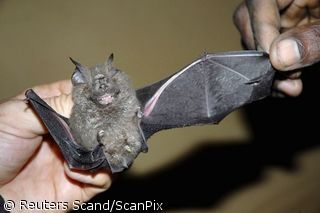 Doctors in Peru are facing outbreaks of two killer diseases, rabies and the plague, being spread by bats and rats.
more »
Doctors in Peru are facing outbreaks of two killer diseases, rabies and the plague, being spread by bats and rats.
more »
 Scientists warn a new drug-resistant superbug could spread worldwide, fuelled in part by medical tourism.
more »
Scientists warn a new drug-resistant superbug could spread worldwide, fuelled in part by medical tourism.
more »
 Chinese officials say they are investigating reports that tainted milk powder has caused premature sexual development in baby girls.
more »
Chinese officials say they are investigating reports that tainted milk powder has caused premature sexual development in baby girls.
more »
 A woman in India says she has to sell her 6-month-old baby in order to pay her husband's medical expenses.
more »
A woman in India says she has to sell her 6-month-old baby in order to pay her husband's medical expenses.
more »