People who use the Internet to find real-life sex partners are more likely to have had sexually transmitted diseases or engaged in risky intimate behavior, a government-led study found.
Published:
27 July 2000 y., Thursday
Another study, based on San Francisco's handling of syphilis cases linked to an Internet chat room, suggests the Internet can help public health officials curb disease outbreaks.
Both studies appear in Wednesday's Journal of the American Medical Association.
In the first study, led by Centers of Disease Control researcher Mary McFarlane, investigators looked at the habits of 856 clients at a Denver HIV testing and counseling center. Nearly 16 percent — 135 subjects — reported seeking sex partners online.
Nearly a third of those online seekers said they had contracted sexually transmitted diseases and had been exposed to HIV-positive sex partners. In comparison, 20 percent of those who tried to find partners in more conventional ways said they'd had venereal diseases and just 14 percent said they'd had HIV-positive partners.
A JAMA editorial said the findings weren't surprising, since the anonymity of sex facilitated by the Internet would be expected to appeal to "sexual adventurers" willing to take risks.
The San Francisco health officials determined last year that two men may have contracted syphilis from partners they met online. Because the patients said they knew only their partners' chat room aliases, officials couldn't use conventional methods of tracking them down or alerting others about the danger.
With help from the service provider that hosted the chat room, officials posted alerts there encouraging men who may have met sexual partners online to seek medical evaluation. That helped them find five additional men with syphilis linked to the chat room, said the authors, led by Dr. Jeffrey Klausner of the city's public health department.
Šaltinis:
discovery.com
Copying, publishing, announcing any information from the News.lt portal without written permission of News.lt editorial office is prohibited.
The most popular articles
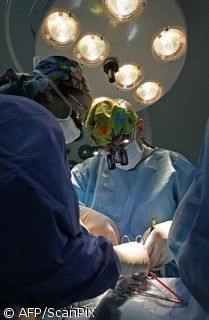 The world's first full face transplant appears in public, and thanks his doctors.
more »
The world's first full face transplant appears in public, and thanks his doctors.
more »
 China's fattest man hospitalized
China's fattest man, weighing 230 kg or 507 pounds, is hospitalised after being diagnosed with heart problems and kidney failure.
more »
China's fattest man hospitalized
China's fattest man, weighing 230 kg or 507 pounds, is hospitalised after being diagnosed with heart problems and kidney failure.
more »
 A Chinese anti-smoking activist is on a one-man mission to eradicate smoking - one smoker at a time.
more »
A Chinese anti-smoking activist is on a one-man mission to eradicate smoking - one smoker at a time.
more »
 A five-month old Siberian tiger with cataracts in both eyes becomes China's youngest animal to undergo surgery.
more »
A five-month old Siberian tiger with cataracts in both eyes becomes China's youngest animal to undergo surgery.
more »
 The Commission has taken further steps against Germany for incorrectly applying EU rules on well established medicinal use when authorising medicinal products pursuant to Directive 2001/83/EC.
more »
The Commission has taken further steps against Germany for incorrectly applying EU rules on well established medicinal use when authorising medicinal products pursuant to Directive 2001/83/EC.
more »
 Theold Bank today approved a US$$117.70 million IDA credit to India, designed to improve quality of and access to health services in the state of Tamil Nadu.
more »
Theold Bank today approved a US$$117.70 million IDA credit to India, designed to improve quality of and access to health services in the state of Tamil Nadu.
more »
 Livestock at a farm outside of Seoul show symptoms of the highly contagious disease.
more »
Livestock at a farm outside of Seoul show symptoms of the highly contagious disease.
more »
A written declaration calling for EU-wide breast cancer screening for women, initiated by MEP Liz Lynne (ALDE, UK) had been signed by sufficient MEPs to qualify as having been endorsed by Parliament, announced the President, thanking those who had signed.
more »
 The European Commission has earmarked €21 million for two new research projects on cancer, as part of an international research effort coordinated since 2007 by the International Cancer Genome Consortium (ICGC).
more »
The European Commission has earmarked €21 million for two new research projects on cancer, as part of an international research effort coordinated since 2007 by the International Cancer Genome Consortium (ICGC).
more »
 To mark World Health Day, WHO is launching a global campaign to raise awareness of the impact of increasing urbanization on the health and lifestyles of people around the globe.
more »
To mark World Health Day, WHO is launching a global campaign to raise awareness of the impact of increasing urbanization on the health and lifestyles of people around the globe.
more »