The next major tech fallout could be environmental, as computer use increases and consumers get rid of obsolete equipment.
Published:
30 May 2001 y., Wednesday
Experts warn that if more viable ways to recycle or re-use old electronics and computer gear are not found, much of the cyberjunk will end up in community landfills, where it poses risks to health and the environment. The issue has corporations, government officials and environmental advocates brainstorming for solutions -- and debating about who should pick up the tab.
According to the National Safety Council, the number of PCs deemed obsolete in 2002 will exceed the number of new PCs shipped. With few recycling programs now in place, the U.S. Environmental Protection Agency estimates that computers and other electronic equipment already account for about 220 million tons of waste per year in the United States.
What is worse, say environmental advocates, is that older equipment contains large amounts of lead, mercury and other heavy metals that pose health hazards if not disposed of properly. The latest response from the high-tech industry came last week, when computer and printer maker Hewlett-Packard announced an equipment recycling service for consumers and businesses. The Palo Alto, California-based company said the service -- part of its ongoing Planet Partners program -- includes pickup, transportation and evaluation of items for possible re-use or donation, as well as recycling.
HP said that computer gear from all manufacturers will be accepted, and consumers can purchase the service online for a fee ranging from US$13 to $34 per item, depending on the type of product being returned.
Šaltinis:
ecommercetimes.com
Copying, publishing, announcing any information from the News.lt portal without written permission of News.lt editorial office is prohibited.
The most popular articles
 With the new influenza season underway, MEPs have criticised the EU's "disproportionate" response to the outbreak of the H1N1 ("swine flu") virus in 2009-2010.
more »
With the new influenza season underway, MEPs have criticised the EU's "disproportionate" response to the outbreak of the H1N1 ("swine flu") virus in 2009-2010.
more »
 Over half the EU adult population is now overweight or obese according to the “Health at a Glance: Europe 2010” report published by the European Commission and the OECD today.
more »
Over half the EU adult population is now overweight or obese according to the “Health at a Glance: Europe 2010” report published by the European Commission and the OECD today.
more »
 Over 130 people die in central Haiti due to a suspected outbreak of cholera.
more »
Over 130 people die in central Haiti due to a suspected outbreak of cholera.
more »
 The Influenza A (H1N1) pandemic returned to the Parliament last week but fortunately not in the literal sense.
more »
The Influenza A (H1N1) pandemic returned to the Parliament last week but fortunately not in the literal sense.
more »
 The Commission announced today its intention to restructure the process of progressive adoption of the list of permitted health claims on food products (also known as “Article 13 claims”).
more »
The Commission announced today its intention to restructure the process of progressive adoption of the list of permitted health claims on food products (also known as “Article 13 claims”).
more »
 Patients will be better informed on how to use medicines, and enabled to report their adverse effects directly to national authorities, thanks to updates of EU laws agreed with the Council and endorsed by Parliament on Wednesday.
more »
Patients will be better informed on how to use medicines, and enabled to report their adverse effects directly to national authorities, thanks to updates of EU laws agreed with the Council and endorsed by Parliament on Wednesday.
more »
 Doctors in Peru are facing outbreaks of two killer diseases, rabies and the plague, being spread by bats and rats.
more »
Doctors in Peru are facing outbreaks of two killer diseases, rabies and the plague, being spread by bats and rats.
more »
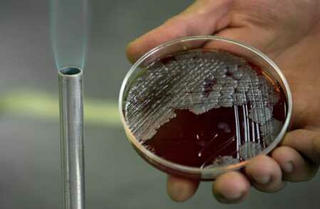 Scientists warn a new drug-resistant superbug could spread worldwide, fuelled in part by medical tourism.
more »
Scientists warn a new drug-resistant superbug could spread worldwide, fuelled in part by medical tourism.
more »
 Chinese officials say they are investigating reports that tainted milk powder has caused premature sexual development in baby girls.
more »
Chinese officials say they are investigating reports that tainted milk powder has caused premature sexual development in baby girls.
more »
 A woman in India says she has to sell her 6-month-old baby in order to pay her husband's medical expenses.
more »
A woman in India says she has to sell her 6-month-old baby in order to pay her husband's medical expenses.
more »