The next major tech fallout could be environmental, as computer use increases and consumers get rid of obsolete equipment.
Published:
30 May 2001 y., Wednesday
Experts warn that if more viable ways to recycle or re-use old electronics and computer gear are not found, much of the cyberjunk will end up in community landfills, where it poses risks to health and the environment. The issue has corporations, government officials and environmental advocates brainstorming for solutions -- and debating about who should pick up the tab.
According to the National Safety Council, the number of PCs deemed obsolete in 2002 will exceed the number of new PCs shipped. With few recycling programs now in place, the U.S. Environmental Protection Agency estimates that computers and other electronic equipment already account for about 220 million tons of waste per year in the United States.
What is worse, say environmental advocates, is that older equipment contains large amounts of lead, mercury and other heavy metals that pose health hazards if not disposed of properly. The latest response from the high-tech industry came last week, when computer and printer maker Hewlett-Packard announced an equipment recycling service for consumers and businesses. The Palo Alto, California-based company said the service -- part of its ongoing Planet Partners program -- includes pickup, transportation and evaluation of items for possible re-use or donation, as well as recycling.
HP said that computer gear from all manufacturers will be accepted, and consumers can purchase the service online for a fee ranging from US$13 to $34 per item, depending on the type of product being returned.
Šaltinis:
ecommercetimes.com
Copying, publishing, announcing any information from the News.lt portal without written permission of News.lt editorial office is prohibited.
The most popular articles
 MEPs last week backed a new report for food labelling that clarifies the origin of food and where it is processed.
more »
MEPs last week backed a new report for food labelling that clarifies the origin of food and where it is processed.
more »
 Mental health problems can affect our “daily life, family, school, work and leisure” and early diagnosis and treatment is the best way to avert personal catastrophe, according to Greek Socialist Evangelia Tzampazi, who is preparing a report on the subject.
more »
Mental health problems can affect our “daily life, family, school, work and leisure” and early diagnosis and treatment is the best way to avert personal catastrophe, according to Greek Socialist Evangelia Tzampazi, who is preparing a report on the subject.
more »
 In 2003, EU health ministers advised governments to put in place large-scale screening programmes for people at a higher risk of cancer because of generic factors like age and gender.
more »
In 2003, EU health ministers advised governments to put in place large-scale screening programmes for people at a higher risk of cancer because of generic factors like age and gender.
more »
 Parliament will today debate new measures to make sure that cancer causing pesticides are banned from going on sale whilst also ensuring that the amounts of current pesticides used are greatly reduced.
more »
Parliament will today debate new measures to make sure that cancer causing pesticides are banned from going on sale whilst also ensuring that the amounts of current pesticides used are greatly reduced.
more »
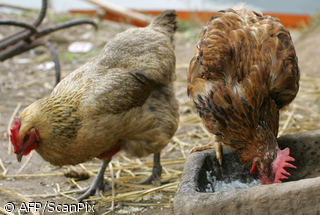 Vets across India's West Bengal state are carrying out a mass cull of birds after a fresh outbreak of avian flu.
more »
Vets across India's West Bengal state are carrying out a mass cull of birds after a fresh outbreak of avian flu.
more »
 Roy Carter - the retired British postman - is game for anything after his damaged knuckles were replaced with ones made from a similar material used to line atomic reactors.
more »
Roy Carter - the retired British postman - is game for anything after his damaged knuckles were replaced with ones made from a similar material used to line atomic reactors.
more »
 Begun only one month ago, stressed out passers-by dish out about two dollars to smash a cup or saucer and relieve their anxieties to the encouragement of staff.
more »
Begun only one month ago, stressed out passers-by dish out about two dollars to smash a cup or saucer and relieve their anxieties to the encouragement of staff.
more »
 MEPs adopted the toy safety proposal with 481 votes in favour, 73 against, 40 abstentions.
more »
MEPs adopted the toy safety proposal with 481 votes in favour, 73 against, 40 abstentions.
more »
 Dairy farmers in some parts of India are getting a boost from a new line of business - cow urine.
more »
Dairy farmers in some parts of India are getting a boost from a new line of business - cow urine.
more »
 The commission has tabled proposals to improve how the European pharmaceutical market operates and ensure that patients benefit from safe, innovative and accessible medicines.
more »
The commission has tabled proposals to improve how the European pharmaceutical market operates and ensure that patients benefit from safe, innovative and accessible medicines.
more »