Predicting Space Weather Becomes More Precise
Published:
30 October 2003 y., Thursday
Predicting space weather is getting more precise. Twice in the past week, forecasters have warned us about two solar storms with the potential for creating havoc among Earth's electrical systems and orbiting satellites. The world is much better prepared to deal with ferocious solar activity than it used to be.
At one time, scientists thought the space between Earth and Sun was a vacuum. But we now know that the sun fills it with gusts of hot, electrically charged atomic particles called the solar wind.
Sometimes this wind blows very hard, as it has with the two most recent solar flares. When the sun's outer layer, the corona, is very active, it hurls nearly one-third of its gaseous matter outward at supersonic speeds. A heavy blast can produce a shock wave that compresses our planet's magnetic field.
The U.S. government's oceans and atmosphere agency NOAA has a Space Environment Center that monitors these discharges. Center director Ernest Hildner says intense solar emissions are not dangerous to people on the ground, but can shut down satellites, power networks, communications, and other technical systems.
The intensity of these solar blasts varies over an 11-year cycle as the sun's magnetic field grows stronger, then weaker. The peak of the most recent 11-year solar cycle came in 2000, but is still a few years from the bottom.
Šaltinis:
voanews.com
Copying, publishing, announcing any information from the News.lt portal without written permission of News.lt editorial office is prohibited.
The most popular articles
 With the new influenza season underway, MEPs have criticised the EU's "disproportionate" response to the outbreak of the H1N1 ("swine flu") virus in 2009-2010.
more »
With the new influenza season underway, MEPs have criticised the EU's "disproportionate" response to the outbreak of the H1N1 ("swine flu") virus in 2009-2010.
more »
 Over half the EU adult population is now overweight or obese according to the “Health at a Glance: Europe 2010” report published by the European Commission and the OECD today.
more »
Over half the EU adult population is now overweight or obese according to the “Health at a Glance: Europe 2010” report published by the European Commission and the OECD today.
more »
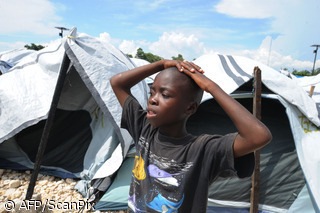 Over 130 people die in central Haiti due to a suspected outbreak of cholera.
more »
Over 130 people die in central Haiti due to a suspected outbreak of cholera.
more »
 The Influenza A (H1N1) pandemic returned to the Parliament last week but fortunately not in the literal sense.
more »
The Influenza A (H1N1) pandemic returned to the Parliament last week but fortunately not in the literal sense.
more »
 The Commission announced today its intention to restructure the process of progressive adoption of the list of permitted health claims on food products (also known as “Article 13 claims”).
more »
The Commission announced today its intention to restructure the process of progressive adoption of the list of permitted health claims on food products (also known as “Article 13 claims”).
more »
 Patients will be better informed on how to use medicines, and enabled to report their adverse effects directly to national authorities, thanks to updates of EU laws agreed with the Council and endorsed by Parliament on Wednesday.
more »
Patients will be better informed on how to use medicines, and enabled to report their adverse effects directly to national authorities, thanks to updates of EU laws agreed with the Council and endorsed by Parliament on Wednesday.
more »
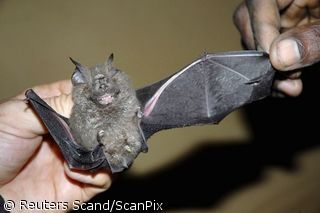 Doctors in Peru are facing outbreaks of two killer diseases, rabies and the plague, being spread by bats and rats.
more »
Doctors in Peru are facing outbreaks of two killer diseases, rabies and the plague, being spread by bats and rats.
more »
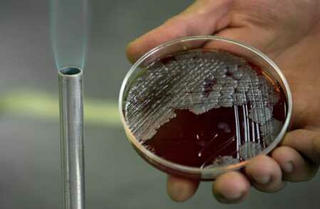 Scientists warn a new drug-resistant superbug could spread worldwide, fuelled in part by medical tourism.
more »
Scientists warn a new drug-resistant superbug could spread worldwide, fuelled in part by medical tourism.
more »
 Chinese officials say they are investigating reports that tainted milk powder has caused premature sexual development in baby girls.
more »
Chinese officials say they are investigating reports that tainted milk powder has caused premature sexual development in baby girls.
more »
 A woman in India says she has to sell her 6-month-old baby in order to pay her husband's medical expenses.
more »
A woman in India says she has to sell her 6-month-old baby in order to pay her husband's medical expenses.
more »