A new imaging technique pin-points the exact location and size of prostate cancer
Published:
18 June 2001 y., Monday
A new imaging technique that pin-points the exact location and size of prostate cancer could help hundreds of thousands of men worldwide. Other types of cancer could also be targeted.
The technique combines two existing imaging technologies, computed tomography (CT) and magnetic resonance imaging (MRI), to target radiotherapy to the cancer cells and not surrounding healthy tissue.
CT scans are used to plan radiotherapy for most cancers, as the bone structure is easily visible. "The problem with CT, though, is that it doesn't give us detail of the soft tissues," says Peter Hoskins from Mount Vernon Hospital in Middlesex. All radiotherapists see is a "blob".
On the other hand, MRI can define tumours and soft tissue very clearly, but is less good at revealing the bone position. This means there is no "map" for use on directing the radiation.
The software developed at King's College London and the Royal Marsden Hospital now allows the soft tissue information to be transposed from the MRI to the CT scan. They plan to use this composite imaging in applying brachytherapy, where a series of radiation sources are focused directly into the walnut-sized prostate gland.
Radiotherapists must treat the entire tumour, but do not want to irradiate healthy tissue. Side-effects of such damage include diarrhoea, impotence and incontinence. The new imaging technique is expected to be validated later in 2001. The team believes it could avoid normal tissue damage in any cancer where MRI currently gives better images than CT scanning, such as brain tumours.
Šaltinis:
newscientist.com
Copying, publishing, announcing any information from the News.lt portal without written permission of News.lt editorial office is prohibited.
The most popular articles
 With the new influenza season underway, MEPs have criticised the EU's "disproportionate" response to the outbreak of the H1N1 ("swine flu") virus in 2009-2010.
more »
With the new influenza season underway, MEPs have criticised the EU's "disproportionate" response to the outbreak of the H1N1 ("swine flu") virus in 2009-2010.
more »
 Over half the EU adult population is now overweight or obese according to the “Health at a Glance: Europe 2010” report published by the European Commission and the OECD today.
more »
Over half the EU adult population is now overweight or obese according to the “Health at a Glance: Europe 2010” report published by the European Commission and the OECD today.
more »
 Over 130 people die in central Haiti due to a suspected outbreak of cholera.
more »
Over 130 people die in central Haiti due to a suspected outbreak of cholera.
more »
 The Influenza A (H1N1) pandemic returned to the Parliament last week but fortunately not in the literal sense.
more »
The Influenza A (H1N1) pandemic returned to the Parliament last week but fortunately not in the literal sense.
more »
 The Commission announced today its intention to restructure the process of progressive adoption of the list of permitted health claims on food products (also known as “Article 13 claims”).
more »
The Commission announced today its intention to restructure the process of progressive adoption of the list of permitted health claims on food products (also known as “Article 13 claims”).
more »
 Patients will be better informed on how to use medicines, and enabled to report their adverse effects directly to national authorities, thanks to updates of EU laws agreed with the Council and endorsed by Parliament on Wednesday.
more »
Patients will be better informed on how to use medicines, and enabled to report their adverse effects directly to national authorities, thanks to updates of EU laws agreed with the Council and endorsed by Parliament on Wednesday.
more »
 Doctors in Peru are facing outbreaks of two killer diseases, rabies and the plague, being spread by bats and rats.
more »
Doctors in Peru are facing outbreaks of two killer diseases, rabies and the plague, being spread by bats and rats.
more »
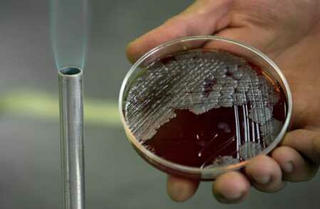 Scientists warn a new drug-resistant superbug could spread worldwide, fuelled in part by medical tourism.
more »
Scientists warn a new drug-resistant superbug could spread worldwide, fuelled in part by medical tourism.
more »
 Chinese officials say they are investigating reports that tainted milk powder has caused premature sexual development in baby girls.
more »
Chinese officials say they are investigating reports that tainted milk powder has caused premature sexual development in baby girls.
more »
 A woman in India says she has to sell her 6-month-old baby in order to pay her husband's medical expenses.
more »
A woman in India says she has to sell her 6-month-old baby in order to pay her husband's medical expenses.
more »