The aggressive marketing of cigarettes in the developing world is a key factor in a predicted rise of global cancer rates over the next 20 years
Published:
7 April 2003 y., Monday
The aggressive marketing of cigarettes in the developing world is a key factor in a predicted rise of global cancer rates over the next 20 years, the World Health Organisation (WHO) said yesterday.
"The deadly smoking habit is particularly worrying in central and eastern Europe and many developing and newly industrialised countries," according to the WHO's World Cancer Report, the most comprehensive global examination of the disease.
"The tendency of youth around the world to start smoking at younger and younger ages will predispose them to substantial risks in later life."
The report also highlighted an ageing world population and health issues stemming from the Third World developing a taste for Western lifestyles as factors.
Global cancer rates are predicted to increase by 50 per cent by 2020, which means that the number of new cases diagnosed in the world each year will rise from about 15 million to more than 20 million.
Most of this increase would be due to longer lifespans, because the risk of cancer becomes higher with age, but a substantial proportion would be due to smoking, diet and more sedentary lifestyles adopted by the developing countries, said Bernard Stewart, co-editor of the report and director of cancer services in the Sydney health service.
Šaltinis:
news.independent.co.uk
Copying, publishing, announcing any information from the News.lt portal without written permission of News.lt editorial office is prohibited.
The most popular articles
 With the new influenza season underway, MEPs have criticised the EU's "disproportionate" response to the outbreak of the H1N1 ("swine flu") virus in 2009-2010.
more »
With the new influenza season underway, MEPs have criticised the EU's "disproportionate" response to the outbreak of the H1N1 ("swine flu") virus in 2009-2010.
more »
 Over half the EU adult population is now overweight or obese according to the “Health at a Glance: Europe 2010” report published by the European Commission and the OECD today.
more »
Over half the EU adult population is now overweight or obese according to the “Health at a Glance: Europe 2010” report published by the European Commission and the OECD today.
more »
 Over 130 people die in central Haiti due to a suspected outbreak of cholera.
more »
Over 130 people die in central Haiti due to a suspected outbreak of cholera.
more »
 The Influenza A (H1N1) pandemic returned to the Parliament last week but fortunately not in the literal sense.
more »
The Influenza A (H1N1) pandemic returned to the Parliament last week but fortunately not in the literal sense.
more »
 The Commission announced today its intention to restructure the process of progressive adoption of the list of permitted health claims on food products (also known as “Article 13 claims”).
more »
The Commission announced today its intention to restructure the process of progressive adoption of the list of permitted health claims on food products (also known as “Article 13 claims”).
more »
 Patients will be better informed on how to use medicines, and enabled to report their adverse effects directly to national authorities, thanks to updates of EU laws agreed with the Council and endorsed by Parliament on Wednesday.
more »
Patients will be better informed on how to use medicines, and enabled to report their adverse effects directly to national authorities, thanks to updates of EU laws agreed with the Council and endorsed by Parliament on Wednesday.
more »
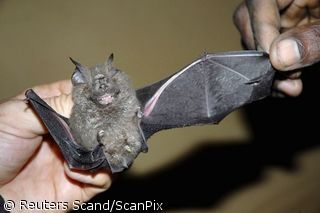 Doctors in Peru are facing outbreaks of two killer diseases, rabies and the plague, being spread by bats and rats.
more »
Doctors in Peru are facing outbreaks of two killer diseases, rabies and the plague, being spread by bats and rats.
more »
 Scientists warn a new drug-resistant superbug could spread worldwide, fuelled in part by medical tourism.
more »
Scientists warn a new drug-resistant superbug could spread worldwide, fuelled in part by medical tourism.
more »
 Chinese officials say they are investigating reports that tainted milk powder has caused premature sexual development in baby girls.
more »
Chinese officials say they are investigating reports that tainted milk powder has caused premature sexual development in baby girls.
more »
 A woman in India says she has to sell her 6-month-old baby in order to pay her husband's medical expenses.
more »
A woman in India says she has to sell her 6-month-old baby in order to pay her husband's medical expenses.
more »