Europe and Central Asia has fastest growing HIV/AIDS epidemic in the world
Published:
20 September 2003 y., Saturday
Though HIV/AIDS is growing fast in the Eastern Europe and Central Asia Region, concerted action now to keep the epidemic from spreading to the general population could prevent huge socioeconomic costs later, according to Averting AIDS Crises in Eastern Europe and Central Asia, the World Bank's Regional Support Strategy launched today.
"By acting now and mobilizing greater political commitment at the country level, governments and development partners could stave off major crises that would damage health as well as economic growth, the labor force and the welfare of households," said Shigeo Katsu, Vice President for the Europe and Central Asia Region (ECA).
Over 1.2 million people are estimated to be living with HIV and AIDS in the region, with major variations across the 28 countries in the group. New HIV cases are growing faster in ECA than in any other region and must be considered alongside existing epidemics of injecting drug use, sexually transmitted infections (STIs) and tuberculosis (TB). Young people are hardest hit, a matter of particular concern due to structural vulnerabilities and factors that put them at risk of infection.
The report presents how the Bank is approaching the problem in the region (see box), describes the scope of the epidemic, and examines financial as well as sociopolitical and institutional constraints that impede success in fighting HIV/AIDS in ECA.
If the HIV epidemic becomes generalized among economically active age groups, annual economic growth rates could decline by 0.5 to 1.0 percentage points. In addition, health expenditures could increase by 1-3 percent. Furthermore, the dependency ratio (the ratio of non-economically active to economically active people) could rise, straining social protection systems, especially in such countries as Belarus, Moldova and Russia, where fertility rates are already dropping.
Šaltinis:
worldbank.org.ba
Copying, publishing, announcing any information from the News.lt portal without written permission of News.lt editorial office is prohibited.
The most popular articles
 With the new influenza season underway, MEPs have criticised the EU's "disproportionate" response to the outbreak of the H1N1 ("swine flu") virus in 2009-2010.
more »
With the new influenza season underway, MEPs have criticised the EU's "disproportionate" response to the outbreak of the H1N1 ("swine flu") virus in 2009-2010.
more »
 Over half the EU adult population is now overweight or obese according to the “Health at a Glance: Europe 2010” report published by the European Commission and the OECD today.
more »
Over half the EU adult population is now overweight or obese according to the “Health at a Glance: Europe 2010” report published by the European Commission and the OECD today.
more »
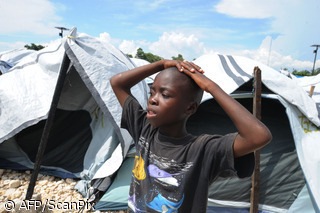 Over 130 people die in central Haiti due to a suspected outbreak of cholera.
more »
Over 130 people die in central Haiti due to a suspected outbreak of cholera.
more »
 The Influenza A (H1N1) pandemic returned to the Parliament last week but fortunately not in the literal sense.
more »
The Influenza A (H1N1) pandemic returned to the Parliament last week but fortunately not in the literal sense.
more »
 The Commission announced today its intention to restructure the process of progressive adoption of the list of permitted health claims on food products (also known as “Article 13 claims”).
more »
The Commission announced today its intention to restructure the process of progressive adoption of the list of permitted health claims on food products (also known as “Article 13 claims”).
more »
 Patients will be better informed on how to use medicines, and enabled to report their adverse effects directly to national authorities, thanks to updates of EU laws agreed with the Council and endorsed by Parliament on Wednesday.
more »
Patients will be better informed on how to use medicines, and enabled to report their adverse effects directly to national authorities, thanks to updates of EU laws agreed with the Council and endorsed by Parliament on Wednesday.
more »
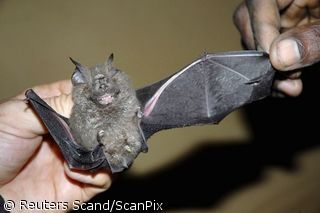 Doctors in Peru are facing outbreaks of two killer diseases, rabies and the plague, being spread by bats and rats.
more »
Doctors in Peru are facing outbreaks of two killer diseases, rabies and the plague, being spread by bats and rats.
more »
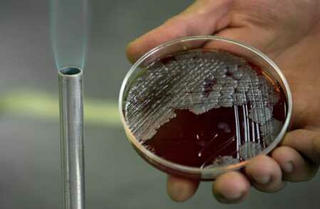 Scientists warn a new drug-resistant superbug could spread worldwide, fuelled in part by medical tourism.
more »
Scientists warn a new drug-resistant superbug could spread worldwide, fuelled in part by medical tourism.
more »
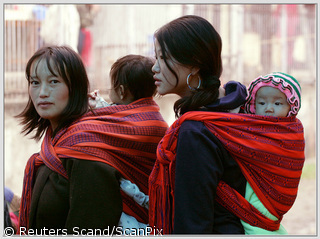 Chinese officials say they are investigating reports that tainted milk powder has caused premature sexual development in baby girls.
more »
Chinese officials say they are investigating reports that tainted milk powder has caused premature sexual development in baby girls.
more »
 A woman in India says she has to sell her 6-month-old baby in order to pay her husband's medical expenses.
more »
A woman in India says she has to sell her 6-month-old baby in order to pay her husband's medical expenses.
more »