Handhelds get better thanks to new software.
Published:
22 July 1999 y., Thursday
Riverbed Technologies Inc. has a simple philosophy when it comes to corporate computing: downsize.Though laptop computers have become a convenient, portable means for roving workers to link up with the office, Riverbed thinks many users would be better served by tiny handheld devices such as 3Com Corp._s PalmPilot organizers. To make that happen, Riverbed develops and markets software to coordinate the use of handheld devices - primarily those built on the PalmPilot platform - on corporate networks. Driving the interest in this technology is the surge of interest in handhelds sparked by the PalmPilot. Though handheld computers have endured a rocky path to acceptance - with devices like Apple Computer Inc._s Newton promising too much, too soon - the various models of 3Com_s Palm have finally validated the concept. Driving the interest in this technology is the surge of interest in handhelds sparked by the PalmPilot. The relatively low cost of Palm devices - ranging from less than $200 for the original model to about $600 for a new version that offers wireless communications - has made them an attractive alternative to laptops for companies that want to collect and deliver information to mobile employees. The new wireless version is especially enticing, offering corporate users the ability to pull information onto PalmPilots without being physically connected to a phone. Handheld devices such as the PalmPilot work well by themselves. With built-in software, a user can "synchronize" data on the handheld with information stored on a personal computer - ensuring that phone lists, calendars and other personal-organization files are up to date. But when it comes to making handhelds talk to an entire corporate network instead of a lone PC, things get complicated. To make handhelds a viable solution for roving workers, they must be able to dial into a corporate server, retrieve and send information, and do so securely - using the same kind of password and other protections that have become standard for laptop users.
Šaltinis:
THE WALL STREET JOURNAL
Copying, publishing, announcing any information from the News.lt portal without written permission of News.lt editorial office is prohibited.
The most popular articles
Software company announced new structure_ of it_s business.
more »
 It was reported that yesterday Canadian Sony Ericsson internet store was attacked
more »
It was reported that yesterday Canadian Sony Ericsson internet store was attacked
more »
 Worldwide mobile communication device sales to end users totaled 427.8 million units in the first quarter of 2011, an increase of 19 percent from the first quarter of 2010, according to Gartner, Inc.
more »
Worldwide mobile communication device sales to end users totaled 427.8 million units in the first quarter of 2011, an increase of 19 percent from the first quarter of 2010, according to Gartner, Inc.
more »
 At the Computer Human Interaction conference in B.C. this week, a team from Texas A&M University unveiled a touch screen technology they’ve been incubating for a couple of years that isn’t really a screen at all.
more »
At the Computer Human Interaction conference in B.C. this week, a team from Texas A&M University unveiled a touch screen technology they’ve been incubating for a couple of years that isn’t really a screen at all.
more »
 A fully autonomous robot, Pneubron 7-11 has been created at the Hosoda Labs in Osaka University. The Pneubron robot was designed to find the link between human interactions and motor development.
more »
A fully autonomous robot, Pneubron 7-11 has been created at the Hosoda Labs in Osaka University. The Pneubron robot was designed to find the link between human interactions and motor development.
more »
 The ability to control objects simply by thinking about them is the subject of serious research in laboratories around the world with wheelchairs and even cars now being driven by the power of the mind. It's all very serious science, but in Japan, technologists are demonstrating that mind control can also be a lot of fun.
more »
The ability to control objects simply by thinking about them is the subject of serious research in laboratories around the world with wheelchairs and even cars now being driven by the power of the mind. It's all very serious science, but in Japan, technologists are demonstrating that mind control can also be a lot of fun.
more »
 Microsoft is planning on ramping up the amount of advertising free users of Skype see while they are making video calls and using the rest of the service.
more »
Microsoft is planning on ramping up the amount of advertising free users of Skype see while they are making video calls and using the rest of the service.
more »
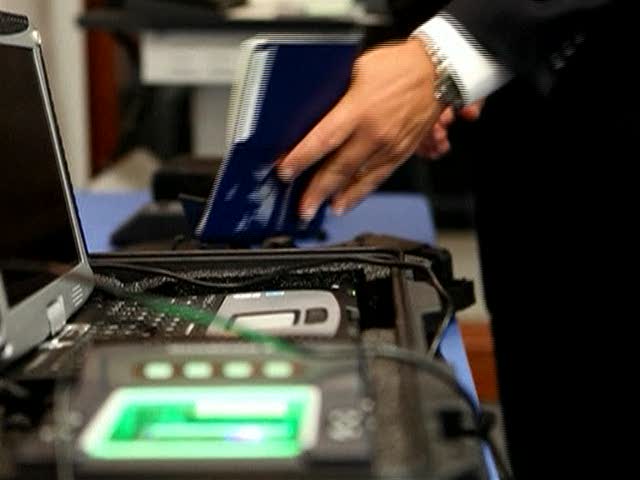 How certain was the U.S. Navy Seal team that it was Osama Bin Laden they shot, killed and buried at sea? According to a Florida company that makes biometric identification equipment, there's no doubt the Seals got their man.
more »
How certain was the U.S. Navy Seal team that it was Osama Bin Laden they shot, killed and buried at sea? According to a Florida company that makes biometric identification equipment, there's no doubt the Seals got their man.
more »
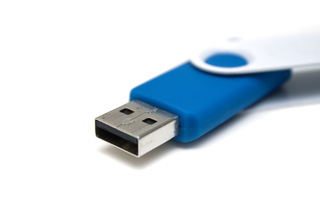 David Braben, the founder of Frontier Developments from Great Britain, has developed a small and very cheap computer "Raspberry Pi".
more »
David Braben, the founder of Frontier Developments from Great Britain, has developed a small and very cheap computer "Raspberry Pi".
more »
 Online music service Spotify is turning up the heat on Apple as it aims to create an alternative to iTunes.
more »
Online music service Spotify is turning up the heat on Apple as it aims to create an alternative to iTunes.
more »
 Kingston Queen's University specialists have developed the world's first prototype of flexible minicomputer.
more »
Kingston Queen's University specialists have developed the world's first prototype of flexible minicomputer.
more »