Congress continues to tackle the question of whether to keep the Internet a largely tax-free shopping zone or pave the way for states to collect sales taxes on most online purchases.
Published:
30 April 2001 y., Monday
There is little doubt lawmakers will extend a moratorium expiring this October that bars taxes on Internet access and prohibits taxes that single out the Internet. The bigger question: What to do about sales taxes? While laws in 45 states say those taxes are owed, they rarely are collected.
At stake are billions of dollars in revenue for state and local governments as well as tax fairness between traditional brick-and-mortar retailers and their Internet and catalog competitors.
Congress' General Accounting Office has estimated that uncollected sales taxes on Internet purchases could cost the states $12.5 billion in 2003. Remote sellers, meanwhile, say complying with thousands of different taxing jurisdictions would create a costly new burden - and could lead to imposition of more taxes in the future.
The taxes are not collected now mainly because of the Supreme Court, which has ruled that a business must have a physical presence - such as a warehouse, a retail store or an executive office - before a state can require sales tax collections on out-of-state purchases. Few states have tried to force their citizens to pay the tax from remote sales on their own.
In the Senate, negotiators have tentatively agreed on an extension of the moratorium through 2006. The measure would also expand states' sales tax collection authority, but only if at least 25 states simplify their own multiple tax rates. Congress would still have to give final approval to the new system.
Šaltinis:
nandotimes.com
Copying, publishing, announcing any information from the News.lt portal without written permission of News.lt editorial office is prohibited.
The most popular articles
Software company announced new structure_ of it_s business.
more »
 Wincor Nixdorf supports banks in networking their delivery channels and enables new customer services by continuously developing its ProClassic/Enterprise Retail Banking Solution Suite.
more »
Wincor Nixdorf supports banks in networking their delivery channels and enables new customer services by continuously developing its ProClassic/Enterprise Retail Banking Solution Suite.
more »
 From the opening of new branches to their operation and modernization – Wincor Nixdorf presents its end-to-end offer for a branch’s entire lifecycle and shows what state-of-the-art branch design can look like.
more »
From the opening of new branches to their operation and modernization – Wincor Nixdorf presents its end-to-end offer for a branch’s entire lifecycle and shows what state-of-the-art branch design can look like.
more »
 Visa will hold its first one-day Key Management Training series in conjunction with ATMIA.
more »
Visa will hold its first one-day Key Management Training series in conjunction with ATMIA.
more »
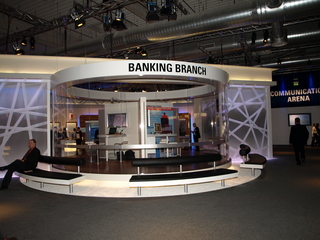 The United States is at the center of many conversations in Europe these days.
more »
The United States is at the center of many conversations in Europe these days.
more »
 Wincor Nixdorf is moving toward the new European standard EPAS (Electronic Protocols Application Software), which is now available as part of the introduction of SEPA for integrating cashless payment solutions in checkouts.
more »
Wincor Nixdorf is moving toward the new European standard EPAS (Electronic Protocols Application Software), which is now available as part of the introduction of SEPA for integrating cashless payment solutions in checkouts.
more »
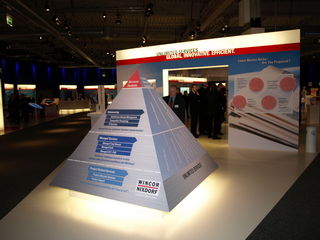 Wincor Nixdorf expands Professional Services portfolio.
more »
Wincor Nixdorf expands Professional Services portfolio.
more »
 Over the years, Wincor World has developed into a premier branch event. It is an important communications forum for the 40 partner companies participating in the event and provides an ideal platform for exhibiting more than 600 IT solutions and services.
more »
Over the years, Wincor World has developed into a premier branch event. It is an important communications forum for the 40 partner companies participating in the event and provides an ideal platform for exhibiting more than 600 IT solutions and services.
more »
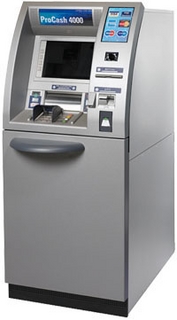 Three-tier concept for more security.
more »
Three-tier concept for more security.
more »
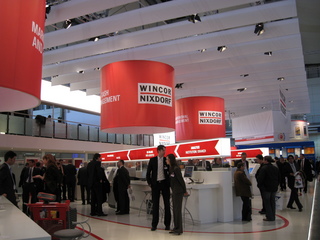 The transfer and processing of transactions with debit and credit cards generates a high administration overhead for financial institutes and retail companies alike, and also requires a suitable IT infrastructure.
more »
The transfer and processing of transactions with debit and credit cards generates a high administration overhead for financial institutes and retail companies alike, and also requires a suitable IT infrastructure.
more »
 International Education Assessment Leaders PISA and TIMSS Endorse Project, Plan to Incorporate Key Findings into Next Versions of International Benchmarks
more »
International Education Assessment Leaders PISA and TIMSS Endorse Project, Plan to Incorporate Key Findings into Next Versions of International Benchmarks
more »