Hewlett-Packard's future vision of shopping online
Published:
3 April 2003 y., Thursday
You are traveling through a dimly lit maze of brick walls with various posters looming back at you. Suddenly, you turn to view one and with a click of a mouse, a movie starts playing.
It's not the latest video game - it's Hewlett-Packard's future vision of shopping online.
The Palo Alto, Calif.-based computer and printer maker recently unveiled its VEDA (virtual environment design automation) project to the press. The OpenGL and XML-based application is used as a visualization database that can be viewed in 3D to create online stores that you can walk through on your monitor, browsing through rooms of items sorted by your category of choice.
Inspired by first-person video games, the demo showed some eerily similar qualities to shooting games like Doom and Quake. However, HP Labs research scientists Nelson Chang and Amir Said assured there were no mutants or monsters crouching behind the turns, only endless possibilities for enterprise.
"Here you have an interface that a 10-year-old kid could understand," said Chang. "Instead of a static Web page, you have interactive content that appeals to users visual senses and adds the benefits of physical stores to online stores."
Chang said VEDA's backend software creates a framework for rich media including audio, video, and 3D models, which could be manipulated. The demo simulated a trip through HP's product catalogue including cameras and other materials that could be viewed 360-degrees. The virtual store could also be approached at the floor level or from a third-person overhead advantage point, allowing the user to skip to other sections without getting lost.
Šaltinis:
internetnews.com
Copying, publishing, announcing any information from the News.lt portal without written permission of News.lt editorial office is prohibited.
The most popular articles
Software company announced new structure_ of it_s business.
more »
 It was reported that yesterday Canadian Sony Ericsson internet store was attacked
more »
It was reported that yesterday Canadian Sony Ericsson internet store was attacked
more »
 Worldwide mobile communication device sales to end users totaled 427.8 million units in the first quarter of 2011, an increase of 19 percent from the first quarter of 2010, according to Gartner, Inc.
more »
Worldwide mobile communication device sales to end users totaled 427.8 million units in the first quarter of 2011, an increase of 19 percent from the first quarter of 2010, according to Gartner, Inc.
more »
 At the Computer Human Interaction conference in B.C. this week, a team from Texas A&M University unveiled a touch screen technology they’ve been incubating for a couple of years that isn’t really a screen at all.
more »
At the Computer Human Interaction conference in B.C. this week, a team from Texas A&M University unveiled a touch screen technology they’ve been incubating for a couple of years that isn’t really a screen at all.
more »
 A fully autonomous robot, Pneubron 7-11 has been created at the Hosoda Labs in Osaka University. The Pneubron robot was designed to find the link between human interactions and motor development.
more »
A fully autonomous robot, Pneubron 7-11 has been created at the Hosoda Labs in Osaka University. The Pneubron robot was designed to find the link between human interactions and motor development.
more »
 The ability to control objects simply by thinking about them is the subject of serious research in laboratories around the world with wheelchairs and even cars now being driven by the power of the mind. It's all very serious science, but in Japan, technologists are demonstrating that mind control can also be a lot of fun.
more »
The ability to control objects simply by thinking about them is the subject of serious research in laboratories around the world with wheelchairs and even cars now being driven by the power of the mind. It's all very serious science, but in Japan, technologists are demonstrating that mind control can also be a lot of fun.
more »
 Microsoft is planning on ramping up the amount of advertising free users of Skype see while they are making video calls and using the rest of the service.
more »
Microsoft is planning on ramping up the amount of advertising free users of Skype see while they are making video calls and using the rest of the service.
more »
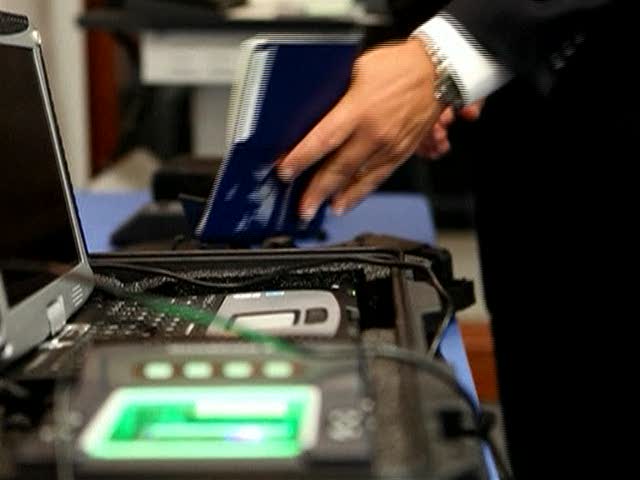 How certain was the U.S. Navy Seal team that it was Osama Bin Laden they shot, killed and buried at sea? According to a Florida company that makes biometric identification equipment, there's no doubt the Seals got their man.
more »
How certain was the U.S. Navy Seal team that it was Osama Bin Laden they shot, killed and buried at sea? According to a Florida company that makes biometric identification equipment, there's no doubt the Seals got their man.
more »
 David Braben, the founder of Frontier Developments from Great Britain, has developed a small and very cheap computer "Raspberry Pi".
more »
David Braben, the founder of Frontier Developments from Great Britain, has developed a small and very cheap computer "Raspberry Pi".
more »
 Online music service Spotify is turning up the heat on Apple as it aims to create an alternative to iTunes.
more »
Online music service Spotify is turning up the heat on Apple as it aims to create an alternative to iTunes.
more »
 Kingston Queen's University specialists have developed the world's first prototype of flexible minicomputer.
more »
Kingston Queen's University specialists have developed the world's first prototype of flexible minicomputer.
more »