Users of Microsoft's forthcoming security software will have the ability to turn its protection on and off at will, the company says
Published:
21 June 2003 y., Saturday
Users of Microsoft's forthcoming security software will have the ability to turn its protection on and off at will, the company says. But applications making use of the security features won't be able to support video or other sophisticated interfaces.
During a demonstration of PCs running an early version of Microsoft's Next-Generation Secure Computing Base, an upcoming feature of Windows better known as Palladium, group product manager Mario Juarez said Microsoft's design goals for the technology include the ability for users to decide whether or not to run applications in a secure mode. There will be an on-screen icon or signal light to show when Palladium is on.
Palladium, expected to arrive in Windows "Longhorn," which is due in two years, uses a secure portion of Windows and a special cryptographic chip to prevent drivers and applications from talking directly to memory, input/output, or other hardware, in order to thwart hackers. But apps protected by Palladium won't be able to run video-based applications inside their windows. Graphics chips will need to be modified to work with Palladium, Juarez says.
Šaltinis:
InformationWeek
Copying, publishing, announcing any information from the News.lt portal without written permission of News.lt editorial office is prohibited.
The most popular articles
Software company announced new structure_ of it_s business.
more »
 It was reported that yesterday Canadian Sony Ericsson internet store was attacked
more »
It was reported that yesterday Canadian Sony Ericsson internet store was attacked
more »
 Worldwide mobile communication device sales to end users totaled 427.8 million units in the first quarter of 2011, an increase of 19 percent from the first quarter of 2010, according to Gartner, Inc.
more »
Worldwide mobile communication device sales to end users totaled 427.8 million units in the first quarter of 2011, an increase of 19 percent from the first quarter of 2010, according to Gartner, Inc.
more »
 At the Computer Human Interaction conference in B.C. this week, a team from Texas A&M University unveiled a touch screen technology they’ve been incubating for a couple of years that isn’t really a screen at all.
more »
At the Computer Human Interaction conference in B.C. this week, a team from Texas A&M University unveiled a touch screen technology they’ve been incubating for a couple of years that isn’t really a screen at all.
more »
 A fully autonomous robot, Pneubron 7-11 has been created at the Hosoda Labs in Osaka University. The Pneubron robot was designed to find the link between human interactions and motor development.
more »
A fully autonomous robot, Pneubron 7-11 has been created at the Hosoda Labs in Osaka University. The Pneubron robot was designed to find the link between human interactions and motor development.
more »
 The ability to control objects simply by thinking about them is the subject of serious research in laboratories around the world with wheelchairs and even cars now being driven by the power of the mind. It's all very serious science, but in Japan, technologists are demonstrating that mind control can also be a lot of fun.
more »
The ability to control objects simply by thinking about them is the subject of serious research in laboratories around the world with wheelchairs and even cars now being driven by the power of the mind. It's all very serious science, but in Japan, technologists are demonstrating that mind control can also be a lot of fun.
more »
 Microsoft is planning on ramping up the amount of advertising free users of Skype see while they are making video calls and using the rest of the service.
more »
Microsoft is planning on ramping up the amount of advertising free users of Skype see while they are making video calls and using the rest of the service.
more »
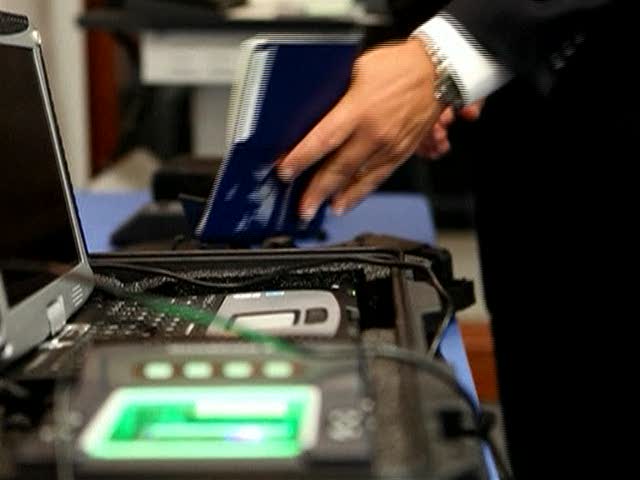 How certain was the U.S. Navy Seal team that it was Osama Bin Laden they shot, killed and buried at sea? According to a Florida company that makes biometric identification equipment, there's no doubt the Seals got their man.
more »
How certain was the U.S. Navy Seal team that it was Osama Bin Laden they shot, killed and buried at sea? According to a Florida company that makes biometric identification equipment, there's no doubt the Seals got their man.
more »
 David Braben, the founder of Frontier Developments from Great Britain, has developed a small and very cheap computer "Raspberry Pi".
more »
David Braben, the founder of Frontier Developments from Great Britain, has developed a small and very cheap computer "Raspberry Pi".
more »
 Online music service Spotify is turning up the heat on Apple as it aims to create an alternative to iTunes.
more »
Online music service Spotify is turning up the heat on Apple as it aims to create an alternative to iTunes.
more »
 Kingston Queen's University specialists have developed the world's first prototype of flexible minicomputer.
more »
Kingston Queen's University specialists have developed the world's first prototype of flexible minicomputer.
more »