Next-generation telecommunications.
Published:
6 July 1999 y., Tuesday
The proceedings of last week_s Family Re-Union 8 symposium moderated by Vice President Al Gore at Vanderbilt University were available over the world_ most advanced network, Internet2. Campuses linked to the network could view this video-on-demand demonstration project. What will enable this and other advanced applications to become widely available in the future is the deployment of high-speed digital networks. Internet2 is the incubator for emerging technologies that will shape the future of the global Internet. Formed in October, 1996 and administered by the University Corporation for Advanced Internet Development (UCAID), Internet2 now encompasses 154 participating universities, 55 corporate members and numerous government agencies, with an annual investment of over $80 million. Internet2 is a consortium of hundreds of high-speed networks linked via two fiber optic backbones that span the country. Qwest Communications, Cisco Systems, Nortel Networks and Indiana University developed one called Abilene. The other is the very high-performance Backbone Network Service (vBNS), developed by the National Science Foundation and MCI WorldCom. Together they are capable of data transfer at speeds up to 2.4 gigabits per second--90,000 times faster than a 28.8K modem. Researchers say that while they have been able to get new technologies to perform in the lab, they must test them in the real world to see if they can scale to thousands of users. Internet2 is the petri dish for network experiments. At the summit, NASA demonstrated the Virtual Collaborative Clinic, which connects medical facilities around the country. It lets doctors manipulate high-resolution, 3D images of MRI scans and other medical imaging. Not only can doctors consult and diagnose, but they can simulate surgery by using a "CyberScalpel." Virtual surgery will give surgeons an opportunity to prepare before ever entering the operating room, reducing the time required for the actual procedure. NASA plans to use the technology to provide remote healthcare to astronauts probing space They do know that for future applications to run effectively, the infrastructure of the existing Internet will have to be significantly upgraded.
Šaltinis:
Forbes.com
Copying, publishing, announcing any information from the News.lt portal without written permission of News.lt editorial office is prohibited.
The most popular articles
Software company announced new structure_ of it_s business.
more »
 It was reported that yesterday Canadian Sony Ericsson internet store was attacked
more »
It was reported that yesterday Canadian Sony Ericsson internet store was attacked
more »
 Worldwide mobile communication device sales to end users totaled 427.8 million units in the first quarter of 2011, an increase of 19 percent from the first quarter of 2010, according to Gartner, Inc.
more »
Worldwide mobile communication device sales to end users totaled 427.8 million units in the first quarter of 2011, an increase of 19 percent from the first quarter of 2010, according to Gartner, Inc.
more »
 At the Computer Human Interaction conference in B.C. this week, a team from Texas A&M University unveiled a touch screen technology they’ve been incubating for a couple of years that isn’t really a screen at all.
more »
At the Computer Human Interaction conference in B.C. this week, a team from Texas A&M University unveiled a touch screen technology they’ve been incubating for a couple of years that isn’t really a screen at all.
more »
 A fully autonomous robot, Pneubron 7-11 has been created at the Hosoda Labs in Osaka University. The Pneubron robot was designed to find the link between human interactions and motor development.
more »
A fully autonomous robot, Pneubron 7-11 has been created at the Hosoda Labs in Osaka University. The Pneubron robot was designed to find the link between human interactions and motor development.
more »
 The ability to control objects simply by thinking about them is the subject of serious research in laboratories around the world with wheelchairs and even cars now being driven by the power of the mind. It's all very serious science, but in Japan, technologists are demonstrating that mind control can also be a lot of fun.
more »
The ability to control objects simply by thinking about them is the subject of serious research in laboratories around the world with wheelchairs and even cars now being driven by the power of the mind. It's all very serious science, but in Japan, technologists are demonstrating that mind control can also be a lot of fun.
more »
 Microsoft is planning on ramping up the amount of advertising free users of Skype see while they are making video calls and using the rest of the service.
more »
Microsoft is planning on ramping up the amount of advertising free users of Skype see while they are making video calls and using the rest of the service.
more »
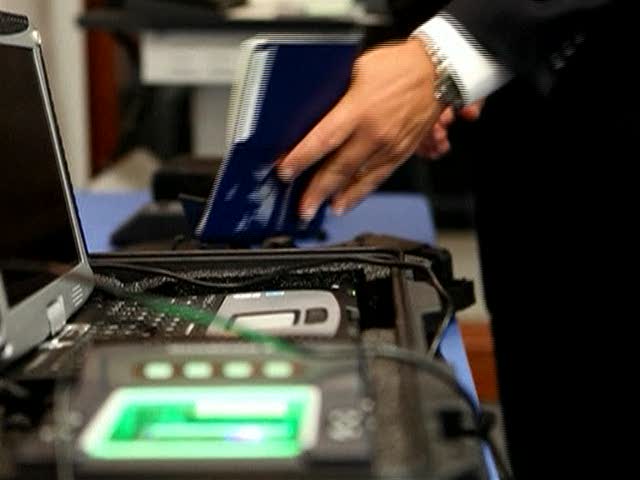 How certain was the U.S. Navy Seal team that it was Osama Bin Laden they shot, killed and buried at sea? According to a Florida company that makes biometric identification equipment, there's no doubt the Seals got their man.
more »
How certain was the U.S. Navy Seal team that it was Osama Bin Laden they shot, killed and buried at sea? According to a Florida company that makes biometric identification equipment, there's no doubt the Seals got their man.
more »
 David Braben, the founder of Frontier Developments from Great Britain, has developed a small and very cheap computer "Raspberry Pi".
more »
David Braben, the founder of Frontier Developments from Great Britain, has developed a small and very cheap computer "Raspberry Pi".
more »
 Online music service Spotify is turning up the heat on Apple as it aims to create an alternative to iTunes.
more »
Online music service Spotify is turning up the heat on Apple as it aims to create an alternative to iTunes.
more »
 Kingston Queen's University specialists have developed the world's first prototype of flexible minicomputer.
more »
Kingston Queen's University specialists have developed the world's first prototype of flexible minicomputer.
more »