Specialists from the State Protection Office (UOP) have developed an e-mail safety code scheme for use in NATO countries' national security systems
Published:
12 May 2001 y., Saturday
Specialists from the State Protection Office (UOP) have developed an e-mail safety code scheme for use in NATO countries' national security systems, PAP reported on 10 May. "This is in line with the best Polish traditions. After all, it was the Poles who broke [Nazi Germany's] Enigma [code]," Prime Minister Jerzy Buzek said during a meeting with UOP head Zbigniew Nowek.
Nowek refused to elaborate on the new e-mail encryption system, saying only that it is better than those used in the U.S. and Germany. "We have been commissioned to train nine NATO candidates in security. This is a big distinction," Buzek said.
Šaltinis:
rferl.org
Copying, publishing, announcing any information from the News.lt portal without written permission of News.lt editorial office is prohibited.
The most popular articles
Software company announced new structure_ of it_s business.
more »
 A new generation of smart phone "iPhone5" will go on sale in September.
more »
A new generation of smart phone "iPhone5" will go on sale in September.
more »
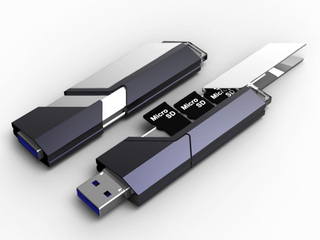 The Collector USB Flash Drive is one awesome concept that I’d love to see on shelves.
more »
The Collector USB Flash Drive is one awesome concept that I’d love to see on shelves.
more »
 Internet Giant Google announced that they will be investing $168 million in a solar energy power plant being developed in the Mojave Desert by the startup BrightSource Energy.
more »
Internet Giant Google announced that they will be investing $168 million in a solar energy power plant being developed in the Mojave Desert by the startup BrightSource Energy.
more »
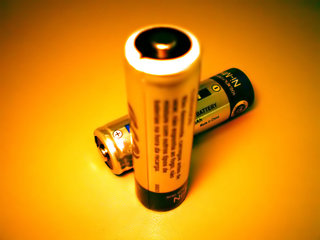 New battery in your phone or laptop, that is charged hundreds of times faster.
more »
New battery in your phone or laptop, that is charged hundreds of times faster.
more »
 Facebook has announced that it will share the design secrets behind its new energy-efficient data centre with rival companies.
more »
Facebook has announced that it will share the design secrets behind its new energy-efficient data centre with rival companies.
more »
 The powerful new 15.6” ASUS-Automobili Lamborghini VX7 offers a completely revamped notebook experience...
more »
The powerful new 15.6” ASUS-Automobili Lamborghini VX7 offers a completely revamped notebook experience...
more »
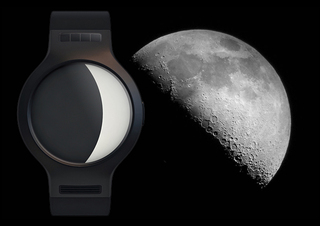 Moonwatch clock is designed to determine the relation between lunar cycle and human emotions.
more »
Moonwatch clock is designed to determine the relation between lunar cycle and human emotions.
more »
 Every year, Fortune magazine comes out with its list of the Most Admired Companies in the world.
more »
Every year, Fortune magazine comes out with its list of the Most Admired Companies in the world.
more »
 NASA's Messenger spacecraft delivers its first photos of Mercury and the first images ever taken from the rocky planet's own orbit.
more »
NASA's Messenger spacecraft delivers its first photos of Mercury and the first images ever taken from the rocky planet's own orbit.
more »
What is the current role and likely future role of social media tools like Facebook and Twitter in framing European discourse?
more »