Romania emerges as new world nexus of cybercrime
Published:
25 October 2003 y., Saturday
It was nearly 70 degrees below zero outside, but the e-mail on a computer at the South Pole Research Center sent a different kind of chill through the scientists inside.
"I've hacked into the server. Pay me off or I'll sell the station's data to another country and tell the world how vulnerable you are," the message warned.
Proving it was no hoax, the message included scientific data showing the extortionist had roamed freely around the server, which controlled the 50 researchers' life-support systems.
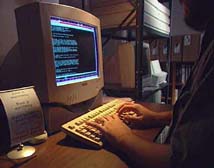
The FBI traced the e-mail to an Internet cafe in Bucharest and helped Romanian police arrest two locals - the latest evidence that computer-savvy Romanians are fast emerging as a bold menace in the shadowy world of cybercrime.
"It's one of the leading places for this kind of activity," said Gabrielle Burger, who runs the FBI's office in Bucharest and is working with Romanian authorities to arrest suspects.
Law enforcement documents obtained by The Associated Press portray a loosely organized but increasingly aggressive network of young Romanians conspiring with accomplices in Europe and the United States to steal millions of dollars each year from consumers and companies.
Their specialties: defrauding consumers through bogus Internet purchases, extorting cash from companies after hacking into their systems, and designing and releasing computer-crippling worms and viruses.
Alarmed authorities say the South Pole case underscores the global impact of this new breed of cyber-outlaw.
Today, Romanians get their first computer lessons in nursery school. Universities have top-notch IT programs whose graduates are heavily recruited by Western companies. Microsoft Corp. recently acquired GeCAD, a leading Bucharest data-security firm.
Šaltinis:
tallahassee.com
Copying, publishing, announcing any information from the News.lt portal without written permission of News.lt editorial office is prohibited.
The most popular articles
Software company announced new structure_ of it_s business.
more »
 A number of MEPs urged Internal Market Commissioner Michel Barnier to come up with common rules to regulate cross border online gambling in Europe.
more »
A number of MEPs urged Internal Market Commissioner Michel Barnier to come up with common rules to regulate cross border online gambling in Europe.
more »
 Think before you post as once you do it is online forever. That was the message on Safer Internet Day marked on 9 February by a seminar in the European Parliament.
more »
Think before you post as once you do it is online forever. That was the message on Safer Internet Day marked on 9 February by a seminar in the European Parliament.
more »
 50% of European teenagers give out personal information on the web – according to an EU study – which can remain online forever and can be seen by anybody.
more »
50% of European teenagers give out personal information on the web – according to an EU study – which can remain online forever and can be seen by anybody.
more »
 When did the Commission start working on social networking sites?
more »
When did the Commission start working on social networking sites?
more »
 ICSA Labs, an independent division of Verizon Business, is the first independent security-product testing and certification laboratory to earn ISO/IEC 17025 accreditation, validating the laboratory's world-class capabilities.
more »
ICSA Labs, an independent division of Verizon Business, is the first independent security-product testing and certification laboratory to earn ISO/IEC 17025 accreditation, validating the laboratory's world-class capabilities.
more »
 From today, European citizens, businesses and organisations can register .eu website names using characters from all 23 official languages of the European Union.
more »
From today, European citizens, businesses and organisations can register .eu website names using characters from all 23 official languages of the European Union.
more »
 Authorities investigated 301 mobile phone services websites in follow-up to EU crackdown on misleading consumer practices.
more »
Authorities investigated 301 mobile phone services websites in follow-up to EU crackdown on misleading consumer practices.
more »
 After nearly 2 years of legislative work the Telecom Package is due to be put to a final vote in Parliament on 24 November in Strasbourg.
more »
After nearly 2 years of legislative work the Telecom Package is due to be put to a final vote in Parliament on 24 November in Strasbourg.
more »
 The Christian Science Monitor reports that three men have been named as being the masterminds behind the hacking of RBS WorldPay, a subsidiary of the Royal Bank of Scotland.
more »
The Christian Science Monitor reports that three men have been named as being the masterminds behind the hacking of RBS WorldPay, a subsidiary of the Royal Bank of Scotland.
more »
 BAI’s Banking Strategies Insights reports that banks must get serious about improving their ATMs, especially in the area of envelope-free deposit.
more »
BAI’s Banking Strategies Insights reports that banks must get serious about improving their ATMs, especially in the area of envelope-free deposit.
more »