The battle between Microsoft, RealNetworks and other streaming software companies is moving from the desktop to the cell phone.
Published:
24 February 2001 y., Saturday
As the companies jockey for position in the wireless world, the race is on to secure critical partnerships with manufacturers and chipmakers to beam music, newscasts and other data to next-generation handheld devices.
Streaming technology allows people to tap into audio and video without having to download large files. Like many other Internet players, streaming software companies see cell phones as devices that will let them step away from the confines of desktop PCs. Going mobile has the potential to resolve some standards issues that have plagued streaming technology thus far, analysts say, but it will likely take time to convince consumers that cell phones are ideal for watching videos and listening to music.
Still, streaming software companies are preparing for the day the market takes off. Just this week, Microsoft said it would team with Texas Instruments to support Windows Media audio, video and digital rights management technology on the chipmaker's DSP-based processors for wireless Internet devices. The collaboration will allow mobile phone manufacturers to offer Windows Media Player on new products.
The announcement follows a key partnership with NTT DoCoMo to serve up Windows Media on a device dubbed Eggy. About 60 devices now support Microsoft's digital music software, said Michael Aldridge, lead product manager for Microsoft's Windows digital media division.
RealNetworks has struck a similar deal with Texas Instruments that lets its audio players run on wireless devices. The Seattle-based company also scored a deal with Nokia last year, in which the RealPlayer technology will be bundled in Nokia's new smart phones.
Šaltinis:
CNET News.com
Copying, publishing, announcing any information from the News.lt portal without written permission of News.lt editorial office is prohibited.
The most popular articles
Software company announced new structure_ of it_s business.
more »
 It was reported that yesterday Canadian Sony Ericsson internet store was attacked
more »
It was reported that yesterday Canadian Sony Ericsson internet store was attacked
more »
 Worldwide mobile communication device sales to end users totaled 427.8 million units in the first quarter of 2011, an increase of 19 percent from the first quarter of 2010, according to Gartner, Inc.
more »
Worldwide mobile communication device sales to end users totaled 427.8 million units in the first quarter of 2011, an increase of 19 percent from the first quarter of 2010, according to Gartner, Inc.
more »
 At the Computer Human Interaction conference in B.C. this week, a team from Texas A&M University unveiled a touch screen technology they’ve been incubating for a couple of years that isn’t really a screen at all.
more »
At the Computer Human Interaction conference in B.C. this week, a team from Texas A&M University unveiled a touch screen technology they’ve been incubating for a couple of years that isn’t really a screen at all.
more »
 A fully autonomous robot, Pneubron 7-11 has been created at the Hosoda Labs in Osaka University. The Pneubron robot was designed to find the link between human interactions and motor development.
more »
A fully autonomous robot, Pneubron 7-11 has been created at the Hosoda Labs in Osaka University. The Pneubron robot was designed to find the link between human interactions and motor development.
more »
 The ability to control objects simply by thinking about them is the subject of serious research in laboratories around the world with wheelchairs and even cars now being driven by the power of the mind. It's all very serious science, but in Japan, technologists are demonstrating that mind control can also be a lot of fun.
more »
The ability to control objects simply by thinking about them is the subject of serious research in laboratories around the world with wheelchairs and even cars now being driven by the power of the mind. It's all very serious science, but in Japan, technologists are demonstrating that mind control can also be a lot of fun.
more »
 Microsoft is planning on ramping up the amount of advertising free users of Skype see while they are making video calls and using the rest of the service.
more »
Microsoft is planning on ramping up the amount of advertising free users of Skype see while they are making video calls and using the rest of the service.
more »
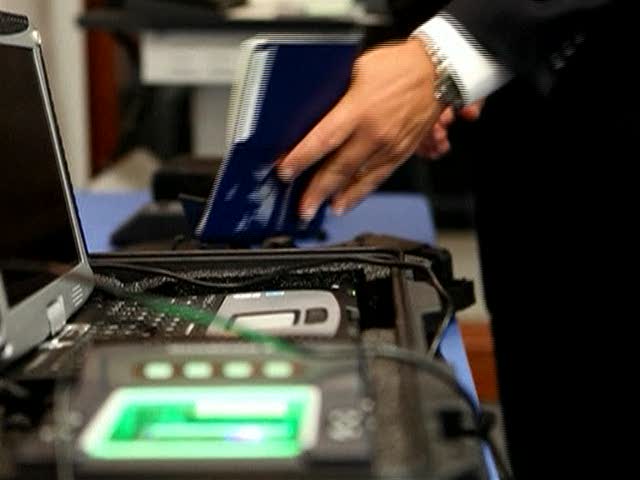 How certain was the U.S. Navy Seal team that it was Osama Bin Laden they shot, killed and buried at sea? According to a Florida company that makes biometric identification equipment, there's no doubt the Seals got their man.
more »
How certain was the U.S. Navy Seal team that it was Osama Bin Laden they shot, killed and buried at sea? According to a Florida company that makes biometric identification equipment, there's no doubt the Seals got their man.
more »
 David Braben, the founder of Frontier Developments from Great Britain, has developed a small and very cheap computer "Raspberry Pi".
more »
David Braben, the founder of Frontier Developments from Great Britain, has developed a small and very cheap computer "Raspberry Pi".
more »
 Online music service Spotify is turning up the heat on Apple as it aims to create an alternative to iTunes.
more »
Online music service Spotify is turning up the heat on Apple as it aims to create an alternative to iTunes.
more »
 Kingston Queen's University specialists have developed the world's first prototype of flexible minicomputer.
more »
Kingston Queen's University specialists have developed the world's first prototype of flexible minicomputer.
more »