Benchmarking Europe with Japan and the US
Published:
17 April 2001 y., Tuesday
Durlacher's recent report - UMTS Report: An investment perspective - identifies the global mobile wireless market as three distinct types of markets:
Mobile operator driven
Internet-driven
Technology-driven
Mobile operator-driven markets are characterized by countries with low internet penetration but high mobile services penetration (e.g. Japan). Due to the dynamics of the economies in these countries, network operators can influence content, and employ a closed portal strategy.
Internet-driven markets are composed of markets with high penetration of internet and relatively low penetration of mobile services. ISPs, portals, application developers and content providers who have matured in the internet world are dominant players in this market. The US is a good example of this type of market.
In Europe the mobile and internet markets are diverse. Northern Europe is a heavy user of both mobile communications and fixed internet access. In Finland for example, there is mobile penetration rate of 75% and fixed line internet access of 50%, according to Durlacher. Countries such as Germany, the UK and the Netherlands are quickly catching up to the Scandinavian countries in terms of both internet and mobile penetration. Southern European countries have high mobile penetration, but have low fixed internet access penetration. Durlacher reports that Italy, for example, had 12% penetration of fixed line internet and 65% penetration of mobile phones in late 2000.
NTT DoCoMo's position in Japan is unique in that it is the dominant operator in the mobile market and is well protected from entry of newcomers. Its dominant position has enabled the company to dictate the development of the technology enablers for the I-mode concept. This includes networks, terminals and applications. While NTT DoCoMo controls 59% of the mobile market, KDDI and J-Phone, two other large mobile operators in Japan, have advanced quickly into the mobile space. Japan leads the world in mobile data and internet services and will be the test bed for 3G services.
While the North American market leads the world in internet adoption and e-commerce, it lags when it comes to the mobile sector. The multiple technology standards and coverage issues have held back quality and service levels in comparison with leading regions in Europe. 3G license auctions have been postponed to 2002, which will delay the commencement of next-generation mobile services in the US. Another significant factor holding back the development of mobile wireless in the US is the fact that mobile operators employ the "Calling Party Pays" system.
Šaltinis:
emarketer.com
Copying, publishing, announcing any information from the News.lt portal without written permission of News.lt editorial office is prohibited.
The most popular articles
Software company announced new structure_ of it_s business.
more »
 It was reported that yesterday Canadian Sony Ericsson internet store was attacked
more »
It was reported that yesterday Canadian Sony Ericsson internet store was attacked
more »
 Worldwide mobile communication device sales to end users totaled 427.8 million units in the first quarter of 2011, an increase of 19 percent from the first quarter of 2010, according to Gartner, Inc.
more »
Worldwide mobile communication device sales to end users totaled 427.8 million units in the first quarter of 2011, an increase of 19 percent from the first quarter of 2010, according to Gartner, Inc.
more »
 At the Computer Human Interaction conference in B.C. this week, a team from Texas A&M University unveiled a touch screen technology they’ve been incubating for a couple of years that isn’t really a screen at all.
more »
At the Computer Human Interaction conference in B.C. this week, a team from Texas A&M University unveiled a touch screen technology they’ve been incubating for a couple of years that isn’t really a screen at all.
more »
 A fully autonomous robot, Pneubron 7-11 has been created at the Hosoda Labs in Osaka University. The Pneubron robot was designed to find the link between human interactions and motor development.
more »
A fully autonomous robot, Pneubron 7-11 has been created at the Hosoda Labs in Osaka University. The Pneubron robot was designed to find the link between human interactions and motor development.
more »
 The ability to control objects simply by thinking about them is the subject of serious research in laboratories around the world with wheelchairs and even cars now being driven by the power of the mind. It's all very serious science, but in Japan, technologists are demonstrating that mind control can also be a lot of fun.
more »
The ability to control objects simply by thinking about them is the subject of serious research in laboratories around the world with wheelchairs and even cars now being driven by the power of the mind. It's all very serious science, but in Japan, technologists are demonstrating that mind control can also be a lot of fun.
more »
 Microsoft is planning on ramping up the amount of advertising free users of Skype see while they are making video calls and using the rest of the service.
more »
Microsoft is planning on ramping up the amount of advertising free users of Skype see while they are making video calls and using the rest of the service.
more »
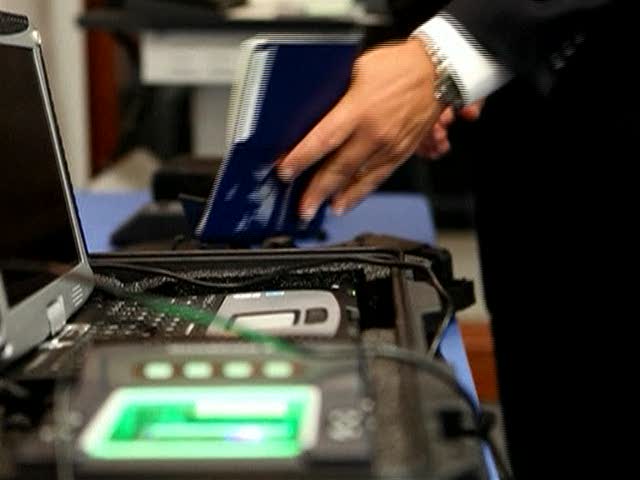 How certain was the U.S. Navy Seal team that it was Osama Bin Laden they shot, killed and buried at sea? According to a Florida company that makes biometric identification equipment, there's no doubt the Seals got their man.
more »
How certain was the U.S. Navy Seal team that it was Osama Bin Laden they shot, killed and buried at sea? According to a Florida company that makes biometric identification equipment, there's no doubt the Seals got their man.
more »
 David Braben, the founder of Frontier Developments from Great Britain, has developed a small and very cheap computer "Raspberry Pi".
more »
David Braben, the founder of Frontier Developments from Great Britain, has developed a small and very cheap computer "Raspberry Pi".
more »
 Online music service Spotify is turning up the heat on Apple as it aims to create an alternative to iTunes.
more »
Online music service Spotify is turning up the heat on Apple as it aims to create an alternative to iTunes.
more »
 Kingston Queen's University specialists have developed the world's first prototype of flexible minicomputer.
more »
Kingston Queen's University specialists have developed the world's first prototype of flexible minicomputer.
more »