Idea of "total war" redefined the conduct of armies against foreign populations in the mid-20th century.
Published:
13 December 2000 y., Wednesday
The Internet now offers people the opportunity to communicate with others around the world almost as if they were neighbors.
Through the Internet, people can gain access to local papers in the native language or dialect, browse personal Web sites, listen to local radio stations talking about local concerns and even watch everyday life unfold via thousands of Web cams pointing at everything from street corners to gold fish bowls.
The Internet, after all, was designed by the U.S. military for war, as a way to maintain communication networks even in the case of a massive attack. The distributed nature of the Internet makes this possible.
This distribution of nodes and centers of control may in fact redefine some of our most basic notions of war in much the same way that the idea of "total war" redefined the conduct of armies against foreign populations in the mid-20th century.
The idea of cyberwar does offer considerable appeal to any military capable of establishing such a program. After all, wars are messy and people, especially when confronted with the visual images of war, tend to have a negative disposition toward these activities.
Cyberwar, on the other hand, offers the possibility of "cleaning" war up a bit with no bombs (or perhaps much fewer bombs), no direct "collateral damage" and really no center of attention to videotape. Ironically, while cyberwar has the potential of being everywhere all at once it also offers the ability to defocus the conduct of war to the point where it may almost appear invisible.
The effectiveness of cyberwar depends on two factors. The first is the degree to which a nation's life-support system is connected electronically. And second, it depends on the ability of the aggressor to collect, process and ultimately redirect massive amounts of information.
Šaltinis:
yomiuri.co.jp
Copying, publishing, announcing any information from the News.lt portal without written permission of News.lt editorial office is prohibited.
The most popular articles
Software company announced new structure_ of it_s business.
more »
 Microsoft's Bing search engine will be the sole provider of search and paid search technology for all of Yahoo's websites. Yahoo will sell premium search ads for both companies.
more »
Microsoft's Bing search engine will be the sole provider of search and paid search technology for all of Yahoo's websites. Yahoo will sell premium search ads for both companies.
more »
 Thales UK today announces that its Cat III Instrument Landing System (ILS)1 has received UK approval for installation at Bournemouth Airport.
more »
Thales UK today announces that its Cat III Instrument Landing System (ILS)1 has received UK approval for installation at Bournemouth Airport.
more »
 Postbank customers can now pay their fuel bills at Shell service stations and withdraw cash as stations in Hamburg, Germany, have been converted to the new technology from Wincor Nixdorf International.
more »
Postbank customers can now pay their fuel bills at Shell service stations and withdraw cash as stations in Hamburg, Germany, have been converted to the new technology from Wincor Nixdorf International.
more »
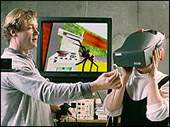 Japanese company Crescent has simulated a series of emergency situations that people may have to deal with in the workplace. By practicing with these simulations they can learn how to cope with a real-life crisis.
more »
Japanese company Crescent has simulated a series of emergency situations that people may have to deal with in the workplace. By practicing with these simulations they can learn how to cope with a real-life crisis.
more »
 The touchscreen device built on Google's Android platform equates to a bold attempt by HTC to take on Apple's popular iPhone - not by creating a copycat - but by building an attractive alternative.
more »
The touchscreen device built on Google's Android platform equates to a bold attempt by HTC to take on Apple's popular iPhone - not by creating a copycat - but by building an attractive alternative.
more »
 A devious piece of criminal coding that has been quietly at work in a clutch of ATMs at banks in Russia and Ukraine has recently been discovered.
more »
A devious piece of criminal coding that has been quietly at work in a clutch of ATMs at banks in Russia and Ukraine has recently been discovered.
more »
 In the person-to-person transfer business, text messaging is so 2008.
more »
In the person-to-person transfer business, text messaging is so 2008.
more »
 Bank Central Asia, one of Indonesia's largest banks, has partnered with Wincor Nixdorf International to rejuvenate its branch network.
more »
Bank Central Asia, one of Indonesia's largest banks, has partnered with Wincor Nixdorf International to rejuvenate its branch network.
more »
 What's cooking at Tokyo's International Food Machinery and Technology Expo? For this robo-chef, it's okonomiaki, Japanese pancakes.
more »
What's cooking at Tokyo's International Food Machinery and Technology Expo? For this robo-chef, it's okonomiaki, Japanese pancakes.
more »
 Taking attendance at Aoyama University used to be a chore, but no longer as the Japanese school is giving over 500 iPhones to students and faculty in an effort to enhance the classroom experience.
more »
Taking attendance at Aoyama University used to be a chore, but no longer as the Japanese school is giving over 500 iPhones to students and faculty in an effort to enhance the classroom experience.
more »