Serial number as a third form of identification.
Published:
28 January 1999 y., Thursday
The security codes to be embedded in Intel_s Pentium III processor can potentially be misused to identify and collect data on Web surfers, some privacy advocates warn. But Intel argues that the technology will actually make the Net a safer place. The controversy has emerged as 30 Web sites prepare to conduct trials of the processor, to be released in February. Critics claim that the number scheme can be used to monitor the Internet habits of virtually anyone with a modern, Intel-based computer. Intel countered that the serial number will actually improve security. The Web sites in the trials, for instance, will use the serial number as a third form of identification, complementing the user name and password schemes currently in place, said Pat Gelsinger, corporate vice president of the Desktop Products Group at Intel. Ideally, hackers couldn_t just assume your identity by swiping your
user name and cracking a password; they would have to steal your computer as well.
Copying, publishing, announcing any information from the News.lt portal without written permission of News.lt editorial office is prohibited.
The most popular articles
Software company announced new structure_ of it_s business.
more »
 The iPhone's new “ATM Hunter” is a a free iPhone application built by MasterCard that allows users to quickly find the ATMs that are closest to them.
more »
The iPhone's new “ATM Hunter” is a a free iPhone application built by MasterCard that allows users to quickly find the ATMs that are closest to them.
more »
 In security breach cases last year, such as Hannaford Bros. supermarket and the card processing firm Heartland Payment Systems, cybercriminals gained access to millions of consumers' credit card details.
more »
In security breach cases last year, such as Hannaford Bros. supermarket and the card processing firm Heartland Payment Systems, cybercriminals gained access to millions of consumers' credit card details.
more »
 Ingenico, a provider of payment solutions, says contactless technology will split the retail market this year, improving sales figures for early adopters and costing those who shun the additional investment in this burgeoning technology.
more »
Ingenico, a provider of payment solutions, says contactless technology will split the retail market this year, improving sales figures for early adopters and costing those who shun the additional investment in this burgeoning technology.
more »
 Widevine Technologies today announced that the US Patent and Trademark Office has reconfirmed the validity of many claims of Widevine's U.S.
more »
Widevine Technologies today announced that the US Patent and Trademark Office has reconfirmed the validity of many claims of Widevine's U.S.
more »
 Nokia Corp., the world's largest maker of cell phones, is making a large investment in California-based Obopay Inc., a startup that's pushing person-to-person mobile-payments technology.
more »
Nokia Corp., the world's largest maker of cell phones, is making a large investment in California-based Obopay Inc., a startup that's pushing person-to-person mobile-payments technology.
more »
 The increasing amount of overlap and duplication of data, tasks and processes in their anti-fraud and anti-money laundering divisions is driving banks to seek synergies between compliance, risk management and security, according to a new report from Datamonitor.
more »
The increasing amount of overlap and duplication of data, tasks and processes in their anti-fraud and anti-money laundering divisions is driving banks to seek synergies between compliance, risk management and security, according to a new report from Datamonitor.
more »
 The total number of IPTV subscribers worldwide passed the 20mn mark at the end of 2008, according to new figures from Informa Telecoms & Media, taking into account both disclosed and estimated figures.
more »
The total number of IPTV subscribers worldwide passed the 20mn mark at the end of 2008, according to new figures from Informa Telecoms & Media, taking into account both disclosed and estimated figures.
more »
 The IPTV World Forum opened its doors this morning on a bright London day, and the mood was equally optimistic indoors, with the conference rooms packed for keynote presentations from Christopher Schläffer of Deutsche Telekom, Christophe Forax from the European Commission and the BBC's Richard Halton, charged with making Project Canvas a reality.
more »
The IPTV World Forum opened its doors this morning on a bright London day, and the mood was equally optimistic indoors, with the conference rooms packed for keynote presentations from Christopher Schläffer of Deutsche Telekom, Christophe Forax from the European Commission and the BBC's Richard Halton, charged with making Project Canvas a reality.
more »
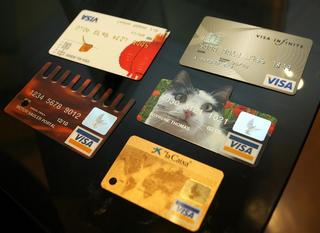 A new Gartner Inc. report suggests that financial fraud could drive consumers away from banks and into the arms of electronic payment systems, such as PayPal, that they perceive to be more secure.
more »
A new Gartner Inc. report suggests that financial fraud could drive consumers away from banks and into the arms of electronic payment systems, such as PayPal, that they perceive to be more secure.
more »
 In the last year this more than doubles the number of cards and devices in circulation around the world.
more »
In the last year this more than doubles the number of cards and devices in circulation around the world.
more »