Union Disbanded
Published:
6 September 2003 y., Saturday
Alexander Lukashenko’s last letter to his Russian colleague, as well as “Gasprom’s” categorical refusal to sell gas to the neighboring state at Russia’s internal prices, can signify only one thing: the union state of Belarus and Russia died unborn. Last Tuesday Alexander Lukashenko told Vladimir Putin that on January 1, 2005 the Russian ruble can’t be launched into circulation on the territory of the two states. Both sides rest assured that the disagreement between them can’t be resolved.
Eight years of the union state’s construction are enough to summarize certain intermediate results, which seem pretty unfortunate. The European countries needed less time to form their union. For the matters of comparison, Belgium, France, Germany, Luxemburg, Italy and the Netherlands signed an agreement on the formation of the European economic community in 1957. And they needed only ten years to found the union bodies of power, such as the European Commission, Parliament and even Court.
Russia and Belarus over approximately the same period of time failed to form the effective parliament and reach consensus concerning the principles of the common customs space and joint protection of their common interests at the exterior markets. Moreover, none of the agreements, signed over the past eight years, had been fulfilled.
Šaltinis:
Charter`97 Press Center
Copying, publishing, announcing any information from the News.lt portal without written permission of News.lt editorial office is prohibited.
The most popular articles
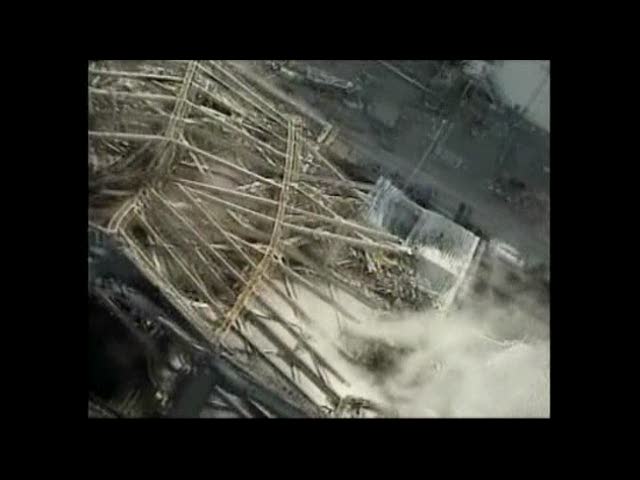 Japan nuclear crisis now at highest rating, matching Chernobyl, causing greater unease among public
more »
Japan nuclear crisis now at highest rating, matching Chernobyl, causing greater unease among public
more »
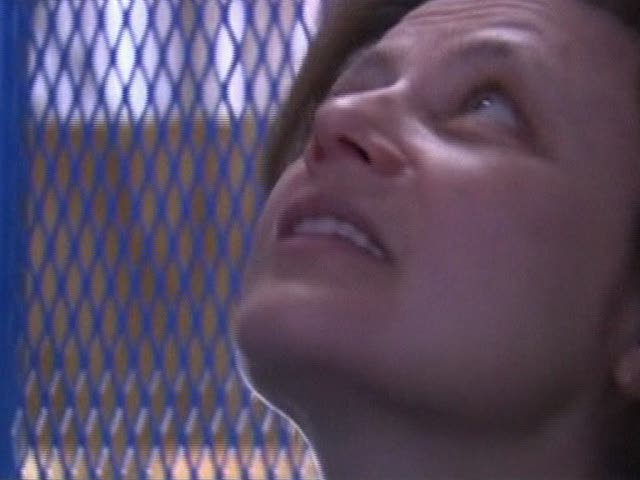 The restoration of the Santa Croce Basilica in Florence is offering art lovers an intimate view of the chapel's 600-year-old frescoes.
more »
The restoration of the Santa Croce Basilica in Florence is offering art lovers an intimate view of the chapel's 600-year-old frescoes.
more »
 Tomorrow, April 5, President of the Republic of Lithuania Dalia Grybauskaitė goes to Norway for a two-day state visit.
more »
Tomorrow, April 5, President of the Republic of Lithuania Dalia Grybauskaitė goes to Norway for a two-day state visit.
more »
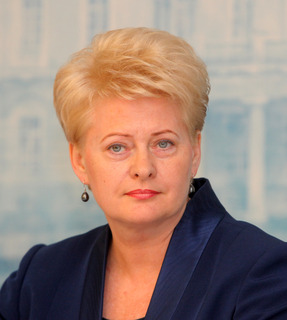 President of the Republic of Lithuania Dalia Grybauskaitė met with India's Minister of State for External Affairs, Preneet Kaur, who is visiting Lithuania.
more »
President of the Republic of Lithuania Dalia Grybauskaitė met with India's Minister of State for External Affairs, Preneet Kaur, who is visiting Lithuania.
more »
 The President of the Republic of Lithuania Dalia Grybauskaitė takes part in the Munich Security Conference.
more »
The President of the Republic of Lithuania Dalia Grybauskaitė takes part in the Munich Security Conference.
more »
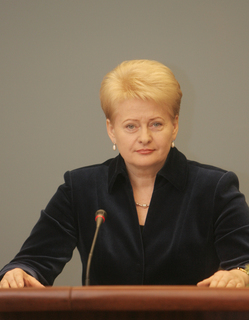 President Dalia Grybauskaitė extended condolences to the people of Russia over the bomb explosion in Moscow that claimed many victims.
more »
President Dalia Grybauskaitė extended condolences to the people of Russia over the bomb explosion in Moscow that claimed many victims.
more »
 President of the Republic of Lithuania Dalia Grybauskaitė had a traditional annual meeting with foreign ambassadors accredited to and resident in Lithuania, to discuss the domestic political situation and foreign policy of Lithuania.
more »
President of the Republic of Lithuania Dalia Grybauskaitė had a traditional annual meeting with foreign ambassadors accredited to and resident in Lithuania, to discuss the domestic political situation and foreign policy of Lithuania.
more »
 President of the Republic of Lithuania Dalia Grybauskaitė met with U.S. Senator Richard Durbin.
more »
President of the Republic of Lithuania Dalia Grybauskaitė met with U.S. Senator Richard Durbin.
more »
 President of the Republic of Lithuania Dalia Grybauskaitė visited the Antakalnis Cemetery to honour the memory of those killed on January 13.
more »
President of the Republic of Lithuania Dalia Grybauskaitė visited the Antakalnis Cemetery to honour the memory of those killed on January 13.
more »
 President of the Republic of Lithuania Dalia Grybauskaitė and Minister of Foreign Affairs Audronius Ažubalis, the new OSCE Chairperson–in–Office as from 1 January, discussed priorities and main concerns for the Lithuanian Chairmanship of this Organization.
more »
President of the Republic of Lithuania Dalia Grybauskaitė and Minister of Foreign Affairs Audronius Ažubalis, the new OSCE Chairperson–in–Office as from 1 January, discussed priorities and main concerns for the Lithuanian Chairmanship of this Organization.
more »