Embassy staff furious at Home Office over scale of East European visa scandal
Published:
17 June 2004 y., Thursday
NINE of out ten immigrants from Eastern Europe should never have been given visas to enter Britain and seek work, a damning report has found.
An investigation by a government watchdog found that British embassy officials in Romania and Bulgaria were appalled by a Home Office decision to admit thousands of immigrants, many of whom could not speak English and had no work skills.
They told a team from the National Audit Office (NAO) that, if their tough standards for approving visas had been used, "they would have issued visas to less than 10 per cent of the applicants that did actually receive them".
Despite the findings, the government insisted last night that the flood of Eastern Europeans into Britain which had been predicted in the run-up to European Union enlargement has not materialised.
Des Browne, the immigration minister, in his first official comment on the issue since eight former Communist states joined the EU, said: "Early indications are that there has not been a ‘flood’ of new entrants and the majority of those who have registered were already in the UK before 1 May."
However, the NAO’s findings will come as a blow to the Home Office, which is still trying to recover from the row over its slack immigration policy for Eastern European applicants that cost Beverley Hughes her job. The former immigration minister was forced to resign after a civil service whistle blower revealed how Romanian applicants, including a one-legged roof tiler, had been granted work visas by the Home Office.
The controversy deepened last night after the NAO confirmed it had been urged by Home Office officials to delay the timing of its report from yesterday until today, to coincide with the Home Office’s internal investigation.
Šaltinis:
news.scotsman.com
Copying, publishing, announcing any information from the News.lt portal without written permission of News.lt editorial office is prohibited.
The most popular articles
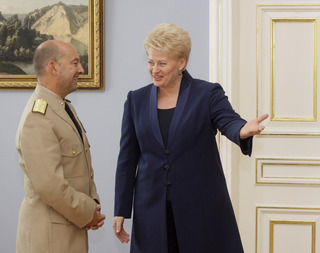 The President of the Republic of Lithuania, Dalia Grybauskaitė, met with the Commander of the US European Command and NATO's Supreme Allied Commander Europe, Admiral James G. Stavridis.
more »
The President of the Republic of Lithuania, Dalia Grybauskaitė, met with the Commander of the US European Command and NATO's Supreme Allied Commander Europe, Admiral James G. Stavridis.
more »
 The President of the Republic of Lithuania, Dalia Grybauskaitė, met with the Prime Minister of Estonia, Andrus Ansip, who is on a visit to Lithuania.
more »
The President of the Republic of Lithuania, Dalia Grybauskaitė, met with the Prime Minister of Estonia, Andrus Ansip, who is on a visit to Lithuania.
more »
 July 12 marks one year since President Dalia Grybauskaitė took office. What has changed in Lithuania over that time?
more »
July 12 marks one year since President Dalia Grybauskaitė took office. What has changed in Lithuania over that time?
more »
 On 8-9 July in Genval, Belgium, Political Director of Lithuania’s Ministry of Foreign Affairs Eitvydas Bajarūnas took part in the consultations of political directors from foreign ministries of 27 European Union member states.
more »
On 8-9 July in Genval, Belgium, Political Director of Lithuania’s Ministry of Foreign Affairs Eitvydas Bajarūnas took part in the consultations of political directors from foreign ministries of 27 European Union member states.
more »
 On 9 July, Lithuania’s Minister of Foreign Affairs Audronius Ažubalis received the outgoing Ambassador of Ukraine Ihor Prokopchuk.
more »
On 9 July, Lithuania’s Minister of Foreign Affairs Audronius Ažubalis received the outgoing Ambassador of Ukraine Ihor Prokopchuk.
more »
 On 7 July in Vilnius, Lithuania’s Minister of Foreign Affairs Audronius Ažubalis and Israel’s Foreign Minister Avigdor Liberman discussed bilateral political, economic and cultural cooperation, as well as possibilities to intensify economic, trade and tourist exchanges.
more »
On 7 July in Vilnius, Lithuania’s Minister of Foreign Affairs Audronius Ažubalis and Israel’s Foreign Minister Avigdor Liberman discussed bilateral political, economic and cultural cooperation, as well as possibilities to intensify economic, trade and tourist exchanges.
more »
 In the statement by U.S. President Barack Obama on the 10th Anniversary of the Community of Democracies that was released on 3 July, the President commended Lithuania for its Presidency of the Community and efforts to focus on the pressing challenges of today.
more »
In the statement by U.S. President Barack Obama on the 10th Anniversary of the Community of Democracies that was released on 3 July, the President commended Lithuania for its Presidency of the Community and efforts to focus on the pressing challenges of today.
more »
 "You offer us yet another opportunity to put ourselves and our civic mind to the test of time. Your example makes us raise our standards higher and higher," President of the Republic of Lithuania Dalia Grybauskaitė said at the ceremony of presenting state awards.
more »
"You offer us yet another opportunity to put ourselves and our civic mind to the test of time. Your example makes us raise our standards higher and higher," President of the Republic of Lithuania Dalia Grybauskaitė said at the ceremony of presenting state awards.
more »
 President Dalia Grybauskaitė offered personal congratulations by phone to President-elect Bronisław Komorowski on his victory in Poland's presidential elections.
more »
President Dalia Grybauskaitė offered personal congratulations by phone to President-elect Bronisław Komorowski on his victory in Poland's presidential elections.
more »
 Foreign states and international organizations extend condolences to Lithuania on the passing of President Algirdas Mykolas Brazauskas
more »
Foreign states and international organizations extend condolences to Lithuania on the passing of President Algirdas Mykolas Brazauskas
more »