Embassy staff furious at Home Office over scale of East European visa scandal
Published:
17 June 2004 y., Thursday
NINE of out ten immigrants from Eastern Europe should never have been given visas to enter Britain and seek work, a damning report has found.
An investigation by a government watchdog found that British embassy officials in Romania and Bulgaria were appalled by a Home Office decision to admit thousands of immigrants, many of whom could not speak English and had no work skills.
They told a team from the National Audit Office (NAO) that, if their tough standards for approving visas had been used, "they would have issued visas to less than 10 per cent of the applicants that did actually receive them".
Despite the findings, the government insisted last night that the flood of Eastern Europeans into Britain which had been predicted in the run-up to European Union enlargement has not materialised.
Des Browne, the immigration minister, in his first official comment on the issue since eight former Communist states joined the EU, said: "Early indications are that there has not been a ‘flood’ of new entrants and the majority of those who have registered were already in the UK before 1 May."
However, the NAO’s findings will come as a blow to the Home Office, which is still trying to recover from the row over its slack immigration policy for Eastern European applicants that cost Beverley Hughes her job. The former immigration minister was forced to resign after a civil service whistle blower revealed how Romanian applicants, including a one-legged roof tiler, had been granted work visas by the Home Office.
The controversy deepened last night after the NAO confirmed it had been urged by Home Office officials to delay the timing of its report from yesterday until today, to coincide with the Home Office’s internal investigation.
Šaltinis:
news.scotsman.com
Copying, publishing, announcing any information from the News.lt portal without written permission of News.lt editorial office is prohibited.
The most popular articles
 The meeting will be followed by a joint press conference of the Baltic leaders.
more »
The meeting will be followed by a joint press conference of the Baltic leaders.
more »
 During his visit to Brussels, Prime Minister Andrius Kubilius met with German Chancellor Angela Merkel.
more »
During his visit to Brussels, Prime Minister Andrius Kubilius met with German Chancellor Angela Merkel.
more »
 Upon the completion of the second working session of the European Council, Prime Minister Andrius Kubilius welcomed its results and the agreements it had reached.
more »
Upon the completion of the second working session of the European Council, Prime Minister Andrius Kubilius welcomed its results and the agreements it had reached.
more »
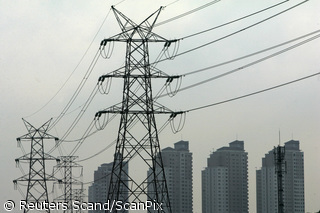 After the first working session of the European Council that ran late into the night, Lithuanian Prime Minister Andrius Kubilius welcomed the agreement on an additional EUR 5 billion investment in European energy and infrastructure projects.
more »
After the first working session of the European Council that ran late into the night, Lithuanian Prime Minister Andrius Kubilius welcomed the agreement on an additional EUR 5 billion investment in European energy and infrastructure projects.
more »
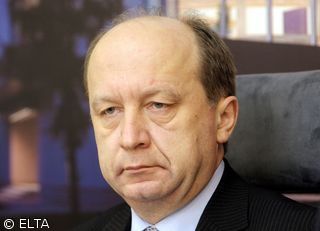 In Brussels, Prime Minister Andrius Kubilius attended the meeting of Nordic and Baltic Prime Ministers – the meeting which is traditionally held to discuss their opinions right before the first working session of the European Council.
more »
In Brussels, Prime Minister Andrius Kubilius attended the meeting of Nordic and Baltic Prime Ministers – the meeting which is traditionally held to discuss their opinions right before the first working session of the European Council.
more »
 Today the Lithuanian Government has approved nomination of Mindaugas Butkus as Ambassador Extraordinary and Plenipotentiary to Germany and has submitted his candidacy to the President.
more »
Today the Lithuanian Government has approved nomination of Mindaugas Butkus as Ambassador Extraordinary and Plenipotentiary to Germany and has submitted his candidacy to the President.
more »
 President of the Republic of Lithuania Valdas Adamkus met with President Georgi Parvanov of Bulgaria who arrived in Lithuania on a state visit.
more »
President of the Republic of Lithuania Valdas Adamkus met with President Georgi Parvanov of Bulgaria who arrived in Lithuania on a state visit.
more »
 President Valdas Adamkus extended congratulations to President Mary McAleese of Ireland on the occasion of national holiday – St. Patrick Day.
more »
President Valdas Adamkus extended congratulations to President Mary McAleese of Ireland on the occasion of national holiday – St. Patrick Day.
more »
 Prime Minister Andrius Kubilius sent a telegram with greetings to new Latvian Prime Minister Valdis Dombrovskis.
more »
Prime Minister Andrius Kubilius sent a telegram with greetings to new Latvian Prime Minister Valdis Dombrovskis.
more »
Next Monday, March 16, the President of the Republic of Bulgaria Mr. Georgi Parvanov and a delegation arrive in Lithuania on a three-day state visit.
more »