During a session of the European Commission in Brussels July 10, the Commissioner for Agriculture Franz Fischler presented a proposal for the reform of the European Union's Common Agricultural Policy (CAP).
Published:
30 July 2002 y., Tuesday
In accordance with the reform, the principles governing the financing of agriculture would change. According to observers, this should help close negotiations with EU candidate countries timely by the end of this year.
The proposed reform may, as one of the EU diplomats said, decrease the fears of net payers to EU coffers, in particular Germany, that enlarging the Union to include the poor Eastern European countries might increase the agricultural budget to a level that would be impossible to finance. In addition, if it is possible to push through the proposal to spend less EU funds on direct subsidies for production and more on the development of rural areas, it will be easier to integrate with the candidate countries' agricultural sectors.
"The commission's proposal...will have a positive side effect-it will facilitate the enlargement of the Union," said Fischler.
The CAP reform has been criticized by France and the EU farmers' unions. Germany and the Netherlands clearly indicated that they would support EU enlargement at the December summit in Copenhagen if at the same time a schedule of cost reduction for the CAP is approved. The candidate countries have welcomed the planned reform, because they believe it offers them more favorable conditions than they previously assumed for utilizing CAP after joining the EU.
Fischler said that farmers from candidate countries would receive the same funds as the EU farmers are getting now, in 2011 and not in 2013 as was planned earlier.
Commenting on the information from Brussels, head of the Sejm Committee
Šaltinis:
warsawvoice.pl
Copying, publishing, announcing any information from the News.lt portal without written permission of News.lt editorial office is prohibited.
The most popular articles
 On February 2, Kęstutis Jankauskas started his tenure as the state secretary of Lithuania’s Ministry of Foreign Affairs, after he was selected by the Ministry for this office.
more »
On February 2, Kęstutis Jankauskas started his tenure as the state secretary of Lithuania’s Ministry of Foreign Affairs, after he was selected by the Ministry for this office.
more »
 On the last day of his working visit to the Worl Economic Forum gathering in Davos, President Valdas Adamkus met with Thomas Mirow, President of the European Bank for Reconstruction and Development.
more »
On the last day of his working visit to the Worl Economic Forum gathering in Davos, President Valdas Adamkus met with Thomas Mirow, President of the European Bank for Reconstruction and Development.
more »
 President asked Azeri and Pakistani leaders to support the Baltic candidature to the position of UNESCO Director General.
more »
President asked Azeri and Pakistani leaders to support the Baltic candidature to the position of UNESCO Director General.
more »
 During the World Economic Forum, the President of the Republic of Lithuania Valdas Adamkus met with Paul Mountford, one of the managers of “Cisco Systems”, Christian Clausen, President and CEO of Nordea Bank, and philanthropist George Soros.
more »
During the World Economic Forum, the President of the Republic of Lithuania Valdas Adamkus met with Paul Mountford, one of the managers of “Cisco Systems”, Christian Clausen, President and CEO of Nordea Bank, and philanthropist George Soros.
more »
 While in Davos (Switzerland) where he participates in the World Economic Forum, the President of the Republic of Lithuania Valdas Adamkus met with Jean-Michel Halfon, “Pfizer” President and General Manager for Emerging Markets, and with Lars Josefsson, “Vattenfall” President and CEO.
more »
While in Davos (Switzerland) where he participates in the World Economic Forum, the President of the Republic of Lithuania Valdas Adamkus met with Jean-Michel Halfon, “Pfizer” President and General Manager for Emerging Markets, and with Lars Josefsson, “Vattenfall” President and CEO.
more »
 The Association has made a decision not to organise a demonstration that had been planned for 3 February.
more »
The Association has made a decision not to organise a demonstration that had been planned for 3 February.
more »
 On 28 January, Lithuania’s Minister of Foreign Affairs Vygaudas Ušackas received a group of twelfth-grade pupils from a secondary school of Saulkrasti, the city of Latvia.
more »
On 28 January, Lithuania’s Minister of Foreign Affairs Vygaudas Ušackas received a group of twelfth-grade pupils from a secondary school of Saulkrasti, the city of Latvia.
more »
 President of the Republic of Lithuania Valdas Adamkus said goodbye to the outgoing Ambassador of the Italian Republic Mr. Giulio Prigioni.
more »
President of the Republic of Lithuania Valdas Adamkus said goodbye to the outgoing Ambassador of the Italian Republic Mr. Giulio Prigioni.
more »
 Prime Minister Andrius Kubilius has met with Estonian President Toomas Hendrik Ilves and Speaker of the Estonian Parliament Ene Ergma today.
more »
Prime Minister Andrius Kubilius has met with Estonian President Toomas Hendrik Ilves and Speaker of the Estonian Parliament Ene Ergma today.
more »
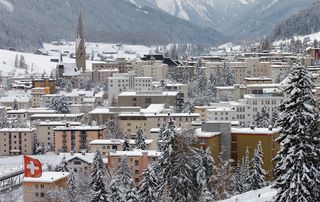 Tomorrow President of the Republic of Lithuania Valdas Adamkus goes for a working visit to Switzerland to take part in the World Economic Forum in Davos to be held under the title “Shaping the Post-Crisis World” on 28-31 January.
more »
Tomorrow President of the Republic of Lithuania Valdas Adamkus goes for a working visit to Switzerland to take part in the World Economic Forum in Davos to be held under the title “Shaping the Post-Crisis World” on 28-31 January.
more »