Bulgaria and Romania should be able to join the EU in 2007, the European Commission said yesterday, opening the way for the bloc's second wave of expansion into ex-communist eastern Europe
Published:
17 October 2004 y., Sunday
Bulgaria and Romania should be able to join the EU in 2007, the European Commission said yesterday, opening the way for the bloc's second wave of expansion into ex-communist eastern Europe.
The two Balkan countries, left out of the historic eastern enlargement in May that brought in 10 new countries, would be fit to join the bloc if they implemented agreed reforms, the EU's executive arm said in a report.
"Bulgaria and Romania are an integral part of this enlargement process ... The EU's objective is to welcome both countries in 2007 as members, if they are ready," it said.
The commission's paper, which must still be endorsed by EU governments in December, proposed a "safeguard clause" that could delay the two countries' accession into the 25-member bloc by one year if economic and administrative reforms stalled.
The report also confirmed entry talks with Croatia would start early next year, but added they could be frozen if Zagreb breached principles of democracy and the rule of law.
It gave no entry date for the former Yugoslav republic, but diplomats say it is not likely to be before 2009.
The report said Bulgaria and Romania must push ahead with many difficult reforms before they were ready to join.
Both need to strengthen their weak public administrations and courts, ensure that laws that exist on paper are properly implemented and root out rampant corruption.
Šaltinis:
busrep.co.za
Copying, publishing, announcing any information from the News.lt portal without written permission of News.lt editorial office is prohibited.
The most popular articles
 President of the Republic of Lithuania Dalia Grybauskaitė congratulated her Italian counterpart, President Giorgio Napolitano, on the Italian national holiday, the Republic Day.
more »
President of the Republic of Lithuania Dalia Grybauskaitė congratulated her Italian counterpart, President Giorgio Napolitano, on the Italian national holiday, the Republic Day.
more »
 The European Union supports and promotes the region through the Baltic Sea Strategy, specially designed to encourage regional cooperation.
more »
The European Union supports and promotes the region through the Baltic Sea Strategy, specially designed to encourage regional cooperation.
more »
 One of the most important topics for Lithuania - efforts to overcome energy isolation of Lithuania and other Baltic States and to strengthen energy security in the Baltic Sea region – is included into the agenda of the Baltic Development Forum (BDF) Summit, which started on 1 June in Vilnius.
more »
One of the most important topics for Lithuania - efforts to overcome energy isolation of Lithuania and other Baltic States and to strengthen energy security in the Baltic Sea region – is included into the agenda of the Baltic Development Forum (BDF) Summit, which started on 1 June in Vilnius.
more »
 President of the Republic of Lithuania Dalia Grybauskaitė will have a meeting with the President of the European Commission, Jose Manuel Barroso, in Vilnius.
more »
President of the Republic of Lithuania Dalia Grybauskaitė will have a meeting with the President of the European Commission, Jose Manuel Barroso, in Vilnius.
more »
 On 28 May in Vilnius, Lithuania’s Minister of Foreign Affairs Audronius Ažubalis met with ambassadors of NATO countries, who reside in Lithuania.
more »
On 28 May in Vilnius, Lithuania’s Minister of Foreign Affairs Audronius Ažubalis met with ambassadors of NATO countries, who reside in Lithuania.
more »
 New British Foreign Secretary William Hague sent a letter to Lithuania’s Minister of Foreign Affairs A. Ažubalis, highlighting the determination to continue and to broaden the close working relationship that the UK and Lithuania shares both bilaterally and within the framework of the EU and NATO.
more »
New British Foreign Secretary William Hague sent a letter to Lithuania’s Minister of Foreign Affairs A. Ažubalis, highlighting the determination to continue and to broaden the close working relationship that the UK and Lithuania shares both bilaterally and within the framework of the EU and NATO.
more »
 At the meeting of foreign ministers from the European Union and the Association of Southeast Asian Nations on 25-26 May in Madrid, Lithuania’s Vice-Minister of Foreign Affairs Šarūnas Adomavičius invited Southeast Asian countries to contribute to the implementation of projects in the province of Ghor, Afghanistan, where Lithuania leads a Provincial Reconstruction Team.
more »
At the meeting of foreign ministers from the European Union and the Association of Southeast Asian Nations on 25-26 May in Madrid, Lithuania’s Vice-Minister of Foreign Affairs Šarūnas Adomavičius invited Southeast Asian countries to contribute to the implementation of projects in the province of Ghor, Afghanistan, where Lithuania leads a Provincial Reconstruction Team.
more »
On 27 May in Vilnius, Lithuania’s Minister of Foreign Affairs Audronius Ažubalis met with prominent figure of the world’s Lithuanian community, scientist and conservationist Dr. Birutė Galdikas.
more »
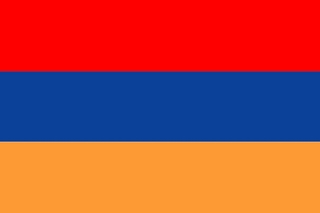 President Dalia Grybauskaitė extended congratulations to President Serzh Sargsyan of Armenia on national holiday - Republic Day.
more »
President Dalia Grybauskaitė extended congratulations to President Serzh Sargsyan of Armenia on national holiday - Republic Day.
more »
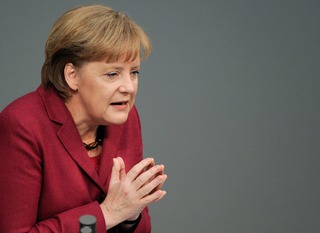 Next Tuesday, June 1 at 17.00 hours, President Dalia Grybauskaitė will meet with the Chancellor of the Federal Republic of Germany, Angela Merkel, who will be in Vilnius on a working visit.
more »
Next Tuesday, June 1 at 17.00 hours, President Dalia Grybauskaitė will meet with the Chancellor of the Federal Republic of Germany, Angela Merkel, who will be in Vilnius on a working visit.
more »