President George W. Bush said Wednesday that he would seek a 50 percent increase in U.S. military assistance to Poland
Published:
12 February 2005 y., Saturday
President George W. Bush said Wednesday that he would seek a 50 percent increase in U.S. military assistance to Poland, a staunch ally in Iraq but one engaged in debate over withdrawing its entire force from that country.
The White House later said that the $100 million for Poland would come from a $400 million "solidarity initiative" it plans to ask Congress to provide for countries supporting its efforts in Iraq and Afghanistan.
In a brief session with reporters at the White House, neither Bush nor the visiting Polish prime president, Aleksander Kwasniewski, publicly addressed the question of how long Polish troops might remain, though Kwasniewski said Poles looked forward to "the successful completion of our mission."
The 2,400 Polish soldiers in Iraq are the fourth-largest coalition force, and about 800 are set to leave this month. Poland leads a multinational division of about 6,000 troops in the country's south-central region.
But amid the unrelenting violence in Iraq - where 16 Polish soldiers and 4 Polish nationals have died - debate continues on whether Poland should follow its partial withdrawal by pulling out remaining troops, perhaps by year's end.
Warsaw, under political and economic pressure, had sought an increase in U.S. military-to-military aid, and a Polish reporter asked about that.
"The president and I talked about that," Bush said. "He has been very insistent about our mil-to-mil relations."
Bush said he would ask Congress to increase aid from the current $65 million to $100 million. "Poland's been a fantastic ally," Bush said, "because the people of Poland love freedom."
The U.S. president also thanked Kwasniewski for his help in nudging leaders in neighboring Ukraine toward a peaceful solution of the tense electoral standoff last year. And he suggested the two were on track to resolving a visa dispute: Americans do not need visas to visit Poland, while the United States requires them of visiting Poles.
Šaltinis:
iht.com
Copying, publishing, announcing any information from the News.lt portal without written permission of News.lt editorial office is prohibited.
The most popular articles
 Guinness World Records officially declares that an Australian man has the world's largest feet.
more »
Guinness World Records officially declares that an Australian man has the world's largest feet.
more »
 It's a sniffer dog with a difference: a military Belgian Shepherd that has been trained to detect signs of prostate cancer in patients' urine. According to French scientists, the dog can do it far more accurately than any currently available scientific technique.
more »
It's a sniffer dog with a difference: a military Belgian Shepherd that has been trained to detect signs of prostate cancer in patients' urine. According to French scientists, the dog can do it far more accurately than any currently available scientific technique.
more »
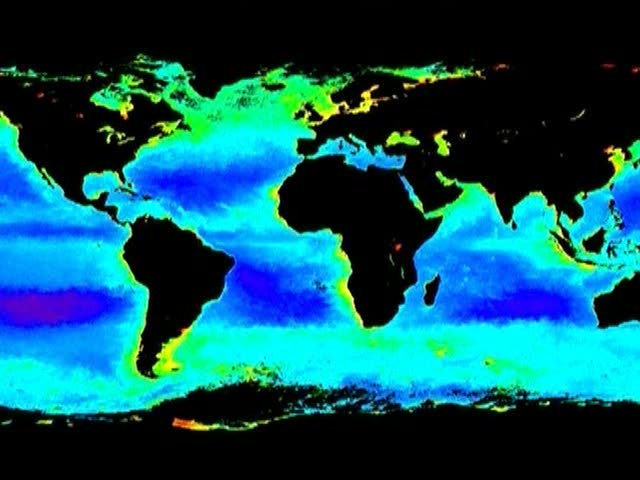 This week marks the beginning of hurricane season in the United States and scientists will be watching closely in the wake of extreme weather patterns that have devastated the Midwest. One of the questions they're trying to answer focuses on the impact of climate change and global warming.
more »
This week marks the beginning of hurricane season in the United States and scientists will be watching closely in the wake of extreme weather patterns that have devastated the Midwest. One of the questions they're trying to answer focuses on the impact of climate change and global warming.
more »
 Spanish cucumbers are being blame for an E.coli outbreak that killed 10 people in Germany and sickened hundreds.
more »
Spanish cucumbers are being blame for an E.coli outbreak that killed 10 people in Germany and sickened hundreds.
more »
 Protesters clash with police as pro Mladic rallies continue in the Serbian capital.
more »
Protesters clash with police as pro Mladic rallies continue in the Serbian capital.
more »
 Japan, Geiger counters, radiation leak, Fuji Electric
more »
Japan, Geiger counters, radiation leak, Fuji Electric
more »
 Chinese artist Qi Baishi's ink-wash work is auctioned for 65.4 million U.S. Dollars (425 million yuan) in Beijing, setting a new record for contemporary Chinese painting.
more »
Chinese artist Qi Baishi's ink-wash work is auctioned for 65.4 million U.S. Dollars (425 million yuan) in Beijing, setting a new record for contemporary Chinese painting.
more »
 Georgian police wearing full riot gear used water cannons and rubber bullets to disperse protesters in Tiblisi.
more »
Georgian police wearing full riot gear used water cannons and rubber bullets to disperse protesters in Tiblisi.
more »
 CT scanning has allowed scientists to identify and recreate in stunning three-dimensional detail, an ancient spider trapped in amber for 50 million years...
more »
CT scanning has allowed scientists to identify and recreate in stunning three-dimensional detail, an ancient spider trapped in amber for 50 million years...
more »
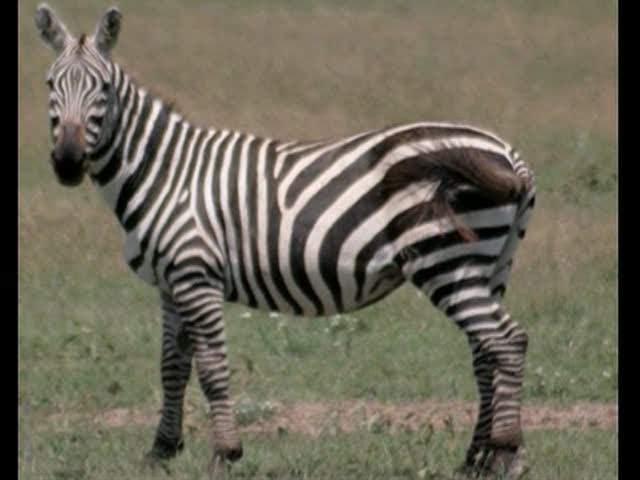 Researchers in Chicago have developed a new barcoding system that can identify and track zebras by their unique stripe patterns. The scientists say their computer program can also be modified to keep track of endangered species like tigers and some giraffe species.
more »
Researchers in Chicago have developed a new barcoding system that can identify and track zebras by their unique stripe patterns. The scientists say their computer program can also be modified to keep track of endangered species like tigers and some giraffe species.
more »