Voter apathy - turnout in the current member states is likely to sink further
Published:
14 April 2004 y., Wednesday
The centre-right is set to dominate again in the European Parliament after elections in June, a new report predicts.
Based on the premise that parties in government will do badly and that large parties in opposition will do well, the study for public affairs company Burson-Marsteller predicts that while the centre-right may make a loss in several smaller member states, it will more than make up for it in Germany, Poland and the UK.
The centre-right EPP-ED, which is currently the biggest group in the European Parliament, is expected to get 285 (39%) seats in the 732-seat assembly.
The socialists are predicted to come in with 217 (30%) seats and the liberals with 73 (10%) - which is exactly the order of the three main groups in the parliament today.
However, the study, carried out by Professor Simon Hix of the London School of Economics and Professor Michael Marsh of Trinity College, also predicts some important changes.The eurosceptic EDD group is "unlikely to secure enough MEPs to form a group" and there "may be as many as 50 non-attached MEPs".
Also, if the votes fall the way the report predicts, the liberals will play a pivotal role in EU legislation, meaning they could side with the socialists on environmental issues and with the conservatives on economic issues.
If the liberals form an alliance with the centre-right, they would have over 50 percent of the seats in the parliament so they could apply some interesting political leverage when the Parliament chooses top positions in the EU such as the presidents of the European Commission and the Parliament.
Šaltinis:
EUOBSERVER
Copying, publishing, announcing any information from the News.lt portal without written permission of News.lt editorial office is prohibited.
The most popular articles
 Guinness World Records officially declares that an Australian man has the world's largest feet.
more »
Guinness World Records officially declares that an Australian man has the world's largest feet.
more »
 It's a sniffer dog with a difference: a military Belgian Shepherd that has been trained to detect signs of prostate cancer in patients' urine. According to French scientists, the dog can do it far more accurately than any currently available scientific technique.
more »
It's a sniffer dog with a difference: a military Belgian Shepherd that has been trained to detect signs of prostate cancer in patients' urine. According to French scientists, the dog can do it far more accurately than any currently available scientific technique.
more »
 This week marks the beginning of hurricane season in the United States and scientists will be watching closely in the wake of extreme weather patterns that have devastated the Midwest. One of the questions they're trying to answer focuses on the impact of climate change and global warming.
more »
This week marks the beginning of hurricane season in the United States and scientists will be watching closely in the wake of extreme weather patterns that have devastated the Midwest. One of the questions they're trying to answer focuses on the impact of climate change and global warming.
more »
 Spanish cucumbers are being blame for an E.coli outbreak that killed 10 people in Germany and sickened hundreds.
more »
Spanish cucumbers are being blame for an E.coli outbreak that killed 10 people in Germany and sickened hundreds.
more »
 Protesters clash with police as pro Mladic rallies continue in the Serbian capital.
more »
Protesters clash with police as pro Mladic rallies continue in the Serbian capital.
more »
 Japan, Geiger counters, radiation leak, Fuji Electric
more »
Japan, Geiger counters, radiation leak, Fuji Electric
more »
 Chinese artist Qi Baishi's ink-wash work is auctioned for 65.4 million U.S. Dollars (425 million yuan) in Beijing, setting a new record for contemporary Chinese painting.
more »
Chinese artist Qi Baishi's ink-wash work is auctioned for 65.4 million U.S. Dollars (425 million yuan) in Beijing, setting a new record for contemporary Chinese painting.
more »
 Georgian police wearing full riot gear used water cannons and rubber bullets to disperse protesters in Tiblisi.
more »
Georgian police wearing full riot gear used water cannons and rubber bullets to disperse protesters in Tiblisi.
more »
 CT scanning has allowed scientists to identify and recreate in stunning three-dimensional detail, an ancient spider trapped in amber for 50 million years...
more »
CT scanning has allowed scientists to identify and recreate in stunning three-dimensional detail, an ancient spider trapped in amber for 50 million years...
more »
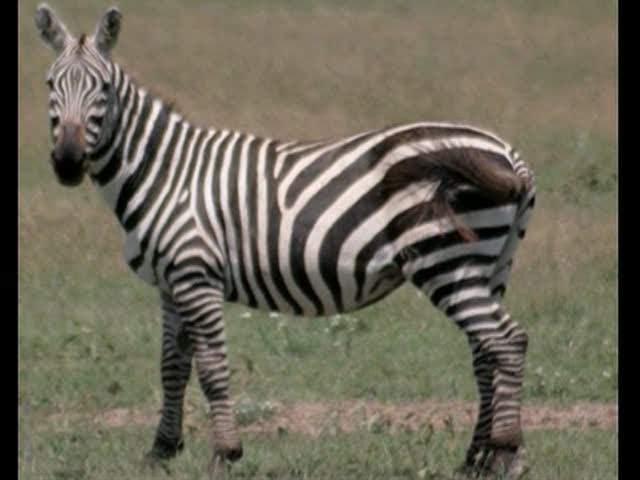 Researchers in Chicago have developed a new barcoding system that can identify and track zebras by their unique stripe patterns. The scientists say their computer program can also be modified to keep track of endangered species like tigers and some giraffe species.
more »
Researchers in Chicago have developed a new barcoding system that can identify and track zebras by their unique stripe patterns. The scientists say their computer program can also be modified to keep track of endangered species like tigers and some giraffe species.
more »