To see why Russia has enthusiastically backed President George W. Bush's call for a global war against terrorism, look at who visited the Kremlin last week.
Published:
17 September 2001 y., Monday
To see why Russia has enthusiastically backed President George W. Bush's call for a global war against terrorism, look at who visited the Kremlin last week. And to see why that enthusiasm shows signs of flagging so soon, look at who did not.
The visitor was Ariel Sharon, the third prime minister of Israel to come to Moscow since 1999. Those visits mark a compelling turnabout since the days when Soviet client states trained anti-Israeli terrorists. Indeed, Mr. Sharon took pains during his Moscow trip to say that the two nations were "united in our concern over the spread of Islamic terrorism."
The man who stayed home was Ali Shamkhani, the defense minister of Iran. Protesting Mr. Sharon's visit, Mr. Shamkhani postponed his own trip, which was meant to seal the purchase of hundreds of millions of dollars in Russian arms.
This time it was the Russian foreign minister, Igor Ivanov, who took pains to show Russia's other side. After meeting with Mr. Sharon, Mr. Ivanov said that Russia was nurturing its relations with Iran "and shall obviously continue to do so."
When it comes to terrorism, Israel and Iran are the two faces of Russia's dry-eyed foreign policy.
Russia has been increasingly vocal in its own opposition to terror. It surpassed itself Thursday by offering NATO unsolicited support for a global struggle against terrorist groups.
Mr. Ivanov even tacitly endorsed U.S. military retaliation, saying the attacks on the World Trade Center and the Pentagon justified "all possible means" in the fight against terrorism.
But within hours, the Russian military pulled back from those positions. The Russian defense minister, Sergei Ivanov, ruled out "even hypothetical assumptions" that Russia and other former Soviet states would lend troops or bases to any NATO military action.
Russian officials also warned the United States that any retaliation that caused civilian suffering would only provoke a greater terrorist response. That is precisely the argument the West has used - and Russians have ignored - in Moscow's own war against Islamic extremists in Chechnya. Russia's view of terrorism's threat has moved much closer to that of Western nations.
But where the Bush administration now calls for an us-versus-them coalition, Russia's view of the problem is far more shaded. Good relations with Israel are one interest. Moscow's old policy of propping up an Arab bloc dedicated to Israel's extinction died with the Soviet Union.
Russia no longer has the money to ship weapons and aid to its old allies. Nor does it have a good reason: today it is Israel, with Western technology, Western entrщe and 1 million Russian immigrants, that has increasingly become the Kremlin's logical Middle East partner.
Chechnya is another reason.
Šaltinis:
New York Times
Copying, publishing, announcing any information from the News.lt portal without written permission of News.lt editorial office is prohibited.
The most popular articles
 A candle lit vigil for the victims of the bombing and shooting incident over the weekend.
more »
A candle lit vigil for the victims of the bombing and shooting incident over the weekend.
more »
 Jennifer Boriss, a Firefox dev, went to the mall seeking test subjects to help improve the browser.
more »
Jennifer Boriss, a Firefox dev, went to the mall seeking test subjects to help improve the browser.
more »
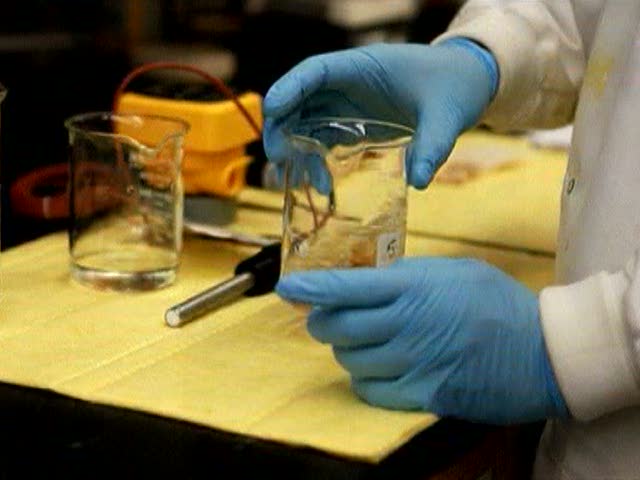 Researchers at North Carolina State University have created and eco-friendly super absorbent foam they say could revolutionise efforts to purify drinking water in developing countries and disaster-stricken areas.
more »
Researchers at North Carolina State University have created and eco-friendly super absorbent foam they say could revolutionise efforts to purify drinking water in developing countries and disaster-stricken areas.
more »
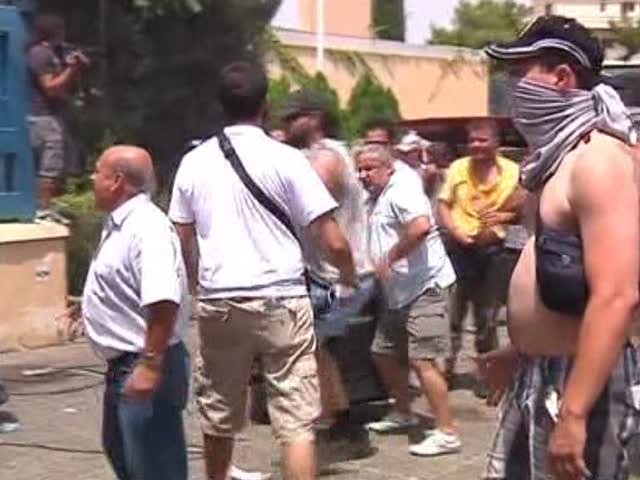 Protesting taxi drivers clash with riot police outside the transport ministry after government talks fail.
more »
Protesting taxi drivers clash with riot police outside the transport ministry after government talks fail.
more »
 Israeli student designs a low-cost solution for shoe addicts.
more »
Israeli student designs a low-cost solution for shoe addicts.
more »
 Chinese basketball player Yao Ming announces his retirement from the NBA.
more »
Chinese basketball player Yao Ming announces his retirement from the NBA.
more »
 Scientists in the UK have discovered the molecule that causes pain in sunburn and say further research could lead to treatments for other inflammatory conditions like arthritis and cystitis.
more »
Scientists in the UK have discovered the molecule that causes pain in sunburn and say further research could lead to treatments for other inflammatory conditions like arthritis and cystitis.
more »
 A travelling puppet theatre charms Lithuanian children as the horse-drawn show brings stories alive on a pop-up stage.
more »
A travelling puppet theatre charms Lithuanian children as the horse-drawn show brings stories alive on a pop-up stage.
more »
 A Taiwanese textile company is using waste coffee grounds to make an environmentally friendly fabric that dries fast and controls odours.
more »
A Taiwanese textile company is using waste coffee grounds to make an environmentally friendly fabric that dries fast and controls odours.
more »
 After six months living a carbon-lean life in a specially built house in Stockholm, the Lindell family has returned home to reflect on the lessons learned...
more »
After six months living a carbon-lean life in a specially built house in Stockholm, the Lindell family has returned home to reflect on the lessons learned...
more »