To see why Russia has enthusiastically backed President George W. Bush's call for a global war against terrorism, look at who visited the Kremlin last week.
Published:
17 September 2001 y., Monday
To see why Russia has enthusiastically backed President George W. Bush's call for a global war against terrorism, look at who visited the Kremlin last week. And to see why that enthusiasm shows signs of flagging so soon, look at who did not.
The visitor was Ariel Sharon, the third prime minister of Israel to come to Moscow since 1999. Those visits mark a compelling turnabout since the days when Soviet client states trained anti-Israeli terrorists. Indeed, Mr. Sharon took pains during his Moscow trip to say that the two nations were "united in our concern over the spread of Islamic terrorism."
The man who stayed home was Ali Shamkhani, the defense minister of Iran. Protesting Mr. Sharon's visit, Mr. Shamkhani postponed his own trip, which was meant to seal the purchase of hundreds of millions of dollars in Russian arms.
This time it was the Russian foreign minister, Igor Ivanov, who took pains to show Russia's other side. After meeting with Mr. Sharon, Mr. Ivanov said that Russia was nurturing its relations with Iran "and shall obviously continue to do so."
When it comes to terrorism, Israel and Iran are the two faces of Russia's dry-eyed foreign policy.
Russia has been increasingly vocal in its own opposition to terror. It surpassed itself Thursday by offering NATO unsolicited support for a global struggle against terrorist groups.
Mr. Ivanov even tacitly endorsed U.S. military retaliation, saying the attacks on the World Trade Center and the Pentagon justified "all possible means" in the fight against terrorism.
But within hours, the Russian military pulled back from those positions. The Russian defense minister, Sergei Ivanov, ruled out "even hypothetical assumptions" that Russia and other former Soviet states would lend troops or bases to any NATO military action.
Russian officials also warned the United States that any retaliation that caused civilian suffering would only provoke a greater terrorist response. That is precisely the argument the West has used - and Russians have ignored - in Moscow's own war against Islamic extremists in Chechnya. Russia's view of terrorism's threat has moved much closer to that of Western nations.
But where the Bush administration now calls for an us-versus-them coalition, Russia's view of the problem is far more shaded. Good relations with Israel are one interest. Moscow's old policy of propping up an Arab bloc dedicated to Israel's extinction died with the Soviet Union.
Russia no longer has the money to ship weapons and aid to its old allies. Nor does it have a good reason: today it is Israel, with Western technology, Western entrщe and 1 million Russian immigrants, that has increasingly become the Kremlin's logical Middle East partner.
Chechnya is another reason.
Šaltinis:
New York Times
Copying, publishing, announcing any information from the News.lt portal without written permission of News.lt editorial office is prohibited.
The most popular articles
 On February 2, Kęstutis Jankauskas started his tenure as the state secretary of Lithuania’s Ministry of Foreign Affairs, after he was selected by the Ministry for this office.
more »
On February 2, Kęstutis Jankauskas started his tenure as the state secretary of Lithuania’s Ministry of Foreign Affairs, after he was selected by the Ministry for this office.
more »
 On the last day of his working visit to the Worl Economic Forum gathering in Davos, President Valdas Adamkus met with Thomas Mirow, President of the European Bank for Reconstruction and Development.
more »
On the last day of his working visit to the Worl Economic Forum gathering in Davos, President Valdas Adamkus met with Thomas Mirow, President of the European Bank for Reconstruction and Development.
more »
 President asked Azeri and Pakistani leaders to support the Baltic candidature to the position of UNESCO Director General.
more »
President asked Azeri and Pakistani leaders to support the Baltic candidature to the position of UNESCO Director General.
more »
 During the World Economic Forum, the President of the Republic of Lithuania Valdas Adamkus met with Paul Mountford, one of the managers of “Cisco Systems”, Christian Clausen, President and CEO of Nordea Bank, and philanthropist George Soros.
more »
During the World Economic Forum, the President of the Republic of Lithuania Valdas Adamkus met with Paul Mountford, one of the managers of “Cisco Systems”, Christian Clausen, President and CEO of Nordea Bank, and philanthropist George Soros.
more »
 While in Davos (Switzerland) where he participates in the World Economic Forum, the President of the Republic of Lithuania Valdas Adamkus met with Jean-Michel Halfon, “Pfizer” President and General Manager for Emerging Markets, and with Lars Josefsson, “Vattenfall” President and CEO.
more »
While in Davos (Switzerland) where he participates in the World Economic Forum, the President of the Republic of Lithuania Valdas Adamkus met with Jean-Michel Halfon, “Pfizer” President and General Manager for Emerging Markets, and with Lars Josefsson, “Vattenfall” President and CEO.
more »
 The Association has made a decision not to organise a demonstration that had been planned for 3 February.
more »
The Association has made a decision not to organise a demonstration that had been planned for 3 February.
more »
 On 28 January, Lithuania’s Minister of Foreign Affairs Vygaudas Ušackas received a group of twelfth-grade pupils from a secondary school of Saulkrasti, the city of Latvia.
more »
On 28 January, Lithuania’s Minister of Foreign Affairs Vygaudas Ušackas received a group of twelfth-grade pupils from a secondary school of Saulkrasti, the city of Latvia.
more »
 President of the Republic of Lithuania Valdas Adamkus said goodbye to the outgoing Ambassador of the Italian Republic Mr. Giulio Prigioni.
more »
President of the Republic of Lithuania Valdas Adamkus said goodbye to the outgoing Ambassador of the Italian Republic Mr. Giulio Prigioni.
more »
 Prime Minister Andrius Kubilius has met with Estonian President Toomas Hendrik Ilves and Speaker of the Estonian Parliament Ene Ergma today.
more »
Prime Minister Andrius Kubilius has met with Estonian President Toomas Hendrik Ilves and Speaker of the Estonian Parliament Ene Ergma today.
more »
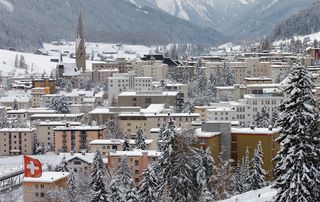 Tomorrow President of the Republic of Lithuania Valdas Adamkus goes for a working visit to Switzerland to take part in the World Economic Forum in Davos to be held under the title “Shaping the Post-Crisis World” on 28-31 January.
more »
Tomorrow President of the Republic of Lithuania Valdas Adamkus goes for a working visit to Switzerland to take part in the World Economic Forum in Davos to be held under the title “Shaping the Post-Crisis World” on 28-31 January.
more »