To see why Russia has enthusiastically backed President George W. Bush's call for a global war against terrorism, look at who visited the Kremlin last week.
Published:
17 September 2001 y., Monday
To see why Russia has enthusiastically backed President George W. Bush's call for a global war against terrorism, look at who visited the Kremlin last week. And to see why that enthusiasm shows signs of flagging so soon, look at who did not.
The visitor was Ariel Sharon, the third prime minister of Israel to come to Moscow since 1999. Those visits mark a compelling turnabout since the days when Soviet client states trained anti-Israeli terrorists. Indeed, Mr. Sharon took pains during his Moscow trip to say that the two nations were "united in our concern over the spread of Islamic terrorism."
The man who stayed home was Ali Shamkhani, the defense minister of Iran. Protesting Mr. Sharon's visit, Mr. Shamkhani postponed his own trip, which was meant to seal the purchase of hundreds of millions of dollars in Russian arms.
This time it was the Russian foreign minister, Igor Ivanov, who took pains to show Russia's other side. After meeting with Mr. Sharon, Mr. Ivanov said that Russia was nurturing its relations with Iran "and shall obviously continue to do so."
When it comes to terrorism, Israel and Iran are the two faces of Russia's dry-eyed foreign policy.
Russia has been increasingly vocal in its own opposition to terror. It surpassed itself Thursday by offering NATO unsolicited support for a global struggle against terrorist groups.
Mr. Ivanov even tacitly endorsed U.S. military retaliation, saying the attacks on the World Trade Center and the Pentagon justified "all possible means" in the fight against terrorism.
But within hours, the Russian military pulled back from those positions. The Russian defense minister, Sergei Ivanov, ruled out "even hypothetical assumptions" that Russia and other former Soviet states would lend troops or bases to any NATO military action.
Russian officials also warned the United States that any retaliation that caused civilian suffering would only provoke a greater terrorist response. That is precisely the argument the West has used - and Russians have ignored - in Moscow's own war against Islamic extremists in Chechnya. Russia's view of terrorism's threat has moved much closer to that of Western nations.
But where the Bush administration now calls for an us-versus-them coalition, Russia's view of the problem is far more shaded. Good relations with Israel are one interest. Moscow's old policy of propping up an Arab bloc dedicated to Israel's extinction died with the Soviet Union.
Russia no longer has the money to ship weapons and aid to its old allies. Nor does it have a good reason: today it is Israel, with Western technology, Western entrщe and 1 million Russian immigrants, that has increasingly become the Kremlin's logical Middle East partner.
Chechnya is another reason.
Šaltinis:
New York Times
Copying, publishing, announcing any information from the News.lt portal without written permission of News.lt editorial office is prohibited.
The most popular articles
The whale shark is the largest living fish species and is usually found in tropical and warm oceans. This gentle giant is not dangerous to humans but demand for its internal organs is putting it in grave danger.
more »
 Land shortages in China and environmental concerns have inspired innovative alternatives at the Asia Funeral Expo in Hong Kong.
more »
Land shortages in China and environmental concerns have inspired innovative alternatives at the Asia Funeral Expo in Hong Kong.
more »
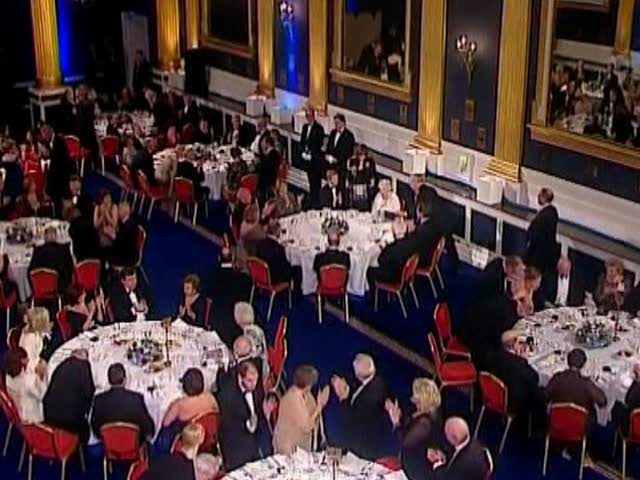 Britain's Queen Elizabeth delivers landmark speech of reconciliation during visit to Ireland but stops short of apology.
more »
Britain's Queen Elizabeth delivers landmark speech of reconciliation during visit to Ireland but stops short of apology.
more »
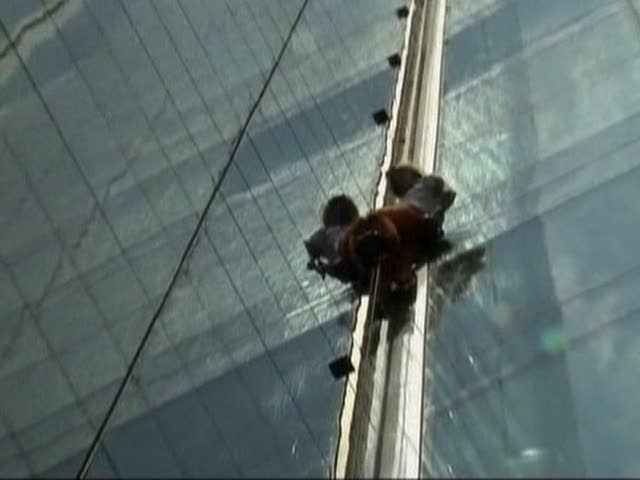 French climber Alain Robert, known as "Spiderman" scales Turkey's tallest building.
more »
French climber Alain Robert, known as "Spiderman" scales Turkey's tallest building.
more »
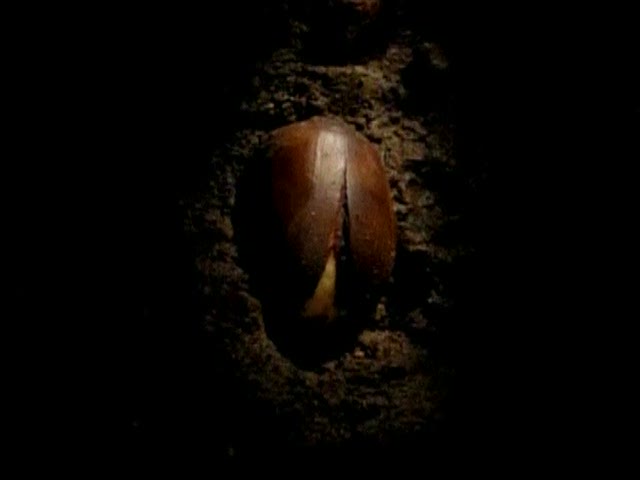 The growth of a tree takes place so slowly that, in real time, it's impossible to observe. Six years ago plant-lover and British film-maker Neil Bromhall decided to speed up the process with time-lapse photography...
more »
The growth of a tree takes place so slowly that, in real time, it's impossible to observe. Six years ago plant-lover and British film-maker Neil Bromhall decided to speed up the process with time-lapse photography...
more »
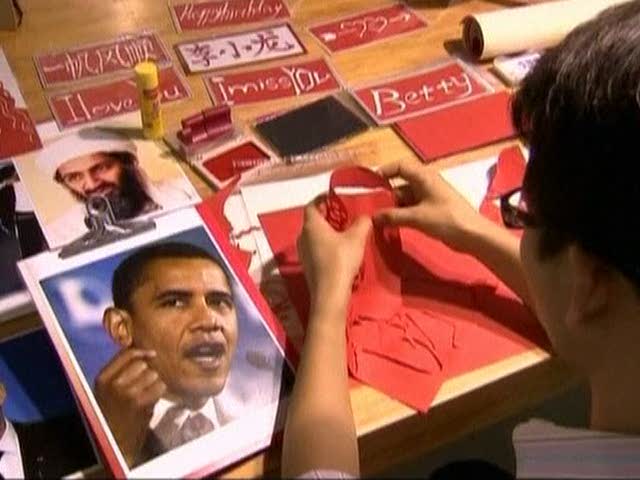 Chinese artist Wang Jiang makes portraits of famous faces including U.S. President Barack Obama and Osama bin Laden from nothing but paper torn by hand.
more »
Chinese artist Wang Jiang makes portraits of famous faces including U.S. President Barack Obama and Osama bin Laden from nothing but paper torn by hand.
more »
 Residents of the southern Spanish town of Lorca stay in makeshift camps and shelters after an earthquake hits the town, destroying buildings and killing at least eight.
more »
Residents of the southern Spanish town of Lorca stay in makeshift camps and shelters after an earthquake hits the town, destroying buildings and killing at least eight.
more »
 The latest technological development in robots is the main focus of the Shanghai International Conference on Robotics and Automation in China.
more »
The latest technological development in robots is the main focus of the Shanghai International Conference on Robotics and Automation in China.
more »
 A rare earthquake rocked Lorca, an ancient town in southeastern Spain, on Wednesday causing houses to collapse, damaging historic churches and public buildings and killing at least 10 people.
more »
A rare earthquake rocked Lorca, an ancient town in southeastern Spain, on Wednesday causing houses to collapse, damaging historic churches and public buildings and killing at least 10 people.
more »
 A small factory in New York's Brooklyn is doing its best to keep the dying art of making vinyl records.
more »
A small factory in New York's Brooklyn is doing its best to keep the dying art of making vinyl records.
more »