Kazakhstan’s parliament is preparing to pass an electoral code that supporters of President Nursultan Nazarbayev portray as proof of their commitment to holding transparent elections
Published:
7 March 2004 y., Sunday
Though the bill contains important concessions to opposition forces, the law, on the whole, appears to safeguard government interests.
After sifting through over 600 proposed changes to the electoral code, a joint session of parliament approved the second reading of the revised election law on February 20. A proposal for the introduction of electronic voting in certain regions prompted the postponement of a final vote on the bill. That vote is now expected on March 15. The new electoral code will be in place for parliamentary elections scheduled for later this year.
A large share of attention has been devoted to an amendment covering the composition of local election commissions. International organizations, opposition groups and, of late, Nazarbayev supporters have argued that political parties should have a larger role on the commissions. Under the proposed law, each commission would comprise seven members, with political parties being limited to one deputy each.
While the provision appears to provide for a more even-handed oversight process, one critical drawback remains. Kazakhstan already has nine registered parties and more are expected to enter the political arena in the coming months. That means some political parties will not have representation on local election commissions. A system for determining commission representation has yet to be worked out. Many opposition political activists believe the discrepancy between the number of commission slots and the number of parties will enable the Nazarbayev administration to exclude its bitterest political foes from local election commissions.
At a news conference in Almaty on February 18, representatives of Ak Zhol, a moderate opposition party, and Democratic Choice of Kazakhstan (DCK), the country’s largest reform movement, repeated earlier complaints that government pressure on parliament had prevented opposition proposals from gaining a fair hearing.
Šaltinis:
EurasiaNet
Copying, publishing, announcing any information from the News.lt portal without written permission of News.lt editorial office is prohibited.
The most popular articles
 BMW recently highlighted an electric scooter, currently still in the concept phase, targeted at green-leaning commuters.
more »
BMW recently highlighted an electric scooter, currently still in the concept phase, targeted at green-leaning commuters.
more »
 "I'm excited about where these findings could take us in terms of eventually developing a new type of analgesic for people who suffer from chronic pain."
more »
"I'm excited about where these findings could take us in terms of eventually developing a new type of analgesic for people who suffer from chronic pain."
more »
 The Anonymous hackers now have names, at least in Italy. A series of dawn searches this morning concluded investigations by IT police, led by Antonio Abruzzese, into coordinated computer attacks by the group over the past few months.
more »
The Anonymous hackers now have names, at least in Italy. A series of dawn searches this morning concluded investigations by IT police, led by Antonio Abruzzese, into coordinated computer attacks by the group over the past few months.
more »
 He world's first flying car has been authorized to use roads while flying in the air.
more »
He world's first flying car has been authorized to use roads while flying in the air.
more »
 This is the adjustable-height desk that pairs with a semi-recumbent elliptical trainer to let users exercise while on the job.
more »
This is the adjustable-height desk that pairs with a semi-recumbent elliptical trainer to let users exercise while on the job.
more »
 Scientists at the Chinese University of Hong Kong have developed an autonomous, caterpillar-inspired robot, designed to climb trees and spot danger to forests via a built-in camera.
more »
Scientists at the Chinese University of Hong Kong have developed an autonomous, caterpillar-inspired robot, designed to climb trees and spot danger to forests via a built-in camera.
more »
 Nuclear officials confident over safety levels of flooded nuclear power plant.
more »
Nuclear officials confident over safety levels of flooded nuclear power plant.
more »
 A 19 year old computer hacker in London has been released on bail after being charged with attacking government websites.
more »
A 19 year old computer hacker in London has been released on bail after being charged with attacking government websites.
more »
 Greek Communists rally at historical monument in Athens to protest new round of austerity measures
more »
Greek Communists rally at historical monument in Athens to protest new round of austerity measures
more »
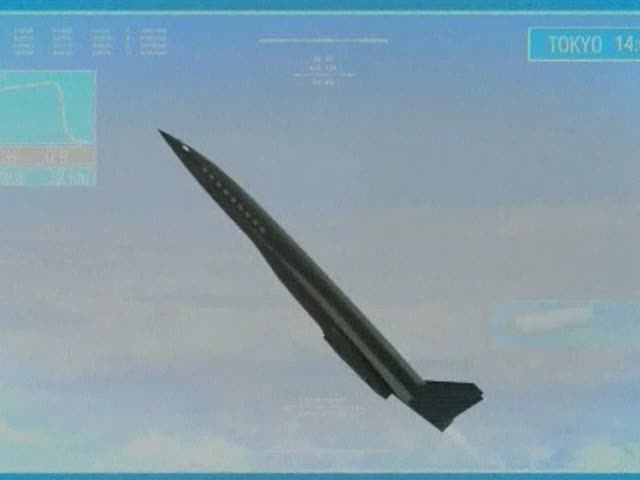 Imagine flying from Tokyo to Paris in less than two and a half hours, without having to burn tons of fossil fuel. One day it might be possible. The concept of zero-emissions, supersonic flight is being explored by European aircraft maker, EADS.
more »
Imagine flying from Tokyo to Paris in less than two and a half hours, without having to burn tons of fossil fuel. One day it might be possible. The concept of zero-emissions, supersonic flight is being explored by European aircraft maker, EADS.
more »