LITHUANIA BOTHERED WITH RUSSIAN OIL WELL PROXIMITY TO COURLAND SPIT
Published:
29 July 2004 y., Thursday
On Tuesday the Lukoil-Kaliningradmorneft subsidiary of the Russian Lukoil concern will put into operation the entire technological chain, beginning from the production of oil at the D-6 field on the Baltic shelf near Lithuania, the administration of the Kaliningrad region has said.
Lithuania will one more time ask Russia to provide the results of independent examination on the impact of the oil well on the environment and information on the exact time of putting into operation of the well, lying adjacent to the Lithuanian national park Courland Spit. It is listed among the UNESCO world heritage and Lithuania is concerned over possible oil leaks, threatening with an irreparable damage to the unique ecological system.
In the interview to the National Radio Alexandras Spruogis, secretary of the Environmental Protection Ministry, said that Russia has not carried out an independent examination of the well's impact on the environment.
The ministerial spokesman said that Russia has been obliged before February to conduct the examination with the inclusion of international experts in the assessment commission. If not, the Courland Spit will be automatically listed as an endangered global object.
Lithuania and Russia included the Courland Spit in the UNESCO list in 2000.
Discovered in 1983, the D-6 oil field is the largest on the sea shelf on the coast of the Kaliningrad region. By preliminary information, it can annually yield about 600,000 tons of oil. The well is located 23 kilometers away from the Courland Spit and five kilometers off Russia's sea border with Lithuania.
Inspecting the D-6 service forms and records last November, UNESCO experts found its operation being a danger to the environmental security of the Courland Spit national park.
Šaltinis:
RIA Novosti
Copying, publishing, announcing any information from the News.lt portal without written permission of News.lt editorial office is prohibited.
The most popular articles
 On 26 November, Lithuania’s Minister of Foreign Affairs Vygaudas Ušackas delivered a lecture “The New NATO Strategic Concept: Lithuania’s Vision” to the participants of Higher Command Studies Course of the Baltic Defence College (BALTDEFCOL).
more »
On 26 November, Lithuania’s Minister of Foreign Affairs Vygaudas Ušackas delivered a lecture “The New NATO Strategic Concept: Lithuania’s Vision” to the participants of Higher Command Studies Course of the Baltic Defence College (BALTDEFCOL).
more »
 On 25 November at the European Information Bureau of the Seimas, Lithuania’s Minister of Foreign Affairs Vygaudas Ušackas took part in the round table discussion “Climate Change: from Kyoto to Copenhagen” and spoke about Lithuania’s contribution to combating climate change.
more »
On 25 November at the European Information Bureau of the Seimas, Lithuania’s Minister of Foreign Affairs Vygaudas Ušackas took part in the round table discussion “Climate Change: from Kyoto to Copenhagen” and spoke about Lithuania’s contribution to combating climate change.
more »
 President of the Republic of Lithuania Dalia Grybauskaitė goes for a working visit to Ukraine to attend a session of the Council of Presidents of the Republic of Lithuania and Ukraine and to meet with Ukraine's President Viktor Yushchenko.
more »
President of the Republic of Lithuania Dalia Grybauskaitė goes for a working visit to Ukraine to attend a session of the Council of Presidents of the Republic of Lithuania and Ukraine and to meet with Ukraine's President Viktor Yushchenko.
more »
 Today, November 26, meeting of the Baltic Chiefs of Defence will begin in General Adolfas Ramanauskas Warfare Training Centre in Nemenčinė (Vilnius distr.).
more »
Today, November 26, meeting of the Baltic Chiefs of Defence will begin in General Adolfas Ramanauskas Warfare Training Centre in Nemenčinė (Vilnius distr.).
more »
 November 24, Defence Attachés accredited to Lithuania met at MoND to address international defence cooperation of Lithuania, activities and plans of the Lithuanian-led Chaghcharan PRT.
more »
November 24, Defence Attachés accredited to Lithuania met at MoND to address international defence cooperation of Lithuania, activities and plans of the Lithuanian-led Chaghcharan PRT.
more »
 President Dalia Grybauskaitė extended congratulations to President Mikheil Saakashvili of Georgia on the occasion of national holiday.
more »
President Dalia Grybauskaitė extended congratulations to President Mikheil Saakashvili of Georgia on the occasion of national holiday.
more »
 This year marks the 20th anniversary of the collapse of communism in Europe and the end of the Cold War.
more »
This year marks the 20th anniversary of the collapse of communism in Europe and the end of the Cold War.
more »
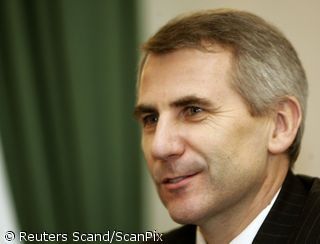 Today Lithuania‘s Minister of Foreign Affairs Vygaudas Ušackas is starting his official visit to Armenia where he will meet with the highest ranking officials of the state, as well as with the representatives of the international organizations and local authorities.
more »
Today Lithuania‘s Minister of Foreign Affairs Vygaudas Ušackas is starting his official visit to Armenia where he will meet with the highest ranking officials of the state, as well as with the representatives of the international organizations and local authorities.
more »
 On 20 November, Lithuania’s Minister of Foreign Affairs Vygaudas Ušackas congratulated Catherine Ashton who had just been elected as European Union‘s High Representative for Foreign Affairs and Security Policy.
more »
On 20 November, Lithuania’s Minister of Foreign Affairs Vygaudas Ušackas congratulated Catherine Ashton who had just been elected as European Union‘s High Representative for Foreign Affairs and Security Policy.
more »
 On 20 November, Lithuania’s Ministry of Foreign Affairs in cooperation with the Lithuanian business confederation | ICC Lithuania will host a seminar “Business in sub-Saharan Africa: Possibilities and Challenges”.
more »
On 20 November, Lithuania’s Ministry of Foreign Affairs in cooperation with the Lithuanian business confederation | ICC Lithuania will host a seminar “Business in sub-Saharan Africa: Possibilities and Challenges”.
more »