LITHUANIA BOTHERED WITH RUSSIAN OIL WELL PROXIMITY TO COURLAND SPIT
Published:
29 July 2004 y., Thursday
On Tuesday the Lukoil-Kaliningradmorneft subsidiary of the Russian Lukoil concern will put into operation the entire technological chain, beginning from the production of oil at the D-6 field on the Baltic shelf near Lithuania, the administration of the Kaliningrad region has said.
Lithuania will one more time ask Russia to provide the results of independent examination on the impact of the oil well on the environment and information on the exact time of putting into operation of the well, lying adjacent to the Lithuanian national park Courland Spit. It is listed among the UNESCO world heritage and Lithuania is concerned over possible oil leaks, threatening with an irreparable damage to the unique ecological system.
In the interview to the National Radio Alexandras Spruogis, secretary of the Environmental Protection Ministry, said that Russia has not carried out an independent examination of the well's impact on the environment.
The ministerial spokesman said that Russia has been obliged before February to conduct the examination with the inclusion of international experts in the assessment commission. If not, the Courland Spit will be automatically listed as an endangered global object.
Lithuania and Russia included the Courland Spit in the UNESCO list in 2000.
Discovered in 1983, the D-6 oil field is the largest on the sea shelf on the coast of the Kaliningrad region. By preliminary information, it can annually yield about 600,000 tons of oil. The well is located 23 kilometers away from the Courland Spit and five kilometers off Russia's sea border with Lithuania.
Inspecting the D-6 service forms and records last November, UNESCO experts found its operation being a danger to the environmental security of the Courland Spit national park.
Šaltinis:
RIA Novosti
Copying, publishing, announcing any information from the News.lt portal without written permission of News.lt editorial office is prohibited.
The most popular articles
 Guinness World Records officially declares that an Australian man has the world's largest feet.
more »
Guinness World Records officially declares that an Australian man has the world's largest feet.
more »
 It's a sniffer dog with a difference: a military Belgian Shepherd that has been trained to detect signs of prostate cancer in patients' urine. According to French scientists, the dog can do it far more accurately than any currently available scientific technique.
more »
It's a sniffer dog with a difference: a military Belgian Shepherd that has been trained to detect signs of prostate cancer in patients' urine. According to French scientists, the dog can do it far more accurately than any currently available scientific technique.
more »
 This week marks the beginning of hurricane season in the United States and scientists will be watching closely in the wake of extreme weather patterns that have devastated the Midwest. One of the questions they're trying to answer focuses on the impact of climate change and global warming.
more »
This week marks the beginning of hurricane season in the United States and scientists will be watching closely in the wake of extreme weather patterns that have devastated the Midwest. One of the questions they're trying to answer focuses on the impact of climate change and global warming.
more »
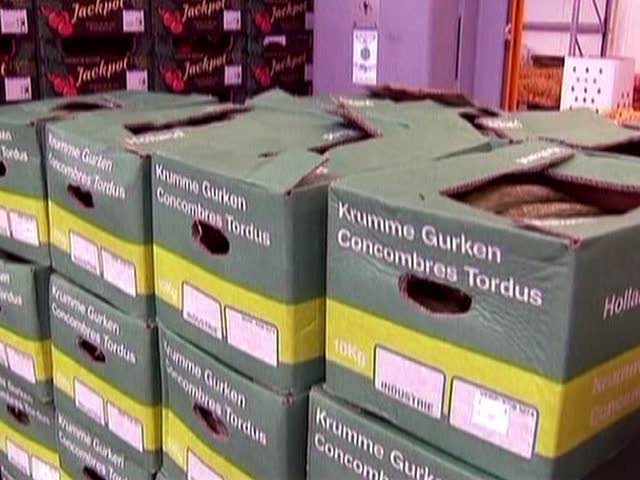 Spanish cucumbers are being blame for an E.coli outbreak that killed 10 people in Germany and sickened hundreds.
more »
Spanish cucumbers are being blame for an E.coli outbreak that killed 10 people in Germany and sickened hundreds.
more »
 Protesters clash with police as pro Mladic rallies continue in the Serbian capital.
more »
Protesters clash with police as pro Mladic rallies continue in the Serbian capital.
more »
 Japan, Geiger counters, radiation leak, Fuji Electric
more »
Japan, Geiger counters, radiation leak, Fuji Electric
more »
 Chinese artist Qi Baishi's ink-wash work is auctioned for 65.4 million U.S. Dollars (425 million yuan) in Beijing, setting a new record for contemporary Chinese painting.
more »
Chinese artist Qi Baishi's ink-wash work is auctioned for 65.4 million U.S. Dollars (425 million yuan) in Beijing, setting a new record for contemporary Chinese painting.
more »
 Georgian police wearing full riot gear used water cannons and rubber bullets to disperse protesters in Tiblisi.
more »
Georgian police wearing full riot gear used water cannons and rubber bullets to disperse protesters in Tiblisi.
more »
 CT scanning has allowed scientists to identify and recreate in stunning three-dimensional detail, an ancient spider trapped in amber for 50 million years...
more »
CT scanning has allowed scientists to identify and recreate in stunning three-dimensional detail, an ancient spider trapped in amber for 50 million years...
more »
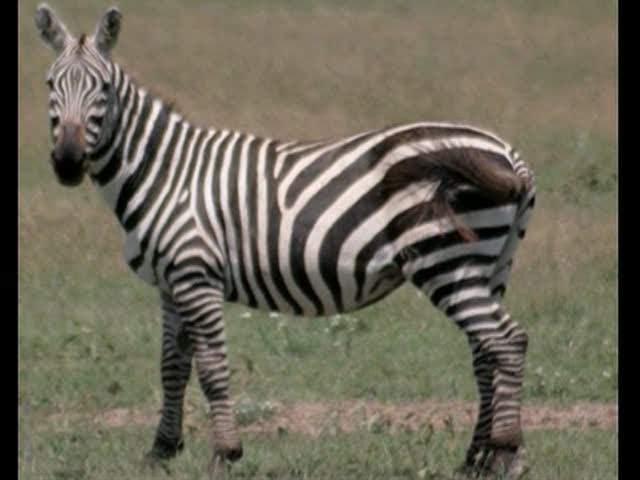 Researchers in Chicago have developed a new barcoding system that can identify and track zebras by their unique stripe patterns. The scientists say their computer program can also be modified to keep track of endangered species like tigers and some giraffe species.
more »
Researchers in Chicago have developed a new barcoding system that can identify and track zebras by their unique stripe patterns. The scientists say their computer program can also be modified to keep track of endangered species like tigers and some giraffe species.
more »