Foreign ministers of the six leading candidates for membership in the European Union have met in Prague to discuss progress toward expansion.
Published:
25 May 2001 y., Friday
At a press conference after the talks, some ministers did not conceal their frustration at the row now going on among EU members about restrictions on the free movement of labor from East to West.
The ministers -- from the Czech Republic, Estonia, Poland, Hungary, Slovenia, and Cyprus -- issued a diplomatically worded statement in which they expressed "satisfaction" that the Union had met the institutional preconditions for enlargement at its Nice summit five months ago. They reaffirmed their countries' "determination" to be ready for membership by the start of 2003, and they said they "expect" next month's EU summit in Sweden will spell out a timetable for the coming accession.
But the statement had a sting in its tail. At the end, it "invited" present EU member-states to avoid complicating the accession process by creating what it called "undue links" between different negotiating issues and by pursuing "short-term political interests."
This was a reference to the heavyweight quarrel now taking place among present EU members, which involves the linkage of two key issues that in themselves are quite separate. These issues are the free movement of labor and how development aid is to be shared among old and new members.
Germany and Austria, fearing a flood of cheap labor from the East when the newcomers join the Union, want a transition period of up to seven years during which Eastern workers would not have free access to Western labor markets.
At the same time, three of the poorer EU members -- Spain, Greece, and Portugal -- are worried that their massive levels of development aid from Brussels will be cut and the money assigned instead to the incoming Easterners.
The tie between the labor and aid issues is that Spain, supported by its two allies, wants guarantees that it will not lose access to high levels of development assistance after enlargement. It is threatening to block a compromise deal on the labor issue until it receives such guarantees.Estonia's Foreign Minister Toomas Ilves also cast doubt on the validity of the EU members' fears that they will be overrun by cheap labor from the East.
Šaltinis:
rferl.org
Copying, publishing, announcing any information from the News.lt portal without written permission of News.lt editorial office is prohibited.
The most popular articles
 Guinness World Records officially declares that an Australian man has the world's largest feet.
more »
Guinness World Records officially declares that an Australian man has the world's largest feet.
more »
 It's a sniffer dog with a difference: a military Belgian Shepherd that has been trained to detect signs of prostate cancer in patients' urine. According to French scientists, the dog can do it far more accurately than any currently available scientific technique.
more »
It's a sniffer dog with a difference: a military Belgian Shepherd that has been trained to detect signs of prostate cancer in patients' urine. According to French scientists, the dog can do it far more accurately than any currently available scientific technique.
more »
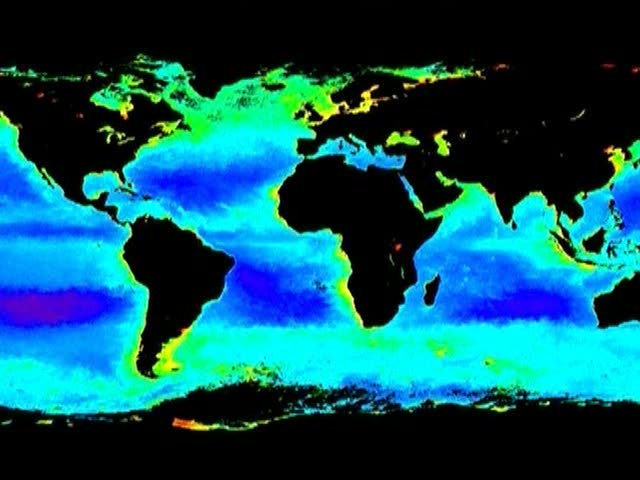 This week marks the beginning of hurricane season in the United States and scientists will be watching closely in the wake of extreme weather patterns that have devastated the Midwest. One of the questions they're trying to answer focuses on the impact of climate change and global warming.
more »
This week marks the beginning of hurricane season in the United States and scientists will be watching closely in the wake of extreme weather patterns that have devastated the Midwest. One of the questions they're trying to answer focuses on the impact of climate change and global warming.
more »
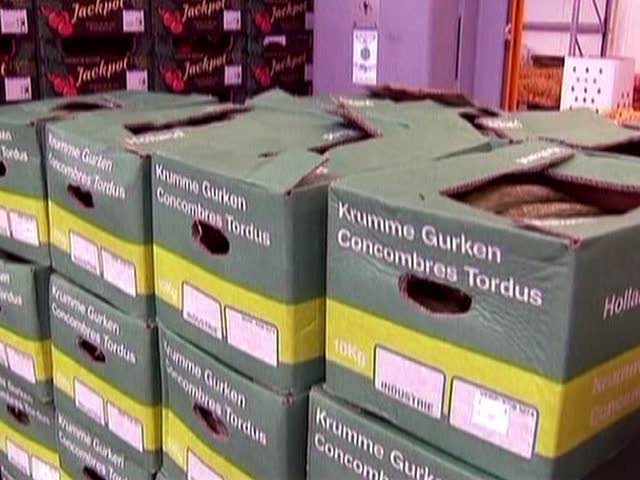 Spanish cucumbers are being blame for an E.coli outbreak that killed 10 people in Germany and sickened hundreds.
more »
Spanish cucumbers are being blame for an E.coli outbreak that killed 10 people in Germany and sickened hundreds.
more »
 Protesters clash with police as pro Mladic rallies continue in the Serbian capital.
more »
Protesters clash with police as pro Mladic rallies continue in the Serbian capital.
more »
 Japan, Geiger counters, radiation leak, Fuji Electric
more »
Japan, Geiger counters, radiation leak, Fuji Electric
more »
 Chinese artist Qi Baishi's ink-wash work is auctioned for 65.4 million U.S. Dollars (425 million yuan) in Beijing, setting a new record for contemporary Chinese painting.
more »
Chinese artist Qi Baishi's ink-wash work is auctioned for 65.4 million U.S. Dollars (425 million yuan) in Beijing, setting a new record for contemporary Chinese painting.
more »
 Georgian police wearing full riot gear used water cannons and rubber bullets to disperse protesters in Tiblisi.
more »
Georgian police wearing full riot gear used water cannons and rubber bullets to disperse protesters in Tiblisi.
more »
 CT scanning has allowed scientists to identify and recreate in stunning three-dimensional detail, an ancient spider trapped in amber for 50 million years...
more »
CT scanning has allowed scientists to identify and recreate in stunning three-dimensional detail, an ancient spider trapped in amber for 50 million years...
more »
 Researchers in Chicago have developed a new barcoding system that can identify and track zebras by their unique stripe patterns. The scientists say their computer program can also be modified to keep track of endangered species like tigers and some giraffe species.
more »
Researchers in Chicago have developed a new barcoding system that can identify and track zebras by their unique stripe patterns. The scientists say their computer program can also be modified to keep track of endangered species like tigers and some giraffe species.
more »