Foreign ministers of the six leading candidates for membership in the European Union have met in Prague to discuss progress toward expansion.
Published:
25 May 2001 y., Friday
At a press conference after the talks, some ministers did not conceal their frustration at the row now going on among EU members about restrictions on the free movement of labor from East to West.
The ministers -- from the Czech Republic, Estonia, Poland, Hungary, Slovenia, and Cyprus -- issued a diplomatically worded statement in which they expressed "satisfaction" that the Union had met the institutional preconditions for enlargement at its Nice summit five months ago. They reaffirmed their countries' "determination" to be ready for membership by the start of 2003, and they said they "expect" next month's EU summit in Sweden will spell out a timetable for the coming accession.
But the statement had a sting in its tail. At the end, it "invited" present EU member-states to avoid complicating the accession process by creating what it called "undue links" between different negotiating issues and by pursuing "short-term political interests."
This was a reference to the heavyweight quarrel now taking place among present EU members, which involves the linkage of two key issues that in themselves are quite separate. These issues are the free movement of labor and how development aid is to be shared among old and new members.
Germany and Austria, fearing a flood of cheap labor from the East when the newcomers join the Union, want a transition period of up to seven years during which Eastern workers would not have free access to Western labor markets.
At the same time, three of the poorer EU members -- Spain, Greece, and Portugal -- are worried that their massive levels of development aid from Brussels will be cut and the money assigned instead to the incoming Easterners.
The tie between the labor and aid issues is that Spain, supported by its two allies, wants guarantees that it will not lose access to high levels of development assistance after enlargement. It is threatening to block a compromise deal on the labor issue until it receives such guarantees.Estonia's Foreign Minister Toomas Ilves also cast doubt on the validity of the EU members' fears that they will be overrun by cheap labor from the East.
Šaltinis:
rferl.org
Copying, publishing, announcing any information from the News.lt portal without written permission of News.lt editorial office is prohibited.
The most popular articles
The whale shark is the largest living fish species and is usually found in tropical and warm oceans. This gentle giant is not dangerous to humans but demand for its internal organs is putting it in grave danger.
more »
 Land shortages in China and environmental concerns have inspired innovative alternatives at the Asia Funeral Expo in Hong Kong.
more »
Land shortages in China and environmental concerns have inspired innovative alternatives at the Asia Funeral Expo in Hong Kong.
more »
 Britain's Queen Elizabeth delivers landmark speech of reconciliation during visit to Ireland but stops short of apology.
more »
Britain's Queen Elizabeth delivers landmark speech of reconciliation during visit to Ireland but stops short of apology.
more »
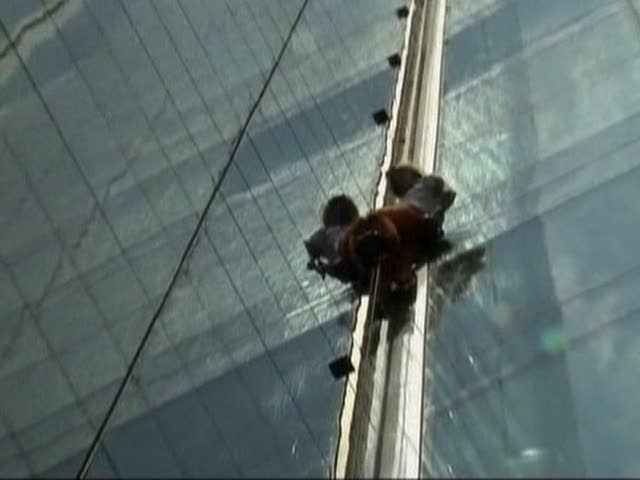 French climber Alain Robert, known as "Spiderman" scales Turkey's tallest building.
more »
French climber Alain Robert, known as "Spiderman" scales Turkey's tallest building.
more »
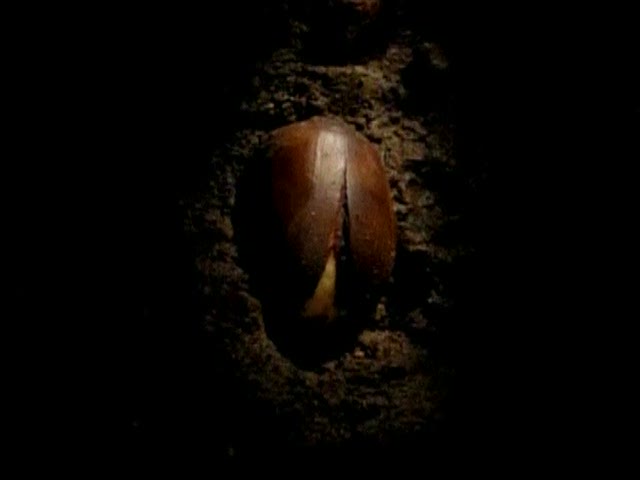 The growth of a tree takes place so slowly that, in real time, it's impossible to observe. Six years ago plant-lover and British film-maker Neil Bromhall decided to speed up the process with time-lapse photography...
more »
The growth of a tree takes place so slowly that, in real time, it's impossible to observe. Six years ago plant-lover and British film-maker Neil Bromhall decided to speed up the process with time-lapse photography...
more »
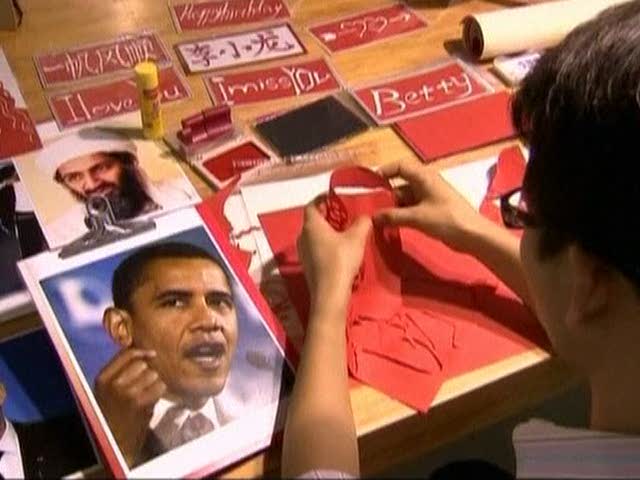 Chinese artist Wang Jiang makes portraits of famous faces including U.S. President Barack Obama and Osama bin Laden from nothing but paper torn by hand.
more »
Chinese artist Wang Jiang makes portraits of famous faces including U.S. President Barack Obama and Osama bin Laden from nothing but paper torn by hand.
more »
 Residents of the southern Spanish town of Lorca stay in makeshift camps and shelters after an earthquake hits the town, destroying buildings and killing at least eight.
more »
Residents of the southern Spanish town of Lorca stay in makeshift camps and shelters after an earthquake hits the town, destroying buildings and killing at least eight.
more »
 The latest technological development in robots is the main focus of the Shanghai International Conference on Robotics and Automation in China.
more »
The latest technological development in robots is the main focus of the Shanghai International Conference on Robotics and Automation in China.
more »
 A rare earthquake rocked Lorca, an ancient town in southeastern Spain, on Wednesday causing houses to collapse, damaging historic churches and public buildings and killing at least 10 people.
more »
A rare earthquake rocked Lorca, an ancient town in southeastern Spain, on Wednesday causing houses to collapse, damaging historic churches and public buildings and killing at least 10 people.
more »
 A small factory in New York's Brooklyn is doing its best to keep the dying art of making vinyl records.
more »
A small factory in New York's Brooklyn is doing its best to keep the dying art of making vinyl records.
more »