The European commission expects the EU's 25 member governments to agree on a significant loosening of the controversial stability and growth pact by spring to kickstart faltering economic growth and create more jobs in the eurozone
Published:
24 December 2004 y., Friday
The European commission expects the EU's 25 member governments to agree on a significant loosening of the controversial stability and growth pact by spring to kickstart faltering economic growth and create more jobs in the eurozone.
Joaquín Almunia, the economic and monetary affairs commissioner, indicated yesterday that reform of the pact, which limits budget deficits to 3% and national debt to 60% of GDP, should be agreed at the March EU summit.
The reforms are sought by a large number of troubled governments struggling with low growth and prolonged unemployment but opposed by disciplinarian countries worried that the pact will be rendered even more meaningless after last week's decision to let serial sinners France and Germany off the hook.
They could be agreed along with changes to the so-called Lisbon strategy, which aims to make the EU the world's most dynamic knowledge-based economy, overtaking the US in terms of innovation, job-creation and sustainable growth - at a time when the US is growing at 4% and the eurozone at under 2%.
Mr Almunia, who is likely to revise down his forecast of 2% growth in the zone in 2005 because of the impact of the soaring euro on exports, said: "I am quite optimistic that we will be able to reach agreement [on pact reform] within the first few months of next year."
His comments came as the commission set in train measures to penalise Greece, already found guilty of supplying false deficit figures before it entered the euro in 2002, for overstepping the 3% ceiling with a likely deficit of 5.3% this year and 3.6% in 2005 - with the 2005 figure not yet accounting for the special effect that this year's Olympic Games will have.
Šaltinis:
The Guardian
Copying, publishing, announcing any information from the News.lt portal without written permission of News.lt editorial office is prohibited.
The most popular articles
 Guinness World Records officially declares that an Australian man has the world's largest feet.
more »
Guinness World Records officially declares that an Australian man has the world's largest feet.
more »
 It's a sniffer dog with a difference: a military Belgian Shepherd that has been trained to detect signs of prostate cancer in patients' urine. According to French scientists, the dog can do it far more accurately than any currently available scientific technique.
more »
It's a sniffer dog with a difference: a military Belgian Shepherd that has been trained to detect signs of prostate cancer in patients' urine. According to French scientists, the dog can do it far more accurately than any currently available scientific technique.
more »
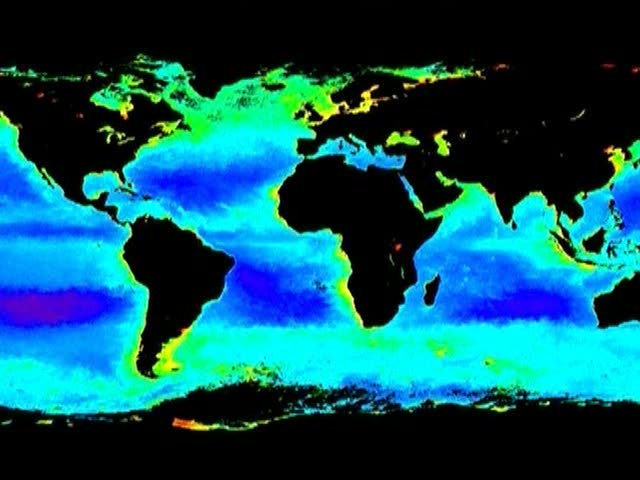 This week marks the beginning of hurricane season in the United States and scientists will be watching closely in the wake of extreme weather patterns that have devastated the Midwest. One of the questions they're trying to answer focuses on the impact of climate change and global warming.
more »
This week marks the beginning of hurricane season in the United States and scientists will be watching closely in the wake of extreme weather patterns that have devastated the Midwest. One of the questions they're trying to answer focuses on the impact of climate change and global warming.
more »
 Spanish cucumbers are being blame for an E.coli outbreak that killed 10 people in Germany and sickened hundreds.
more »
Spanish cucumbers are being blame for an E.coli outbreak that killed 10 people in Germany and sickened hundreds.
more »
 Protesters clash with police as pro Mladic rallies continue in the Serbian capital.
more »
Protesters clash with police as pro Mladic rallies continue in the Serbian capital.
more »
 Japan, Geiger counters, radiation leak, Fuji Electric
more »
Japan, Geiger counters, radiation leak, Fuji Electric
more »
 Chinese artist Qi Baishi's ink-wash work is auctioned for 65.4 million U.S. Dollars (425 million yuan) in Beijing, setting a new record for contemporary Chinese painting.
more »
Chinese artist Qi Baishi's ink-wash work is auctioned for 65.4 million U.S. Dollars (425 million yuan) in Beijing, setting a new record for contemporary Chinese painting.
more »
 Georgian police wearing full riot gear used water cannons and rubber bullets to disperse protesters in Tiblisi.
more »
Georgian police wearing full riot gear used water cannons and rubber bullets to disperse protesters in Tiblisi.
more »
 CT scanning has allowed scientists to identify and recreate in stunning three-dimensional detail, an ancient spider trapped in amber for 50 million years...
more »
CT scanning has allowed scientists to identify and recreate in stunning three-dimensional detail, an ancient spider trapped in amber for 50 million years...
more »
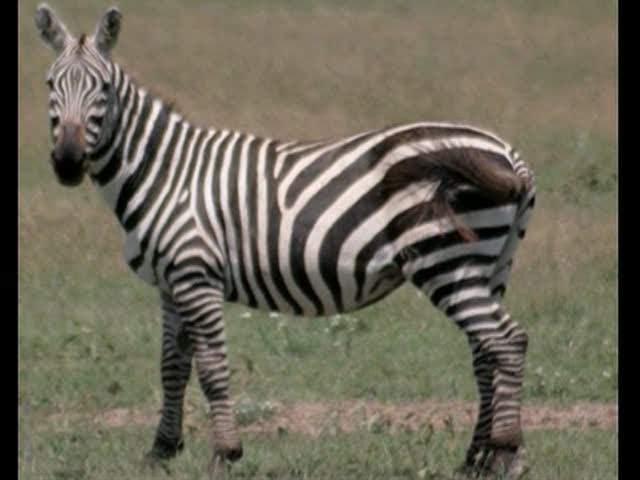 Researchers in Chicago have developed a new barcoding system that can identify and track zebras by their unique stripe patterns. The scientists say their computer program can also be modified to keep track of endangered species like tigers and some giraffe species.
more »
Researchers in Chicago have developed a new barcoding system that can identify and track zebras by their unique stripe patterns. The scientists say their computer program can also be modified to keep track of endangered species like tigers and some giraffe species.
more »