Leaders of the world's major industrialized nations, hoping to stem a growing backlash against globalization, pledged Sunday at their annual economic summit to do more to provide schooling, health care and food to the poorest nations.
Published:
24 July 2000 y., Monday
In a communique issued at the conclusion of their three-day summit, the leaders cited "unprecedented economic progress" by many world nations and agreed that more must be done to spread that prosperity to poorer nations. "The 21st century must be a century of prosperity for all," they said.
They said their countries must work harder to relieve the debt burden of developing nations. "We must for our part promote more responsible lending and borrowing practices to ensure that (poor countries) will not again be burdened by unsupportable
debt," the communique said.
German Chancellor Gerhard Schroeder, whose country agreed to restructure $4 billion of Russia's debt, suggested that wealthy nations hold back demands for poorer countries to pay off their loans. "It would be better to put the money in health and education systems in these countries," he told reporters.
The Okinawa meeting was the first "development summit" for the Group of Eight - leaders of the seven richest industrialized nations and Russia, and the last G-8
meeting for President Clinton. Clinton announced that the United States will send $300 million in surplus farm crops to provide school lunches in the developing world.
The eight countries set a goal of universal primary education for all the world's children by 2015, and gender equality in schools by 2005. Currently, 100 million children in developing nations are not in school.
They also vowed to reduce by the year 2010 the number of HIV-infected young people by 25 percent, tuberculosis deaths by 50 percent, and the burden of diseases associated with malaria by 50 percent.
Šaltinis:
AP Online
Copying, publishing, announcing any information from the News.lt portal without written permission of News.lt editorial office is prohibited.
The most popular articles
 President Dalia Grybauskaitė sent congratulations on behalf of herself and the people of Lithuania to President Dmitry Medvedev of the Russian Federation on the Day of Russia.
more »
President Dalia Grybauskaitė sent congratulations on behalf of herself and the people of Lithuania to President Dmitry Medvedev of the Russian Federation on the Day of Russia.
more »
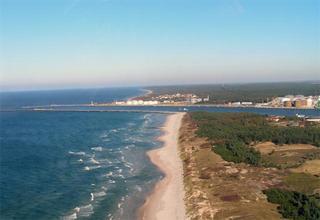 Political support, commitment at all levels of governance and ensured financing are crucial elements for the successful implementation of the European Union Strategy for the Baltic Sea Region, Lithuania’s Vice-Minister of Foreign Affairs A. Skaisgirytė Liauškienė said at the seminar, dedicated to discuss financial and management aspects of the Strategy’s implementation.
more »
Political support, commitment at all levels of governance and ensured financing are crucial elements for the successful implementation of the European Union Strategy for the Baltic Sea Region, Lithuania’s Vice-Minister of Foreign Affairs A. Skaisgirytė Liauškienė said at the seminar, dedicated to discuss financial and management aspects of the Strategy’s implementation.
more »
 On 10 June, Political Director of Lithuania’s Ministry of Foreign Affairs Eitvydas Bajarūnas took part in the political consultations with officials from the Ukrainian Foreign Ministry in Kyiv.
more »
On 10 June, Political Director of Lithuania’s Ministry of Foreign Affairs Eitvydas Bajarūnas took part in the political consultations with officials from the Ukrainian Foreign Ministry in Kyiv.
more »
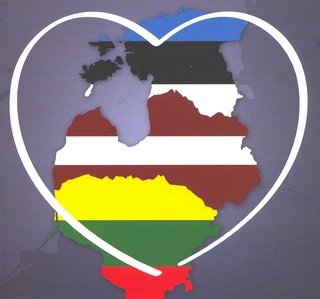 On 10 June, a seminar to discuss financial and management aspects of the implementation of the EU Strategy for the Baltic Sea Region will be held in Vilnius.
more »
On 10 June, a seminar to discuss financial and management aspects of the implementation of the EU Strategy for the Baltic Sea Region will be held in Vilnius.
more »
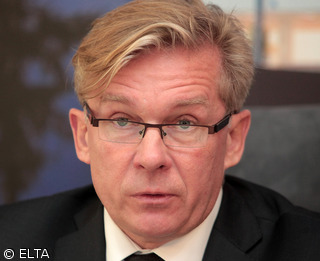 Two entities with common objectives, Conference on Interaction and Confidence Building Measures in Asia and the Organization for Security and Co-operation in Europe, could act alongside each other, Lithuania’s Minister of Foreign Affairs A. Ažubalis says.
more »
Two entities with common objectives, Conference on Interaction and Confidence Building Measures in Asia and the Organization for Security and Co-operation in Europe, could act alongside each other, Lithuania’s Minister of Foreign Affairs A. Ažubalis says.
more »
 President of the Republic of Lithuania Dalia Grybauskaitė has just made her first State of the Nation Address in the Seimas, to give an overview of the situation of the country and the status of internal and foreign policies of the state, as required under the Constitution of the Republic of Lithuania.
more »
President of the Republic of Lithuania Dalia Grybauskaitė has just made her first State of the Nation Address in the Seimas, to give an overview of the situation of the country and the status of internal and foreign policies of the state, as required under the Constitution of the Republic of Lithuania.
more »
 A round table discussion "Europe 2030: Do We Have a New Approach?" was held on 4 June in Vilnius.
more »
A round table discussion "Europe 2030: Do We Have a New Approach?" was held on 4 June in Vilnius.
more »
 On 7 June in Vilnius, Lithuania’s Vice-Minister of Foreign Affairs Šarūnas Adomavičius met with Chairman of the Knesset Lithuanian-Israeli Parliamentary Friendship Group Zeev Bielski and discussed the cooperation between the countries, as well as in international organizations.
more »
On 7 June in Vilnius, Lithuania’s Vice-Minister of Foreign Affairs Šarūnas Adomavičius met with Chairman of the Knesset Lithuanian-Israeli Parliamentary Friendship Group Zeev Bielski and discussed the cooperation between the countries, as well as in international organizations.
more »
 Today Chancellor Angela Merkel of the Federal Republic of Germany called President of the Republic of Lithuania Dalia Grybauskaitė to express regrets at not having been able to come to Lithuania earlier in the week due to the complicated political situation in Germany.
more »
Today Chancellor Angela Merkel of the Federal Republic of Germany called President of the Republic of Lithuania Dalia Grybauskaitė to express regrets at not having been able to come to Lithuania earlier in the week due to the complicated political situation in Germany.
more »
 President of the Republic of Lithuania Dalia Grybauskaitė met with the President of the European Commission, Jose Manuel Barroso, who is currently visiting Lithuania.
more »
President of the Republic of Lithuania Dalia Grybauskaitė met with the President of the European Commission, Jose Manuel Barroso, who is currently visiting Lithuania.
more »