Moore's Law, as chip manufacturers generally refer to it today, is coming to an end, according to a recent research paper
Published:
2 December 2003 y., Tuesday
Granted, that end likely won't come for about two decades, but Intel researchers have recently published a paper theorizing that chipmakers will hit a wall when it comes to shrinking the size of transistors, one of the chief methods for making chips that are smaller, more powerful and cheaper than their predecessors.
Manufacturers will be able to produce chips on the 16-nanometer manufacturing process, expected by conservative estimates to arrive in 2018, and maybe one or two manufacturing processes after that, but that's it.
"This looks like a fundamental limit," said Paolo Gargini, director of technology strategy at Intel and an Intel fellow. The paper, titled "Limits to Binary Logic Switch Scaling--A Gedanken Model," was written by four authors and was published in the Proceedings of the IEEE (Institute of Electrical and Electronics Engineers) in November.
Although it's not unusual for researchers to theorize about the end of transistor scaling, it's an unusual statement for researchers from Intel, and it underscores the difficulties chip designers currently face. The size, energy consumption and performance requirements of today's computers are forcing semiconductor makers to completely rethink how they design their products and are prompting many to pool design with research and development.
Resolving these issues is a major goal for the entire industry. Under Moore's Law, chipmakers can double the number of transistors on a given chip every two years, an exponential growth pattern that has allowed computers to get both cheaper and more powerful at the same time.
Šaltinis:
news.com.com
Copying, publishing, announcing any information from the News.lt portal without written permission of News.lt editorial office is prohibited.
The most popular articles
 Guinness World Records officially declares that an Australian man has the world's largest feet.
more »
Guinness World Records officially declares that an Australian man has the world's largest feet.
more »
 It's a sniffer dog with a difference: a military Belgian Shepherd that has been trained to detect signs of prostate cancer in patients' urine. According to French scientists, the dog can do it far more accurately than any currently available scientific technique.
more »
It's a sniffer dog with a difference: a military Belgian Shepherd that has been trained to detect signs of prostate cancer in patients' urine. According to French scientists, the dog can do it far more accurately than any currently available scientific technique.
more »
 This week marks the beginning of hurricane season in the United States and scientists will be watching closely in the wake of extreme weather patterns that have devastated the Midwest. One of the questions they're trying to answer focuses on the impact of climate change and global warming.
more »
This week marks the beginning of hurricane season in the United States and scientists will be watching closely in the wake of extreme weather patterns that have devastated the Midwest. One of the questions they're trying to answer focuses on the impact of climate change and global warming.
more »
 Spanish cucumbers are being blame for an E.coli outbreak that killed 10 people in Germany and sickened hundreds.
more »
Spanish cucumbers are being blame for an E.coli outbreak that killed 10 people in Germany and sickened hundreds.
more »
 Protesters clash with police as pro Mladic rallies continue in the Serbian capital.
more »
Protesters clash with police as pro Mladic rallies continue in the Serbian capital.
more »
 Japan, Geiger counters, radiation leak, Fuji Electric
more »
Japan, Geiger counters, radiation leak, Fuji Electric
more »
 Chinese artist Qi Baishi's ink-wash work is auctioned for 65.4 million U.S. Dollars (425 million yuan) in Beijing, setting a new record for contemporary Chinese painting.
more »
Chinese artist Qi Baishi's ink-wash work is auctioned for 65.4 million U.S. Dollars (425 million yuan) in Beijing, setting a new record for contemporary Chinese painting.
more »
 Georgian police wearing full riot gear used water cannons and rubber bullets to disperse protesters in Tiblisi.
more »
Georgian police wearing full riot gear used water cannons and rubber bullets to disperse protesters in Tiblisi.
more »
 CT scanning has allowed scientists to identify and recreate in stunning three-dimensional detail, an ancient spider trapped in amber for 50 million years...
more »
CT scanning has allowed scientists to identify and recreate in stunning three-dimensional detail, an ancient spider trapped in amber for 50 million years...
more »
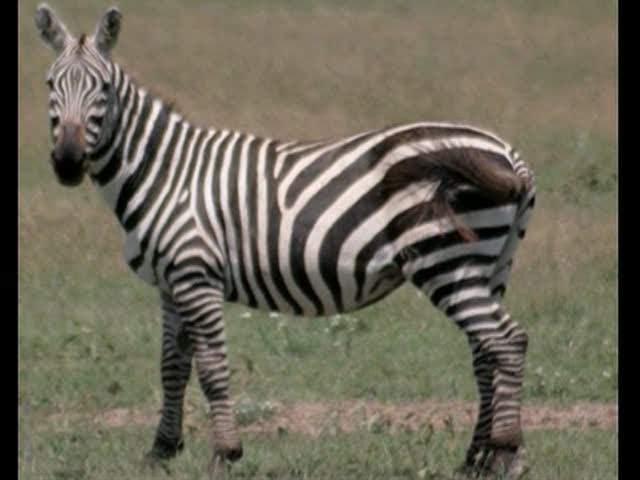 Researchers in Chicago have developed a new barcoding system that can identify and track zebras by their unique stripe patterns. The scientists say their computer program can also be modified to keep track of endangered species like tigers and some giraffe species.
more »
Researchers in Chicago have developed a new barcoding system that can identify and track zebras by their unique stripe patterns. The scientists say their computer program can also be modified to keep track of endangered species like tigers and some giraffe species.
more »