Iran's foreign minister said yesterday that his country would begin talks with the United Nations about improving access to its nuclear activities
Published:
5 September 2003 y., Friday
Iran's foreign minister said yesterday that his country would begin talks with the United Nations about improving access to its nuclear activities.
Kamal Kharrazi, in Tokyo for a two-day visit, said he told Japanese Prime Minister Junichiro Koizumi about his plans to negotiate with the U.N. International Atomic Energy Agency about inspections.
Until this week, Iran had been resisting months of international pressure to sign the protocol, which would allow IAEA inspectors unfettered access to its nuclear program.
The United States alleges Iran has been secretly developing nuclear weapons. It has demanded the country allow more intrusive inspections of its facilities. Iran says its nuclear program is for peaceful purposes.
Concerns over the Iranian nuclear program increased this week after an IAEA report said U.N. inspectors found traces of highly enriched, weapons-grade uranium at Iran's Natanz nuclear facility. Ali-Akbar Salehi, Tehran's ambassador to the Vienna-based IAEA, said Iran offered Monday to enter negotiations with the nuclear agency over the protocol. He said talks would likely begin after next month.
Japanese Foreign Ministry spokesman Jiro Okuyama said Kharrazi told Koizumi that Iran has no intention to develop nuclear arms but has a right to develop nuclear power. Koizumi reminded Kharrazi of the global concern about Iran's nuclear programs and urged the foreign minister to fully cooperate with IAEA and the international community, Okuyama said.
Šaltinis:
iran.ru
Copying, publishing, announcing any information from the News.lt portal without written permission of News.lt editorial office is prohibited.
The most popular articles
 The Government of Lithuania has reached a watershed agreement with the nation’s most important business, labour and social groups on policies and initiatives to overcome the current deep recession as swiftly as possible and put the economy back on track for euro adoption and stable growth.
more »
The Government of Lithuania has reached a watershed agreement with the nation’s most important business, labour and social groups on policies and initiatives to overcome the current deep recession as swiftly as possible and put the economy back on track for euro adoption and stable growth.
more »
 Yesterday, 26 October, the EU countries agreed to adopt a common strategy for the Baltic Sea region.
more »
Yesterday, 26 October, the EU countries agreed to adopt a common strategy for the Baltic Sea region.
more »
 President Dalia Grybauskaitė extended congratulations to President Gurbanguly Berdymuhamedov of Turkmenistan on the occasion of Independence Day.
more »
President Dalia Grybauskaitė extended congratulations to President Gurbanguly Berdymuhamedov of Turkmenistan on the occasion of Independence Day.
more »
 President Dalia Grybauskaitė received OSCE Secretary General Marc Perrin de Brichambaut.
more »
President Dalia Grybauskaitė received OSCE Secretary General Marc Perrin de Brichambaut.
more »
 President Dalia Grybauskaitė received representatives of the European Business Network and foreign investors in Lithuania.
more »
President Dalia Grybauskaitė received representatives of the European Business Network and foreign investors in Lithuania.
more »
 Prime Minister Andrius Kubilius has received a visit from the new Extraordinary and Plenipotentiary Ambassador of the United States to Lithuania Anne Elizabeth Derse.
more »
Prime Minister Andrius Kubilius has received a visit from the new Extraordinary and Plenipotentiary Ambassador of the United States to Lithuania Anne Elizabeth Derse.
more »
 Today, on 21 October during the visit to Austria, Lithuania’s Minister of Foreign Affairs Vygaudas Ušackas met with Michael Spindelegger, Minister for European and Foreign Affairs of Austria.
more »
Today, on 21 October during the visit to Austria, Lithuania’s Minister of Foreign Affairs Vygaudas Ušackas met with Michael Spindelegger, Minister for European and Foreign Affairs of Austria.
more »
 October 19-20, Minister of National Defence Rasa Juknevičienė will pay a formal visit the UK by invitation of Defence Secretary Bob Ainsworth.
more »
October 19-20, Minister of National Defence Rasa Juknevičienė will pay a formal visit the UK by invitation of Defence Secretary Bob Ainsworth.
more »
 On 17 October in Baku, Lithuania’s Minister of Foreign Affairs Vygaudas Ušackas and Minister of Foreign Affairs of Azerbaijan Elmar Mammadyarov discussed bilateral cooperation...
more »
On 17 October in Baku, Lithuania’s Minister of Foreign Affairs Vygaudas Ušackas and Minister of Foreign Affairs of Azerbaijan Elmar Mammadyarov discussed bilateral cooperation...
more »
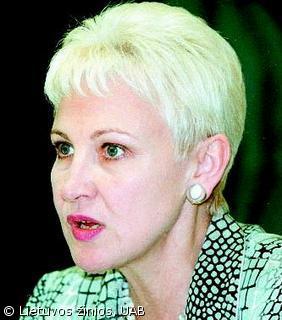 Ms Irena Degutienė, Speaker of the Seimas of the Republic of Lithuania, participated in the International Conference Europe 70 years after the Molotov–Ribbentrop Pact held by the European Parliament.
more »
Ms Irena Degutienė, Speaker of the Seimas of the Republic of Lithuania, participated in the International Conference Europe 70 years after the Molotov–Ribbentrop Pact held by the European Parliament.
more »