Israel withdrew from 6.1 percent of the West Bank on Tuesday, giving Palestinian leader Yasser Arafat a stronger hold over about 40 percent of the disputed territories as the two sides headed into talks on a final peace treaty.
Published:
23 March 2000 y., Thursday
The transfer helps create the territorial contiguity Arafat needs for future statehood. Palestinians celebrating the withdrawal said the handover brought them one step closer to Jerusalem, claimed by both sides as a capital.
The Palestinians had demanded suburbs of Jerusalem for the withdrawal that was originally to have taken place Jan. 20, but Israel refused. The dispute stalled negotiations for five weeks.
A compromise gave the Palestinians villages near but not bordering Jerusalem. The withdrawal from lands abutting the Palestinian cities of Hebron, Ramallah and Nablus solidifies Arafat's control over key parts of the West Bank.
In Beitunia, small crowds greeted jeeploads of Palestinian police who rolled into the new territories, firing their rifles into the air in celebration.
Palestinian and Israeli negotiators resumed talks near Washington on Tuesday over a framework agreement for a final peace treaty. The framework is due in May and the final treaty in September. Among issues on the table are Jerusalem, borders, Palestinian refugees and Jewish settlements.
Copying, publishing, announcing any information from the News.lt portal without written permission of News.lt editorial office is prohibited.
The most popular articles
 President Dalia Grybauskaitė sent congratulations on behalf of herself and the people of Lithuania to President Dmitry Medvedev of the Russian Federation on the Day of Russia.
more »
President Dalia Grybauskaitė sent congratulations on behalf of herself and the people of Lithuania to President Dmitry Medvedev of the Russian Federation on the Day of Russia.
more »
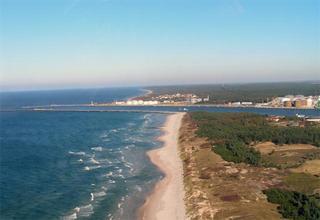 Political support, commitment at all levels of governance and ensured financing are crucial elements for the successful implementation of the European Union Strategy for the Baltic Sea Region, Lithuania’s Vice-Minister of Foreign Affairs A. Skaisgirytė Liauškienė said at the seminar, dedicated to discuss financial and management aspects of the Strategy’s implementation.
more »
Political support, commitment at all levels of governance and ensured financing are crucial elements for the successful implementation of the European Union Strategy for the Baltic Sea Region, Lithuania’s Vice-Minister of Foreign Affairs A. Skaisgirytė Liauškienė said at the seminar, dedicated to discuss financial and management aspects of the Strategy’s implementation.
more »
 On 10 June, Political Director of Lithuania’s Ministry of Foreign Affairs Eitvydas Bajarūnas took part in the political consultations with officials from the Ukrainian Foreign Ministry in Kyiv.
more »
On 10 June, Political Director of Lithuania’s Ministry of Foreign Affairs Eitvydas Bajarūnas took part in the political consultations with officials from the Ukrainian Foreign Ministry in Kyiv.
more »
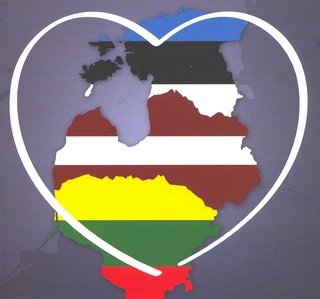 On 10 June, a seminar to discuss financial and management aspects of the implementation of the EU Strategy for the Baltic Sea Region will be held in Vilnius.
more »
On 10 June, a seminar to discuss financial and management aspects of the implementation of the EU Strategy for the Baltic Sea Region will be held in Vilnius.
more »
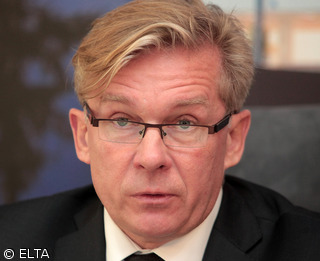 Two entities with common objectives, Conference on Interaction and Confidence Building Measures in Asia and the Organization for Security and Co-operation in Europe, could act alongside each other, Lithuania’s Minister of Foreign Affairs A. Ažubalis says.
more »
Two entities with common objectives, Conference on Interaction and Confidence Building Measures in Asia and the Organization for Security and Co-operation in Europe, could act alongside each other, Lithuania’s Minister of Foreign Affairs A. Ažubalis says.
more »
 President of the Republic of Lithuania Dalia Grybauskaitė has just made her first State of the Nation Address in the Seimas, to give an overview of the situation of the country and the status of internal and foreign policies of the state, as required under the Constitution of the Republic of Lithuania.
more »
President of the Republic of Lithuania Dalia Grybauskaitė has just made her first State of the Nation Address in the Seimas, to give an overview of the situation of the country and the status of internal and foreign policies of the state, as required under the Constitution of the Republic of Lithuania.
more »
 A round table discussion "Europe 2030: Do We Have a New Approach?" was held on 4 June in Vilnius.
more »
A round table discussion "Europe 2030: Do We Have a New Approach?" was held on 4 June in Vilnius.
more »
 On 7 June in Vilnius, Lithuania’s Vice-Minister of Foreign Affairs Šarūnas Adomavičius met with Chairman of the Knesset Lithuanian-Israeli Parliamentary Friendship Group Zeev Bielski and discussed the cooperation between the countries, as well as in international organizations.
more »
On 7 June in Vilnius, Lithuania’s Vice-Minister of Foreign Affairs Šarūnas Adomavičius met with Chairman of the Knesset Lithuanian-Israeli Parliamentary Friendship Group Zeev Bielski and discussed the cooperation between the countries, as well as in international organizations.
more »
 Today Chancellor Angela Merkel of the Federal Republic of Germany called President of the Republic of Lithuania Dalia Grybauskaitė to express regrets at not having been able to come to Lithuania earlier in the week due to the complicated political situation in Germany.
more »
Today Chancellor Angela Merkel of the Federal Republic of Germany called President of the Republic of Lithuania Dalia Grybauskaitė to express regrets at not having been able to come to Lithuania earlier in the week due to the complicated political situation in Germany.
more »
 President of the Republic of Lithuania Dalia Grybauskaitė met with the President of the European Commission, Jose Manuel Barroso, who is currently visiting Lithuania.
more »
President of the Republic of Lithuania Dalia Grybauskaitė met with the President of the European Commission, Jose Manuel Barroso, who is currently visiting Lithuania.
more »