Israel withdrew from 6.1 percent of the West Bank on Tuesday, giving Palestinian leader Yasser Arafat a stronger hold over about 40 percent of the disputed territories as the two sides headed into talks on a final peace treaty.
Published:
23 March 2000 y., Thursday
The transfer helps create the territorial contiguity Arafat needs for future statehood. Palestinians celebrating the withdrawal said the handover brought them one step closer to Jerusalem, claimed by both sides as a capital.
The Palestinians had demanded suburbs of Jerusalem for the withdrawal that was originally to have taken place Jan. 20, but Israel refused. The dispute stalled negotiations for five weeks.
A compromise gave the Palestinians villages near but not bordering Jerusalem. The withdrawal from lands abutting the Palestinian cities of Hebron, Ramallah and Nablus solidifies Arafat's control over key parts of the West Bank.
In Beitunia, small crowds greeted jeeploads of Palestinian police who rolled into the new territories, firing their rifles into the air in celebration.
Palestinian and Israeli negotiators resumed talks near Washington on Tuesday over a framework agreement for a final peace treaty. The framework is due in May and the final treaty in September. Among issues on the table are Jerusalem, borders, Palestinian refugees and Jewish settlements.
Copying, publishing, announcing any information from the News.lt portal without written permission of News.lt editorial office is prohibited.
The most popular articles
 President of the Republic of Lithuania Dalia Grybauskaitė congratulated her Italian counterpart, President Giorgio Napolitano, on the Italian national holiday, the Republic Day.
more »
President of the Republic of Lithuania Dalia Grybauskaitė congratulated her Italian counterpart, President Giorgio Napolitano, on the Italian national holiday, the Republic Day.
more »
 The European Union supports and promotes the region through the Baltic Sea Strategy, specially designed to encourage regional cooperation.
more »
The European Union supports and promotes the region through the Baltic Sea Strategy, specially designed to encourage regional cooperation.
more »
 One of the most important topics for Lithuania - efforts to overcome energy isolation of Lithuania and other Baltic States and to strengthen energy security in the Baltic Sea region – is included into the agenda of the Baltic Development Forum (BDF) Summit, which started on 1 June in Vilnius.
more »
One of the most important topics for Lithuania - efforts to overcome energy isolation of Lithuania and other Baltic States and to strengthen energy security in the Baltic Sea region – is included into the agenda of the Baltic Development Forum (BDF) Summit, which started on 1 June in Vilnius.
more »
 President of the Republic of Lithuania Dalia Grybauskaitė will have a meeting with the President of the European Commission, Jose Manuel Barroso, in Vilnius.
more »
President of the Republic of Lithuania Dalia Grybauskaitė will have a meeting with the President of the European Commission, Jose Manuel Barroso, in Vilnius.
more »
 On 28 May in Vilnius, Lithuania’s Minister of Foreign Affairs Audronius Ažubalis met with ambassadors of NATO countries, who reside in Lithuania.
more »
On 28 May in Vilnius, Lithuania’s Minister of Foreign Affairs Audronius Ažubalis met with ambassadors of NATO countries, who reside in Lithuania.
more »
 New British Foreign Secretary William Hague sent a letter to Lithuania’s Minister of Foreign Affairs A. Ažubalis, highlighting the determination to continue and to broaden the close working relationship that the UK and Lithuania shares both bilaterally and within the framework of the EU and NATO.
more »
New British Foreign Secretary William Hague sent a letter to Lithuania’s Minister of Foreign Affairs A. Ažubalis, highlighting the determination to continue and to broaden the close working relationship that the UK and Lithuania shares both bilaterally and within the framework of the EU and NATO.
more »
 At the meeting of foreign ministers from the European Union and the Association of Southeast Asian Nations on 25-26 May in Madrid, Lithuania’s Vice-Minister of Foreign Affairs Šarūnas Adomavičius invited Southeast Asian countries to contribute to the implementation of projects in the province of Ghor, Afghanistan, where Lithuania leads a Provincial Reconstruction Team.
more »
At the meeting of foreign ministers from the European Union and the Association of Southeast Asian Nations on 25-26 May in Madrid, Lithuania’s Vice-Minister of Foreign Affairs Šarūnas Adomavičius invited Southeast Asian countries to contribute to the implementation of projects in the province of Ghor, Afghanistan, where Lithuania leads a Provincial Reconstruction Team.
more »
On 27 May in Vilnius, Lithuania’s Minister of Foreign Affairs Audronius Ažubalis met with prominent figure of the world’s Lithuanian community, scientist and conservationist Dr. Birutė Galdikas.
more »
 President Dalia Grybauskaitė extended congratulations to President Serzh Sargsyan of Armenia on national holiday - Republic Day.
more »
President Dalia Grybauskaitė extended congratulations to President Serzh Sargsyan of Armenia on national holiday - Republic Day.
more »
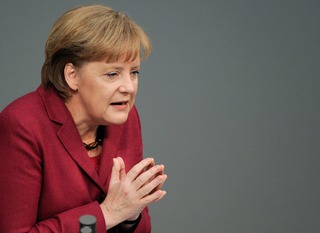 Next Tuesday, June 1 at 17.00 hours, President Dalia Grybauskaitė will meet with the Chancellor of the Federal Republic of Germany, Angela Merkel, who will be in Vilnius on a working visit.
more »
Next Tuesday, June 1 at 17.00 hours, President Dalia Grybauskaitė will meet with the Chancellor of the Federal Republic of Germany, Angela Merkel, who will be in Vilnius on a working visit.
more »