Ukrainian President and German Chancellor Unable to Agree.
Published:
16 July 1999 y., Friday
CEE Bankwatch Network is disappointed with the results of negotiations between German Chancellor Schrouder and Ukrainian President Kuchma. Schrouder visited Ukraine to discuss alternatives to two nuclear power plants - Khmelnitsky 2 and Rivne 4 (K2/R4). President Kuchma and Chancellor Schrouder were unable to agree on a non-nuclear energy project to replace Chernobyl_s energy production capacity. The package presented to the Ukrainian Government by Schrouder stems from a resolution adopted by the German Parliament on May 17, 1999, asking the German Government to oppose the K2/R4 Project in the EBRD board. In a 1995 Memorandum of Understanding between G-7 countries and Ukraine, the K2/R4 Project was proposed by the G-7 as one of several replacement options for Chernobyl. Since then, K2/R4 was misleadingly introduced by the European Bank for Reconstruction and Development (EBRD) as the only viable option for the reconstruction of the Ukrainian energy sector. This is despite the fact that the Ukrainian State Committee for Energy Conservation prepared a list of 66 alternative energy projects which would exceed the 1000 MW presently produced by Chernobyl. Yet, the EBRD is now expected to lend 190 million of the1.72 billion USD needed to complete the K2/R4 Project. The widespread opposition of the Ukrainian public to the G-7 and EBRD plan to fund the hazardous K2/R4 nuclear reactors has been matched internationally. Over 260 organisations from 41 countries supported a letter to G-7 leaders which called on them to fund non-nuclear projects rather than the K2/R4 Project.
Copying, publishing, announcing any information from the News.lt portal without written permission of News.lt editorial office is prohibited.
The most popular articles
 President of the Republic of Lithuania Dalia Grybauskaitė congratulated her Italian counterpart, President Giorgio Napolitano, on the Italian national holiday, the Republic Day.
more »
President of the Republic of Lithuania Dalia Grybauskaitė congratulated her Italian counterpart, President Giorgio Napolitano, on the Italian national holiday, the Republic Day.
more »
 The European Union supports and promotes the region through the Baltic Sea Strategy, specially designed to encourage regional cooperation.
more »
The European Union supports and promotes the region through the Baltic Sea Strategy, specially designed to encourage regional cooperation.
more »
 One of the most important topics for Lithuania - efforts to overcome energy isolation of Lithuania and other Baltic States and to strengthen energy security in the Baltic Sea region – is included into the agenda of the Baltic Development Forum (BDF) Summit, which started on 1 June in Vilnius.
more »
One of the most important topics for Lithuania - efforts to overcome energy isolation of Lithuania and other Baltic States and to strengthen energy security in the Baltic Sea region – is included into the agenda of the Baltic Development Forum (BDF) Summit, which started on 1 June in Vilnius.
more »
 President of the Republic of Lithuania Dalia Grybauskaitė will have a meeting with the President of the European Commission, Jose Manuel Barroso, in Vilnius.
more »
President of the Republic of Lithuania Dalia Grybauskaitė will have a meeting with the President of the European Commission, Jose Manuel Barroso, in Vilnius.
more »
 On 28 May in Vilnius, Lithuania’s Minister of Foreign Affairs Audronius Ažubalis met with ambassadors of NATO countries, who reside in Lithuania.
more »
On 28 May in Vilnius, Lithuania’s Minister of Foreign Affairs Audronius Ažubalis met with ambassadors of NATO countries, who reside in Lithuania.
more »
 New British Foreign Secretary William Hague sent a letter to Lithuania’s Minister of Foreign Affairs A. Ažubalis, highlighting the determination to continue and to broaden the close working relationship that the UK and Lithuania shares both bilaterally and within the framework of the EU and NATO.
more »
New British Foreign Secretary William Hague sent a letter to Lithuania’s Minister of Foreign Affairs A. Ažubalis, highlighting the determination to continue and to broaden the close working relationship that the UK and Lithuania shares both bilaterally and within the framework of the EU and NATO.
more »
 At the meeting of foreign ministers from the European Union and the Association of Southeast Asian Nations on 25-26 May in Madrid, Lithuania’s Vice-Minister of Foreign Affairs Šarūnas Adomavičius invited Southeast Asian countries to contribute to the implementation of projects in the province of Ghor, Afghanistan, where Lithuania leads a Provincial Reconstruction Team.
more »
At the meeting of foreign ministers from the European Union and the Association of Southeast Asian Nations on 25-26 May in Madrid, Lithuania’s Vice-Minister of Foreign Affairs Šarūnas Adomavičius invited Southeast Asian countries to contribute to the implementation of projects in the province of Ghor, Afghanistan, where Lithuania leads a Provincial Reconstruction Team.
more »
On 27 May in Vilnius, Lithuania’s Minister of Foreign Affairs Audronius Ažubalis met with prominent figure of the world’s Lithuanian community, scientist and conservationist Dr. Birutė Galdikas.
more »
 President Dalia Grybauskaitė extended congratulations to President Serzh Sargsyan of Armenia on national holiday - Republic Day.
more »
President Dalia Grybauskaitė extended congratulations to President Serzh Sargsyan of Armenia on national holiday - Republic Day.
more »
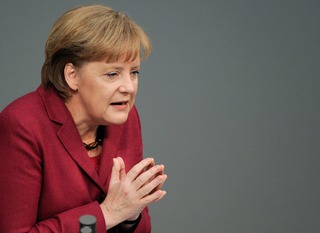 Next Tuesday, June 1 at 17.00 hours, President Dalia Grybauskaitė will meet with the Chancellor of the Federal Republic of Germany, Angela Merkel, who will be in Vilnius on a working visit.
more »
Next Tuesday, June 1 at 17.00 hours, President Dalia Grybauskaitė will meet with the Chancellor of the Federal Republic of Germany, Angela Merkel, who will be in Vilnius on a working visit.
more »