Leaders of Moldova and the self-proclaimed Transdniestr Republic have welcomed the constitutional reform plan developed by Dmitry Kozak, the first deputy chief of the Russian Presidential Administration
Published:
20 November 2003 y., Thursday
The scheme provides for creation of what Kozak calls “asymmetric federation” and grants special autonomy status to breakaway regions of Transdniestr and Gagauzia.
Dmitry Kozak, recently appointed to the post of the first deputy chief of the presidential administration following Alexander Voloshin’s resignation, has been absorbed in the problems of Moldova for about two months now. The most important of those problems is the ongoing conflict between Chisinau and the self-proclaimed Transdniestr Republic, the conflict in which the two sides waged an open war in 1992.
The armed struggle ended as Russia deployed peacekeepers to the region, but the political conflict remains acute to these days. Throughout the years Transdniestr has urged Moscow to let it join the Russian Federation, whereas Moscow, it transpired, has been mulling a plan of reinstating the breakaway region within Moldova. The plan was made public on Monday this week, when Kozak set out on his final trip to Moldova.
The Kremlin official brought to Chisinau the final draft of the memorandum outlining the provisions of the future Constitution of Moldova, to be adopted not later than October 2004.
Russian ambassador to Moldova Yuri Zubakov officially delivered the memorandum to Moldova’s President Vladimir Voronin; Kozak personally handed the draft to the recently re-elected President of Transdniestr Igor Smirnov.
Šaltinis:
gazeta.ru
Copying, publishing, announcing any information from the News.lt portal without written permission of News.lt editorial office is prohibited.
The most popular articles
 Lithuania took over the Chairmanship of the Organization for Security and Co-operation in Europe today, with a focus on internal and external threats in the OSCE area, fostering democracy, human rights and fundamental freedoms, notably freedom of the media, promoting energy security in Europe and building upon synergies between regional organizations.
more »
Lithuania took over the Chairmanship of the Organization for Security and Co-operation in Europe today, with a focus on internal and external threats in the OSCE area, fostering democracy, human rights and fundamental freedoms, notably freedom of the media, promoting energy security in Europe and building upon synergies between regional organizations.
more »
 President of the Republic of Lithuania Dalia Grybauskaitė says the decision taken by the European Council to amend the EU Treaty to provide for the establishment of a permanent support mechanism for crisis–stricken eurozone countries is very important for Lithuania.
more »
President of the Republic of Lithuania Dalia Grybauskaitė says the decision taken by the European Council to amend the EU Treaty to provide for the establishment of a permanent support mechanism for crisis–stricken eurozone countries is very important for Lithuania.
more »
 At the OSCE Summit, President of the Republic of Lithuania Dalia Grybauskaitė met with President of the Kyrgyz Republic Roza Otunbayeva for a bilateral discussion.
more »
At the OSCE Summit, President of the Republic of Lithuania Dalia Grybauskaitė met with President of the Kyrgyz Republic Roza Otunbayeva for a bilateral discussion.
more »
President of the Republic of Lithuania Dalia Grybauskaitė attending OSCE Summit in Astana had a conversation with US Secretary of State Hillary Clinton.
more »
 President Dalia Grybauskaitė positively assessed the European Commission's decision to include the integration of the Baltic Energy Market into the European market in the map of EU priorities.
more »
President Dalia Grybauskaitė positively assessed the European Commission's decision to include the integration of the Baltic Energy Market into the European market in the map of EU priorities.
more »
 President of the Republic of Lithuania Dalia Grybauskaitė left to Lisbon to attend NATO Summit that starts today.
more »
President of the Republic of Lithuania Dalia Grybauskaitė left to Lisbon to attend NATO Summit that starts today.
more »
 President of the Republic of Lithuania Dalia Grybauskaitė congratulated President Valdis Zatlers of the Republic of Latvia and all Latvian people on Latvia's national holiday, the Independence Day.
more »
President of the Republic of Lithuania Dalia Grybauskaitė congratulated President Valdis Zatlers of the Republic of Latvia and all Latvian people on Latvia's national holiday, the Independence Day.
more »
President of the Republic of Lithuania Dalia Grybauskaitė received letters of credence from the Ambassador of the Islamic Republic of Iran, Samad Ali Lakizadeh.
more »
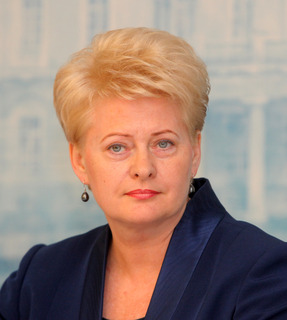 President of the Republic of Lithuania Dalia Grybauskaitė received letters of credence from the Ambassador of the United Arab Emirates, Mohammed Ahmed Al Mahmood.
more »
President of the Republic of Lithuania Dalia Grybauskaitė received letters of credence from the Ambassador of the United Arab Emirates, Mohammed Ahmed Al Mahmood.
more »
 As a response to the address made by representatives of Lithuania's culture community and civic society concerning the future of Kristijonas Donelaitis museum in Chistye Prudy in the Kaliningrad Oblast, President of the Republic of Lithuania D. Grybauskaitė sent a letter to President D. Medvedev of the Russian Federation.
more »
As a response to the address made by representatives of Lithuania's culture community and civic society concerning the future of Kristijonas Donelaitis museum in Chistye Prudy in the Kaliningrad Oblast, President of the Republic of Lithuania D. Grybauskaitė sent a letter to President D. Medvedev of the Russian Federation.
more »