Moldova votes for a new parliament Sunday with the election likely to place the impoverished nation firmly on a pro-European path
Published:
6 March 2005 y., Sunday
Moldova votes for a new parliament Sunday with the election likely to place the impoverished nation firmly on a pro-European path, the third ex-Soviet republic to turn away from Moscow’s influence in little over a year.
Voters will choose deputies for a 101-seat parliament that will then elect the president of the country sandwiched between Ukraine and Romania, considered to be Europe’s poorest, with per capita gross national product barely 600 dollars.
The Communists, who hold 71 seats in the outgoing chamber, are considered the front-runners in a field of nine parties, two blocs and a dozen individual candidates.
Like their main competitors—the centrist Bloc for Democratic Moldova (BDM) and nationalist Popular Christian Democratic Party (PPCD) -- the Communists avow themselves as pro-Western, with voters having a choice between the degrees of Eurocentrism.
With BDM in favor of keeping closer ties to Russia and the PPCD favoring Moldovan entry into the NATO alliance, the Communists find themselves in the middle of the road, garnering between 49 and 62 percent of voters’ support, according to the latest opinion polls.
Although the Communists came to power in 2001 on a pro-Russia ticket, they have since done an about-face, partly because of disagreements with Moscow over its troop presence in the separatist region of Trandsdniestr, which Russia has tacitly supported ever since it broke away from Chisinau after a short war in 1992.
Tensions between Chisinau and Moscow have increased ahead of the vote, with Moldova refusing entry to dozens of Russians who presented themselves as election observers on the eve of the poll.
Šaltinis:
AFP
Copying, publishing, announcing any information from the News.lt portal without written permission of News.lt editorial office is prohibited.
The most popular articles
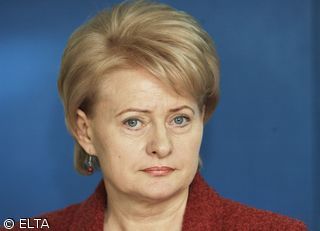 President of the Republic of Lithuania Dalia Grybauskaitė goes for a working visit to Brussels to attend an informal meeting of the European Council.
more »
President of the Republic of Lithuania Dalia Grybauskaitė goes for a working visit to Brussels to attend an informal meeting of the European Council.
more »
 President Dalia Grybauskaitė extended congratulations to President Valdis Zatlers and the people of Latvia on their national holiday - Independence Day.
more »
President Dalia Grybauskaitė extended congratulations to President Valdis Zatlers and the people of Latvia on their national holiday - Independence Day.
more »
 On 16 November in Brussels, Lithuania’s Minister of Foreign Affairs Vygaudas Ušackas took part in the joint meeting of European Union’s foreign and defence ministers with NATO Secretary General Anders Fogh Rasmussen.
more »
On 16 November in Brussels, Lithuania’s Minister of Foreign Affairs Vygaudas Ušackas took part in the joint meeting of European Union’s foreign and defence ministers with NATO Secretary General Anders Fogh Rasmussen.
more »
 Wednesday, November 11, President of the Republic of Lithuania Dalia Grybauskaitė met with President of the Republic of Poland Lech Kaczyński.
more »
Wednesday, November 11, President of the Republic of Lithuania Dalia Grybauskaitė met with President of the Republic of Poland Lech Kaczyński.
more »
 On November 5-6 meeting of the Baltic Chiefs of Defence Staffs of the Baltic States will be held in Nemenčinė, Gen. Ramanauskas Warfare Training Centre (Vilnius Region).
more »
On November 5-6 meeting of the Baltic Chiefs of Defence Staffs of the Baltic States will be held in Nemenčinė, Gen. Ramanauskas Warfare Training Centre (Vilnius Region).
more »
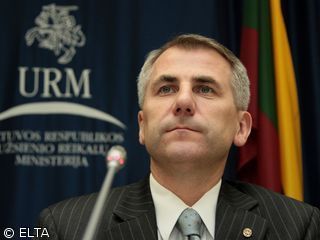 The interview of Lithuania’s Minister of Foreign Affairs Vygaudas Ušackas to the daily Die Presse about his country’s sensitive relations with Russia, about perspectives for Kiev and bad American PR in the antiballistic missile defence debate.
more »
The interview of Lithuania’s Minister of Foreign Affairs Vygaudas Ušackas to the daily Die Presse about his country’s sensitive relations with Russia, about perspectives for Kiev and bad American PR in the antiballistic missile defence debate.
more »
 Professor Vytautas Landsbergis, outstanding Lithuanian politician and cultural figure, is invited as a keynote speaker and will deliver a report on the Lithuanian contribution to European freedom and unification in 1988-1989.
more »
Professor Vytautas Landsbergis, outstanding Lithuanian politician and cultural figure, is invited as a keynote speaker and will deliver a report on the Lithuanian contribution to European freedom and unification in 1988-1989.
more »
 President of the Republic of Lithuania participating in her first session of the European Council strongly defends interests of the Baltic countries and other new Member States of the EU at the commencing discussion among the European leaders concerning the common position to be upheld in the upcoming world-wide meeting in Copenhagen on the issue of mitigation of consequences of climate change.
more »
President of the Republic of Lithuania participating in her first session of the European Council strongly defends interests of the Baltic countries and other new Member States of the EU at the commencing discussion among the European leaders concerning the common position to be upheld in the upcoming world-wide meeting in Copenhagen on the issue of mitigation of consequences of climate change.
more »
 Lithuania’s Minister of Foreign Affairs Vygaudas Ušackas offers his most sincere condolences to the families of those who have lost their loved ones during the terrorist act in Kabul, the capital of Afghanistan, on 28 October.
more »
Lithuania’s Minister of Foreign Affairs Vygaudas Ušackas offers his most sincere condolences to the families of those who have lost their loved ones during the terrorist act in Kabul, the capital of Afghanistan, on 28 October.
more »
 President Dalia Grybauskaitė extended congratulations to President Abdullah Gül on the 86th anniversary of the founding of the Republic of Turkey.
more »
President Dalia Grybauskaitė extended congratulations to President Abdullah Gül on the 86th anniversary of the founding of the Republic of Turkey.
more »