Moldovan President Petru Lucinschi on Thursday vetoed a law that would end direct presidential elections.
Published:
21 July 2000 y., Friday
Moldovan President Petru Lucinschi on Thursday vetoed a law that would end direct presidential elections and allow parliament to elect the head of state saying he refused to be turned into a puppet.
Parliament voted overwhelmingly this month to change the constitution to end direct presidential elections and allow the head of state to be elected by parliament. Only a handful of deputies opposed the bill in the assembly, which has blocked Lucinschi's initiatives since his 1996 election. Mustering a two-thirds majority to counter Lucinschi's veto appears easy.
But Lucinschi said Moldova, a country wedged between Ukraine and Romania, was gripped by a constitutional crisis and called on deputies not to override his veto. The president called for a referendum on November 5, putting to voters two drafts for constitutional change - a parliamentary draft and a presidential version.
Lucinschi had been due to run for re-election in December. He would be favourite in any popular vote, but stands little chance of winning an election in parliament. He said parliament's moves contradicted the outcome of a consultative referendum held last year in which a large majority of Moldovans backed his proposal to extend presidential powers. Parliament later blocked the changes.
Moldova is one of the poorest former Soviet republics, with average monthly salaries equivalent to about $30. It has been plagued by political instability, with four governments in office since Lucinschi came to power.
Šaltinis:
Gazeta.ru
Copying, publishing, announcing any information from the News.lt portal without written permission of News.lt editorial office is prohibited.
The most popular articles
 Lithuania took over the Chairmanship of the Organization for Security and Co-operation in Europe today, with a focus on internal and external threats in the OSCE area, fostering democracy, human rights and fundamental freedoms, notably freedom of the media, promoting energy security in Europe and building upon synergies between regional organizations.
more »
Lithuania took over the Chairmanship of the Organization for Security and Co-operation in Europe today, with a focus on internal and external threats in the OSCE area, fostering democracy, human rights and fundamental freedoms, notably freedom of the media, promoting energy security in Europe and building upon synergies between regional organizations.
more »
 President of the Republic of Lithuania Dalia Grybauskaitė says the decision taken by the European Council to amend the EU Treaty to provide for the establishment of a permanent support mechanism for crisis–stricken eurozone countries is very important for Lithuania.
more »
President of the Republic of Lithuania Dalia Grybauskaitė says the decision taken by the European Council to amend the EU Treaty to provide for the establishment of a permanent support mechanism for crisis–stricken eurozone countries is very important for Lithuania.
more »
 At the OSCE Summit, President of the Republic of Lithuania Dalia Grybauskaitė met with President of the Kyrgyz Republic Roza Otunbayeva for a bilateral discussion.
more »
At the OSCE Summit, President of the Republic of Lithuania Dalia Grybauskaitė met with President of the Kyrgyz Republic Roza Otunbayeva for a bilateral discussion.
more »
President of the Republic of Lithuania Dalia Grybauskaitė attending OSCE Summit in Astana had a conversation with US Secretary of State Hillary Clinton.
more »
 President Dalia Grybauskaitė positively assessed the European Commission's decision to include the integration of the Baltic Energy Market into the European market in the map of EU priorities.
more »
President Dalia Grybauskaitė positively assessed the European Commission's decision to include the integration of the Baltic Energy Market into the European market in the map of EU priorities.
more »
 President of the Republic of Lithuania Dalia Grybauskaitė left to Lisbon to attend NATO Summit that starts today.
more »
President of the Republic of Lithuania Dalia Grybauskaitė left to Lisbon to attend NATO Summit that starts today.
more »
 President of the Republic of Lithuania Dalia Grybauskaitė congratulated President Valdis Zatlers of the Republic of Latvia and all Latvian people on Latvia's national holiday, the Independence Day.
more »
President of the Republic of Lithuania Dalia Grybauskaitė congratulated President Valdis Zatlers of the Republic of Latvia and all Latvian people on Latvia's national holiday, the Independence Day.
more »
President of the Republic of Lithuania Dalia Grybauskaitė received letters of credence from the Ambassador of the Islamic Republic of Iran, Samad Ali Lakizadeh.
more »
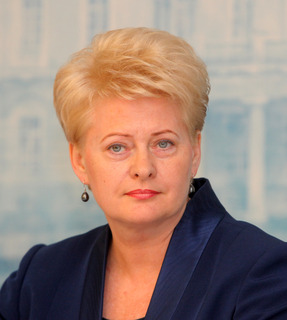 President of the Republic of Lithuania Dalia Grybauskaitė received letters of credence from the Ambassador of the United Arab Emirates, Mohammed Ahmed Al Mahmood.
more »
President of the Republic of Lithuania Dalia Grybauskaitė received letters of credence from the Ambassador of the United Arab Emirates, Mohammed Ahmed Al Mahmood.
more »
 As a response to the address made by representatives of Lithuania's culture community and civic society concerning the future of Kristijonas Donelaitis museum in Chistye Prudy in the Kaliningrad Oblast, President of the Republic of Lithuania D. Grybauskaitė sent a letter to President D. Medvedev of the Russian Federation.
more »
As a response to the address made by representatives of Lithuania's culture community and civic society concerning the future of Kristijonas Donelaitis museum in Chistye Prudy in the Kaliningrad Oblast, President of the Republic of Lithuania D. Grybauskaitė sent a letter to President D. Medvedev of the Russian Federation.
more »