Russia's plan to build a bypass pipeline around Ukraine suffered a blow this week following an agreement by Poland to buy gas from Norway.
Published:
4 September 2001 y., Tuesday
The deal is likely to make Warsaw more resistant to Moscow's strategy and could spur Russia's attempts to mend fences with Kyiv.
A deal reached on 29 August by Poland and Norway could spell the end of Russia's long campaign to pressure Ukraine over its pipelines that transport Russian gas.
The British "Financial Times" reported that Norway's agreement to sell 74 billion cubic meters of gas to Poland over a 16-year period will reduce Warsaw's dependence on Russia for fuel supplies.
The deliveries by Norway's Statoil to the Polish Oil and Gas Company, known as PGNiG, would start in 2008 and rise quickly to 5 billion cubic meters annually through 2024. Although the amount seems relatively small, Poland consumed only about 11 billion cubic meters of gas last year. Over 60 percent of that was imported from Russia.
The deal is important because of the three-way tensions that have been building among Russia, Poland, and Ukraine over Kyiv's use of Russian gas and Moscow's attempts to solve the problem.
Some 90 percent of Russia's gas exports to Europe run through the former Soviet pipelines in Ukraine. But Russia has frequently charged Ukraine with illicitly tapping the gas. Ukraine also owes an estimated $1.3 billion for past Russian supplies.
In July of last year, Russia announced it would try to build a bypass line through Poland and Slovakia to reduce its reliance on Ukraine and eventually double energy exports to the European Union.
The agreement with Norway, which has been debated for months, may help Poland in at least two ways. It limits Moscow's power to pressure Warsaw over its stand on the bypass by ending its role as monopoly supplier. It may also satisfy an EU directive on diversifying energy sources, which may aid Poland's drive to join the EU.
On the downside, Poland will pay more for Norwegian gas, which will require a new pipeline to be built across the Baltic Sea. Poland's neighbor Germany may also be displeased, since Germany's Ruhrgas is a shareholder in Russia's Gazprom and a partner in studying the bypass plan.
Šaltinis:
caspian.ru
Copying, publishing, announcing any information from the News.lt portal without written permission of News.lt editorial office is prohibited.
The most popular articles
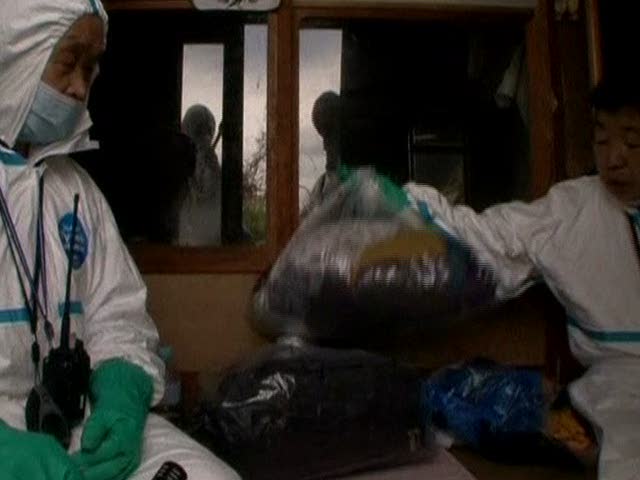 Evacuees are allowed briefly back to their homes inside the Fukushima Daiichi exclusion zone to collect belongings.
more »
Evacuees are allowed briefly back to their homes inside the Fukushima Daiichi exclusion zone to collect belongings.
more »
 A Chilean base-jumper soars off a cliff in the Andes on a motorbike before opening his parachute.
more »
A Chilean base-jumper soars off a cliff in the Andes on a motorbike before opening his parachute.
more »
 China's largest unmanned helicopter reports successful maiden flight.
more »
China's largest unmanned helicopter reports successful maiden flight.
more »
 How certain was the U.S. Navy Seal team that it was Osama Bin Laden they shot, killed and buried at sea? According to a Florida company that makes biometric identification equipment, there's no doubt the Seals got their man.
more »
How certain was the U.S. Navy Seal team that it was Osama Bin Laden they shot, killed and buried at sea? According to a Florida company that makes biometric identification equipment, there's no doubt the Seals got their man.
more »
 Emissions and noise-free, the world's first electric trash carts are hitting the streets of France, powered by Franco-American technology.
more »
Emissions and noise-free, the world's first electric trash carts are hitting the streets of France, powered by Franco-American technology.
more »
 U.S. National Security Adviser Tom Donilon says he has seen no evidence that Pakistan was aware Osama bin Laden was living in a compound in the country.
more »
U.S. National Security Adviser Tom Donilon says he has seen no evidence that Pakistan was aware Osama bin Laden was living in a compound in the country.
more »
 Conservationists hope a new sanctuary will save Australia's declining Tasmanian Devil population.
more »
Conservationists hope a new sanctuary will save Australia's declining Tasmanian Devil population.
more »
 The tiny microbe could be the future of sustainable energy according to researchers in the uk. The scientists are developing autonomous robots that can generate their own power, and microbial fuel cells that can turn any organic material into electricity, could be the answer.
more »
The tiny microbe could be the future of sustainable energy according to researchers in the uk. The scientists are developing autonomous robots that can generate their own power, and microbial fuel cells that can turn any organic material into electricity, could be the answer.
more »
 The day's top showbiz news and headlines including Arnold Schwarzenegger lines up his next film, Justin Bieber's Japan concerts in jeopardy, and Cheryl Cole to be on U.S. "X Factor."
more »
The day's top showbiz news and headlines including Arnold Schwarzenegger lines up his next film, Justin Bieber's Japan concerts in jeopardy, and Cheryl Cole to be on U.S. "X Factor."
more »
 The last combat veteran to serve in the First World War dies in Australia at 110.
more »
The last combat veteran to serve in the First World War dies in Australia at 110.
more »