Russia's plan to build a bypass pipeline around Ukraine suffered a blow this week following an agreement by Poland to buy gas from Norway.
Published:
4 September 2001 y., Tuesday
The deal is likely to make Warsaw more resistant to Moscow's strategy and could spur Russia's attempts to mend fences with Kyiv.
A deal reached on 29 August by Poland and Norway could spell the end of Russia's long campaign to pressure Ukraine over its pipelines that transport Russian gas.
The British "Financial Times" reported that Norway's agreement to sell 74 billion cubic meters of gas to Poland over a 16-year period will reduce Warsaw's dependence on Russia for fuel supplies.
The deliveries by Norway's Statoil to the Polish Oil and Gas Company, known as PGNiG, would start in 2008 and rise quickly to 5 billion cubic meters annually through 2024. Although the amount seems relatively small, Poland consumed only about 11 billion cubic meters of gas last year. Over 60 percent of that was imported from Russia.
The deal is important because of the three-way tensions that have been building among Russia, Poland, and Ukraine over Kyiv's use of Russian gas and Moscow's attempts to solve the problem.
Some 90 percent of Russia's gas exports to Europe run through the former Soviet pipelines in Ukraine. But Russia has frequently charged Ukraine with illicitly tapping the gas. Ukraine also owes an estimated $1.3 billion for past Russian supplies.
In July of last year, Russia announced it would try to build a bypass line through Poland and Slovakia to reduce its reliance on Ukraine and eventually double energy exports to the European Union.
The agreement with Norway, which has been debated for months, may help Poland in at least two ways. It limits Moscow's power to pressure Warsaw over its stand on the bypass by ending its role as monopoly supplier. It may also satisfy an EU directive on diversifying energy sources, which may aid Poland's drive to join the EU.
On the downside, Poland will pay more for Norwegian gas, which will require a new pipeline to be built across the Baltic Sea. Poland's neighbor Germany may also be displeased, since Germany's Ruhrgas is a shareholder in Russia's Gazprom and a partner in studying the bypass plan.
Šaltinis:
caspian.ru
Copying, publishing, announcing any information from the News.lt portal without written permission of News.lt editorial office is prohibited.
The most popular articles
 Twenty five years after the Chernobyl explosion, radiation contamination continues to haunt the survivors as it spreads to the next generation.
more »
Twenty five years after the Chernobyl explosion, radiation contamination continues to haunt the survivors as it spreads to the next generation.
more »
 A British man builds a model of the retired U.S. aircraft carrier the USS Intrepid in New York, made entirely out of Lego pieces.
more »
A British man builds a model of the retired U.S. aircraft carrier the USS Intrepid in New York, made entirely out of Lego pieces.
more »
 A researcher at MIT has used his technical skills to give chocolate bunnies and eggs a run for their money. David Carr built a new type of 3D printer that uses chocolate to give a new face to Easter treats.
more »
A researcher at MIT has used his technical skills to give chocolate bunnies and eggs a run for their money. David Carr built a new type of 3D printer that uses chocolate to give a new face to Easter treats.
more »
 Storm chasers captured two tornadoes on tape as they touched down in the midwestern United States- continuing a recent onslaught of twisters that have killed dozens and destroyed swathes of land and property.
more »
Storm chasers captured two tornadoes on tape as they touched down in the midwestern United States- continuing a recent onslaught of twisters that have killed dozens and destroyed swathes of land and property.
more »
 A small factory in Brazil's northeast is bringing smiles to the faces of environmentalists by turning used toothpaste tubes into furniture and roof tiles.
more »
A small factory in Brazil's northeast is bringing smiles to the faces of environmentalists by turning used toothpaste tubes into furniture and roof tiles.
more »
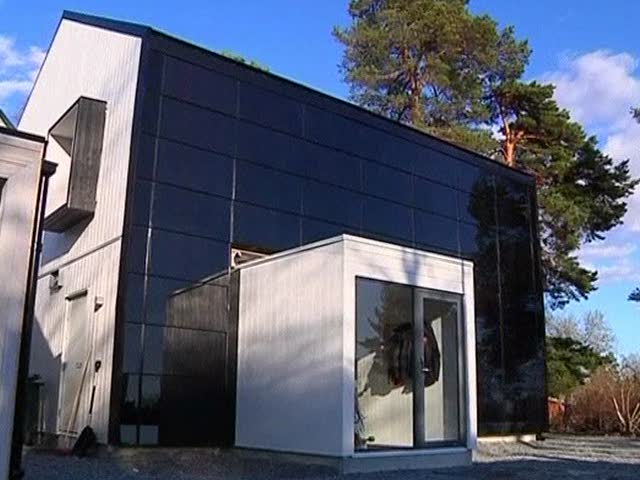 The Lindel family are attempting to live a low carbon life as part of an experiment to cut their carbon emissions from the annual average of seven tonnes per person to only one tonne.
more »
The Lindel family are attempting to live a low carbon life as part of an experiment to cut their carbon emissions from the annual average of seven tonnes per person to only one tonne.
more »
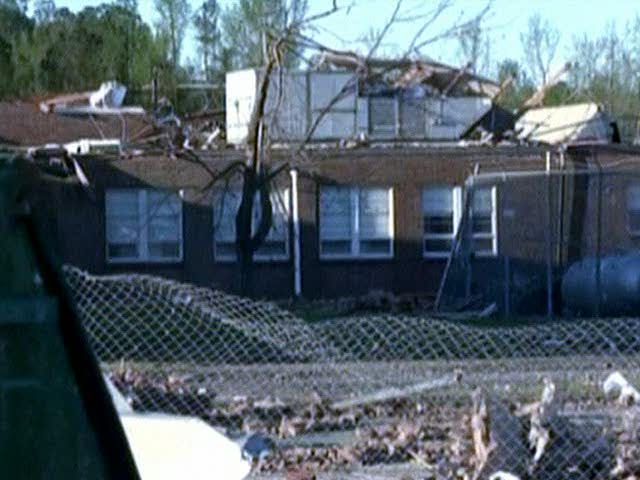 Three days of severe storms and tornadoes in the southern United States have killed at least 39 people.
more »
Three days of severe storms and tornadoes in the southern United States have killed at least 39 people.
more »
 Disagreements over the stalemated NATO military mission in Libya persist on the first day of the NATO foreign ministers' meeting in Berlin.
more »
Disagreements over the stalemated NATO military mission in Libya persist on the first day of the NATO foreign ministers' meeting in Berlin.
more »
 Tourists go head-to-head with locals in water fights as celebrates its New Year.
more »
Tourists go head-to-head with locals in water fights as celebrates its New Year.
more »
 Six thousand Lego lovers and a crane create the world's largest Lego tower in Sao Paulo.
more »
Six thousand Lego lovers and a crane create the world's largest Lego tower in Sao Paulo.
more »