Russia's plan to build a bypass pipeline around Ukraine suffered a blow this week following an agreement by Poland to buy gas from Norway.
Published:
4 September 2001 y., Tuesday
The deal is likely to make Warsaw more resistant to Moscow's strategy and could spur Russia's attempts to mend fences with Kyiv.
A deal reached on 29 August by Poland and Norway could spell the end of Russia's long campaign to pressure Ukraine over its pipelines that transport Russian gas.
The British "Financial Times" reported that Norway's agreement to sell 74 billion cubic meters of gas to Poland over a 16-year period will reduce Warsaw's dependence on Russia for fuel supplies.
The deliveries by Norway's Statoil to the Polish Oil and Gas Company, known as PGNiG, would start in 2008 and rise quickly to 5 billion cubic meters annually through 2024. Although the amount seems relatively small, Poland consumed only about 11 billion cubic meters of gas last year. Over 60 percent of that was imported from Russia.
The deal is important because of the three-way tensions that have been building among Russia, Poland, and Ukraine over Kyiv's use of Russian gas and Moscow's attempts to solve the problem.
Some 90 percent of Russia's gas exports to Europe run through the former Soviet pipelines in Ukraine. But Russia has frequently charged Ukraine with illicitly tapping the gas. Ukraine also owes an estimated $1.3 billion for past Russian supplies.
In July of last year, Russia announced it would try to build a bypass line through Poland and Slovakia to reduce its reliance on Ukraine and eventually double energy exports to the European Union.
The agreement with Norway, which has been debated for months, may help Poland in at least two ways. It limits Moscow's power to pressure Warsaw over its stand on the bypass by ending its role as monopoly supplier. It may also satisfy an EU directive on diversifying energy sources, which may aid Poland's drive to join the EU.
On the downside, Poland will pay more for Norwegian gas, which will require a new pipeline to be built across the Baltic Sea. Poland's neighbor Germany may also be displeased, since Germany's Ruhrgas is a shareholder in Russia's Gazprom and a partner in studying the bypass plan.
Šaltinis:
caspian.ru
Copying, publishing, announcing any information from the News.lt portal without written permission of News.lt editorial office is prohibited.
The most popular articles
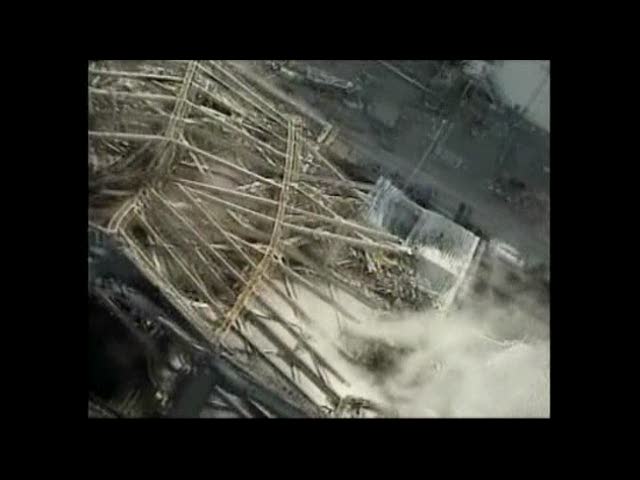 Japan nuclear crisis now at highest rating, matching Chernobyl, causing greater unease among public
more »
Japan nuclear crisis now at highest rating, matching Chernobyl, causing greater unease among public
more »
 The restoration of the Santa Croce Basilica in Florence is offering art lovers an intimate view of the chapel's 600-year-old frescoes.
more »
The restoration of the Santa Croce Basilica in Florence is offering art lovers an intimate view of the chapel's 600-year-old frescoes.
more »
 Tomorrow, April 5, President of the Republic of Lithuania Dalia Grybauskaitė goes to Norway for a two-day state visit.
more »
Tomorrow, April 5, President of the Republic of Lithuania Dalia Grybauskaitė goes to Norway for a two-day state visit.
more »
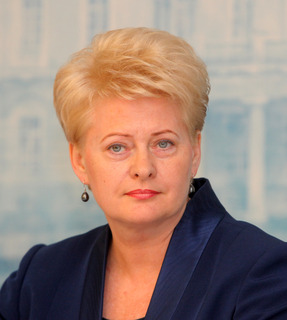 President of the Republic of Lithuania Dalia Grybauskaitė met with India's Minister of State for External Affairs, Preneet Kaur, who is visiting Lithuania.
more »
President of the Republic of Lithuania Dalia Grybauskaitė met with India's Minister of State for External Affairs, Preneet Kaur, who is visiting Lithuania.
more »
 The President of the Republic of Lithuania Dalia Grybauskaitė takes part in the Munich Security Conference.
more »
The President of the Republic of Lithuania Dalia Grybauskaitė takes part in the Munich Security Conference.
more »
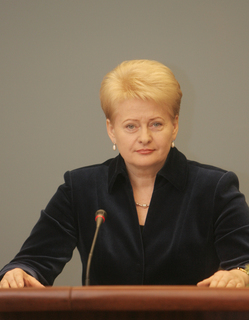 President Dalia Grybauskaitė extended condolences to the people of Russia over the bomb explosion in Moscow that claimed many victims.
more »
President Dalia Grybauskaitė extended condolences to the people of Russia over the bomb explosion in Moscow that claimed many victims.
more »
 President of the Republic of Lithuania Dalia Grybauskaitė had a traditional annual meeting with foreign ambassadors accredited to and resident in Lithuania, to discuss the domestic political situation and foreign policy of Lithuania.
more »
President of the Republic of Lithuania Dalia Grybauskaitė had a traditional annual meeting with foreign ambassadors accredited to and resident in Lithuania, to discuss the domestic political situation and foreign policy of Lithuania.
more »
 President of the Republic of Lithuania Dalia Grybauskaitė met with U.S. Senator Richard Durbin.
more »
President of the Republic of Lithuania Dalia Grybauskaitė met with U.S. Senator Richard Durbin.
more »
 President of the Republic of Lithuania Dalia Grybauskaitė visited the Antakalnis Cemetery to honour the memory of those killed on January 13.
more »
President of the Republic of Lithuania Dalia Grybauskaitė visited the Antakalnis Cemetery to honour the memory of those killed on January 13.
more »
 President of the Republic of Lithuania Dalia Grybauskaitė and Minister of Foreign Affairs Audronius Ažubalis, the new OSCE Chairperson–in–Office as from 1 January, discussed priorities and main concerns for the Lithuanian Chairmanship of this Organization.
more »
President of the Republic of Lithuania Dalia Grybauskaitė and Minister of Foreign Affairs Audronius Ažubalis, the new OSCE Chairperson–in–Office as from 1 January, discussed priorities and main concerns for the Lithuanian Chairmanship of this Organization.
more »