President Bush conceded Thursday that it is unrealistic to expect NATO countries to send more troops to Iraq, but made a parting plea to world powers to do more to guide the Iraqi people to a stable democracy
Published:
11 June 2004 y., Friday
President Bush conceded Thursday that it is unrealistic to expect NATO countries to send more troops to Iraq, but made a parting plea to world powers to do more to guide the Iraqi people to a stable democracy.
"They need our help, and they will have our help," Bush said at the end of a Group of Eight economic summit where European allies expressed resistance to giving NATO an expanded military role.
That means the United States and Britain will continue to provide the bulk of military troops in Iraq for now, although Bush said that over time, "the solution for Iraqi security is going to be provided by the Iraqis."
French President Jacques Chirac said he believed any direct involvement by NATO troops in Iraq held "great risks, including something of a risk of a clash between the Christian West and the Muslim East." Chirac did not rule out a training role, however.
Germany also opposes sending NATO troops to Iraq, although Chancellor Gerhard Schroeder said Thursday that "we have also made it clear that the decision of the NATO members who are involved in Iraq won't be blocked."
Šaltinis:
chinadaily.com.cn
Copying, publishing, announcing any information from the News.lt portal without written permission of News.lt editorial office is prohibited.
The most popular articles
 President Dalia Grybauskaitė sent congratulations on behalf of herself and the people of Lithuania to President Dmitry Medvedev of the Russian Federation on the Day of Russia.
more »
President Dalia Grybauskaitė sent congratulations on behalf of herself and the people of Lithuania to President Dmitry Medvedev of the Russian Federation on the Day of Russia.
more »
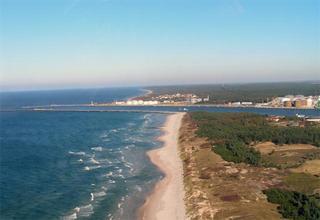 Political support, commitment at all levels of governance and ensured financing are crucial elements for the successful implementation of the European Union Strategy for the Baltic Sea Region, Lithuania’s Vice-Minister of Foreign Affairs A. Skaisgirytė Liauškienė said at the seminar, dedicated to discuss financial and management aspects of the Strategy’s implementation.
more »
Political support, commitment at all levels of governance and ensured financing are crucial elements for the successful implementation of the European Union Strategy for the Baltic Sea Region, Lithuania’s Vice-Minister of Foreign Affairs A. Skaisgirytė Liauškienė said at the seminar, dedicated to discuss financial and management aspects of the Strategy’s implementation.
more »
 On 10 June, Political Director of Lithuania’s Ministry of Foreign Affairs Eitvydas Bajarūnas took part in the political consultations with officials from the Ukrainian Foreign Ministry in Kyiv.
more »
On 10 June, Political Director of Lithuania’s Ministry of Foreign Affairs Eitvydas Bajarūnas took part in the political consultations with officials from the Ukrainian Foreign Ministry in Kyiv.
more »
 On 10 June, a seminar to discuss financial and management aspects of the implementation of the EU Strategy for the Baltic Sea Region will be held in Vilnius.
more »
On 10 June, a seminar to discuss financial and management aspects of the implementation of the EU Strategy for the Baltic Sea Region will be held in Vilnius.
more »
 Two entities with common objectives, Conference on Interaction and Confidence Building Measures in Asia and the Organization for Security and Co-operation in Europe, could act alongside each other, Lithuania’s Minister of Foreign Affairs A. Ažubalis says.
more »
Two entities with common objectives, Conference on Interaction and Confidence Building Measures in Asia and the Organization for Security and Co-operation in Europe, could act alongside each other, Lithuania’s Minister of Foreign Affairs A. Ažubalis says.
more »
 President of the Republic of Lithuania Dalia Grybauskaitė has just made her first State of the Nation Address in the Seimas, to give an overview of the situation of the country and the status of internal and foreign policies of the state, as required under the Constitution of the Republic of Lithuania.
more »
President of the Republic of Lithuania Dalia Grybauskaitė has just made her first State of the Nation Address in the Seimas, to give an overview of the situation of the country and the status of internal and foreign policies of the state, as required under the Constitution of the Republic of Lithuania.
more »
 A round table discussion "Europe 2030: Do We Have a New Approach?" was held on 4 June in Vilnius.
more »
A round table discussion "Europe 2030: Do We Have a New Approach?" was held on 4 June in Vilnius.
more »
 On 7 June in Vilnius, Lithuania’s Vice-Minister of Foreign Affairs Šarūnas Adomavičius met with Chairman of the Knesset Lithuanian-Israeli Parliamentary Friendship Group Zeev Bielski and discussed the cooperation between the countries, as well as in international organizations.
more »
On 7 June in Vilnius, Lithuania’s Vice-Minister of Foreign Affairs Šarūnas Adomavičius met with Chairman of the Knesset Lithuanian-Israeli Parliamentary Friendship Group Zeev Bielski and discussed the cooperation between the countries, as well as in international organizations.
more »
 Today Chancellor Angela Merkel of the Federal Republic of Germany called President of the Republic of Lithuania Dalia Grybauskaitė to express regrets at not having been able to come to Lithuania earlier in the week due to the complicated political situation in Germany.
more »
Today Chancellor Angela Merkel of the Federal Republic of Germany called President of the Republic of Lithuania Dalia Grybauskaitė to express regrets at not having been able to come to Lithuania earlier in the week due to the complicated political situation in Germany.
more »
 President of the Republic of Lithuania Dalia Grybauskaitė met with the President of the European Commission, Jose Manuel Barroso, who is currently visiting Lithuania.
more »
President of the Republic of Lithuania Dalia Grybauskaitė met with the President of the European Commission, Jose Manuel Barroso, who is currently visiting Lithuania.
more »