Poland said late on Monday it would send up to 200 soldiers to join a U.S.-led campaign to disarm Saddam Hussein
Published:
19 March 2003 y., Wednesday
Poland said late on Monday it would send up to 200 soldiers to join a U.S.-led campaign to disarm Saddam Hussein, maintaining its position as bedrock of Eastern European support for Washington in the Iraq crisis.
"We are prepared to use the Polish military contingent to force Iraq to respect UN Security Council Resolution 1441," Polish President Aleksander Kwasniewski told a news conference alongside Prime Minister Leszek Miller.
Speaking ahead of a speech by President George W. Bush that set the clock ticking to war, Kwasniewski said the Polish troops would lend logistical support to U.S. forces in the Iraq region for a period limited from March 19 to September 15.
Poland, a NATO member on course to join the European Union on May 1, 2004, has emerged as one of Washington's staunchest supporters in the Iraq crisis.
Its declaration came after the PAP news agency said Kwasniewski held a round of telephone calls with counterparts in Eastern Europe, including the Czech Republic's President Vaclav Klaus, Lithuania's Rolandas Paksas, Slovenia's Janez Drnovsek, Slovakia's Rudolf Schuester and Ukraine's Leonid Kuchma.
Poland late in January angered France and Germany when it signed a letter with seven other European countries backing the U.S. hardline stance on Iraq.
France and Germany have led European opposition to the U.S. stance in the crisis.Ten other Eastern European countries signed a similar declaration in early February.
Šaltinis:
tehrantimes.com
Copying, publishing, announcing any information from the News.lt portal without written permission of News.lt editorial office is prohibited.
The most popular articles
 The Government of Lithuania has reached a watershed agreement with the nation’s most important business, labour and social groups on policies and initiatives to overcome the current deep recession as swiftly as possible and put the economy back on track for euro adoption and stable growth.
more »
The Government of Lithuania has reached a watershed agreement with the nation’s most important business, labour and social groups on policies and initiatives to overcome the current deep recession as swiftly as possible and put the economy back on track for euro adoption and stable growth.
more »
 Yesterday, 26 October, the EU countries agreed to adopt a common strategy for the Baltic Sea region.
more »
Yesterday, 26 October, the EU countries agreed to adopt a common strategy for the Baltic Sea region.
more »
 President Dalia Grybauskaitė extended congratulations to President Gurbanguly Berdymuhamedov of Turkmenistan on the occasion of Independence Day.
more »
President Dalia Grybauskaitė extended congratulations to President Gurbanguly Berdymuhamedov of Turkmenistan on the occasion of Independence Day.
more »
 President Dalia Grybauskaitė received OSCE Secretary General Marc Perrin de Brichambaut.
more »
President Dalia Grybauskaitė received OSCE Secretary General Marc Perrin de Brichambaut.
more »
 President Dalia Grybauskaitė received representatives of the European Business Network and foreign investors in Lithuania.
more »
President Dalia Grybauskaitė received representatives of the European Business Network and foreign investors in Lithuania.
more »
 Prime Minister Andrius Kubilius has received a visit from the new Extraordinary and Plenipotentiary Ambassador of the United States to Lithuania Anne Elizabeth Derse.
more »
Prime Minister Andrius Kubilius has received a visit from the new Extraordinary and Plenipotentiary Ambassador of the United States to Lithuania Anne Elizabeth Derse.
more »
 Today, on 21 October during the visit to Austria, Lithuania’s Minister of Foreign Affairs Vygaudas Ušackas met with Michael Spindelegger, Minister for European and Foreign Affairs of Austria.
more »
Today, on 21 October during the visit to Austria, Lithuania’s Minister of Foreign Affairs Vygaudas Ušackas met with Michael Spindelegger, Minister for European and Foreign Affairs of Austria.
more »
 October 19-20, Minister of National Defence Rasa Juknevičienė will pay a formal visit the UK by invitation of Defence Secretary Bob Ainsworth.
more »
October 19-20, Minister of National Defence Rasa Juknevičienė will pay a formal visit the UK by invitation of Defence Secretary Bob Ainsworth.
more »
 On 17 October in Baku, Lithuania’s Minister of Foreign Affairs Vygaudas Ušackas and Minister of Foreign Affairs of Azerbaijan Elmar Mammadyarov discussed bilateral cooperation...
more »
On 17 October in Baku, Lithuania’s Minister of Foreign Affairs Vygaudas Ušackas and Minister of Foreign Affairs of Azerbaijan Elmar Mammadyarov discussed bilateral cooperation...
more »
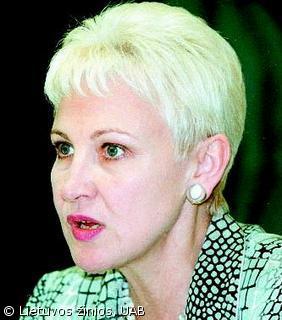 Ms Irena Degutienė, Speaker of the Seimas of the Republic of Lithuania, participated in the International Conference Europe 70 years after the Molotov–Ribbentrop Pact held by the European Parliament.
more »
Ms Irena Degutienė, Speaker of the Seimas of the Republic of Lithuania, participated in the International Conference Europe 70 years after the Molotov–Ribbentrop Pact held by the European Parliament.
more »